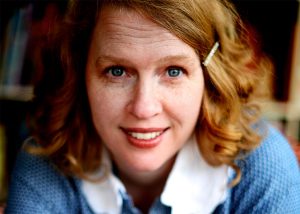
 I received an ARC of How to Walk Away from the publisher St. Martin’s Press and fell in love with Katherine’s writing. Although never having had to face such a challenge as the main character, I could definitely relate to her constant bewilderment at other people’s actions. After following Katherine’s book tour online, I gathered my courage and asked her for an interview. She graciously stuffed my little blogblogblog into her bursting schedule. I’m excited to share a little insight into the life of this bestselling author. Check out her website (below) and follow her on social media.
 Tell me about your writing process, including schedule, environment, and strategies, techniques, and nuances that keep you moving forward in the craft.
I’m just always thinking about stories. Whether I’m working on one of my own, or reading someone else’s, or watching a movie, or reading a news story, or talking to my kids—stories are just kind of the lens that I bring to everything that I do. When I’m not writing, I’m reading fiction, or reading about fiction, or writing about it in a journal. It’s fun for me to take stories apart and figure out what makes them work (or not work). As for schedule, I’m not a person who writes every day. When I have a story going, I write obsessively, but then I take breaks in between to focus on something else and let the well fill back up. I am very chatty and sociable, and I find hanging out with my cute family almost irresistible, so when I have a big deadline, I leave town for several days so I can really concentrate. My mom has a sunny little beach house on Galveston Island in Texas, and I’ll spend four or five quiet days there several times a year so I can get big bursts of writing done. But I think the time when I’m not writing is as important as the time when I am—letting the story “drain,” and letting myself get distance from it, is important, too. My main strategy for getting better—and I am always trying to get better—is to try to get clearer and clearer about what I love in a story, myself, as a reader, and then to get smarter and more skilled at how to do those things for readers when I write. Whenever I read a story that I fall in love with, I try to figure out what I loved about it and teach myself how to do that. I really find, in writing and in life, that it’s best to focus on what you love.
 I love your philosophy of resilience, always getting up no matter what happens. This makes me think of Sophie Kinsella’s work, with the feel good, happy, yet realistic and pragmatic, endings. How do you maintain that sense of joy and positivity, and trust in your work—what inspirations do you have in your work environment and in your head?
Humor is a coping mechanism for me, and I’ve always had a wry sense of humor, but I wouldn’t say that I’m naturally sunny, exactly. I’ve had to really work at it. Growing up, I had a strong tendency to focus on everything that was wrong in any situation—usually out of an earnest desire to fix it. I had this idea that we could only be happy if nothing was wrong. But of course, the older you get, the more you realize that you can never fix everything. Things are always going to be wrong—and right—all at the same time. The trick is to learn to savor life’s joys even among all the hardship. It’s never just one or the other. It’s always both at the same time. So the way I embrace joy is hard-won—and very deliberate. And that’s what I do in my stories, as well. I try to put joy on the page. I try to write stories that are infused with pleasure and laughter—even among all the struggles and troubles. In fact, you can’t write about joy without also writing about suffering. You need the contrast. We tend to think of comedy and tragedy as being opposites, but I think they’re two sides of the same coin. They live side by side—in real life and in fiction.
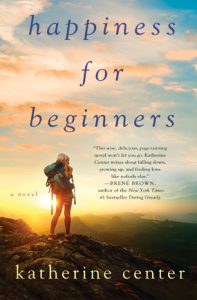 Describe the process of publishing, from final draft to final product, including your publishing team and all your cheerleaders, and all the promotional work you do yourself.
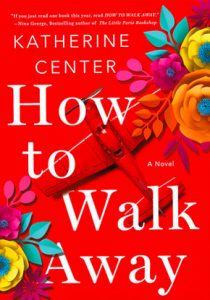
That’s a big question! Honestly, it’s different for every book. For How to Walk Away, my publishing house worked very hard to get the word out. They printed a gorgeous tri-fold brochure and a first chapter sampler. They designed a phenomenal cover that was so eye-catching and totally captured the book’s vibe. Then they printed up Advance Reader Copies (ARCs), which are like a paperback version of the final book, to send to reviewers and book bloggers and Instagrammers. With How to Walk Away, I was very lucky to get some beautiful blurbs for the ARC from many bestselling authors, including Emily Giffin, Nina George, Elinor Lipman, Karen White, Graeme Simsion, Jill Santopolo, Brené Brown, and Jenny Lawson. In the months leading up to pub date, my publicist and marketing team at St. Martin’s Press (The most amazing, fun, hardworking people!! Love them!!) sent out advance copies and worked to get the book out there as much as possible! My part of it has been to say YES to everything! I visit book clubs, chat with readers on Instagram, post on Facebook, answer Q&As, do podcasts, write guest posts. It’s very busy around book launch time—we call it “book season”—but I just go and go, because I want to do everything I possibly can to help my books take flight and find the readers who will love them.
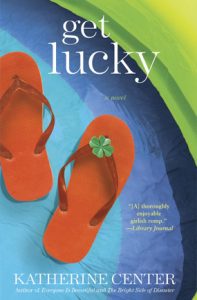 I can imagine that you’re a powerful and inspirational speaker; I’ve enjoyed following you online on your book tour for How to Walk Away. Who arranges your speaking engagements, where do you speak, and what specifically are your speaking topics?
I love to speak! I’m a talker from a long line of talkers, and going up on stage is one of my favorite parts of my job. Sometimes I set up the details of speaking events myself, and sometimes it’s a speaking agent, depending on the kind of event it is! When folks email me, I route them to the right person. I usually talk about some aspect of stories—how they work, why they matter, how they make us better at life. I’ve also spoken about why telling great stories helps businesses, how failure is good for you, and how to learn to look for the good stuff in life. I gave a TEDx Talk this spring about how stories teach us empathy—and why we need to encourage boys to read stories about girls.
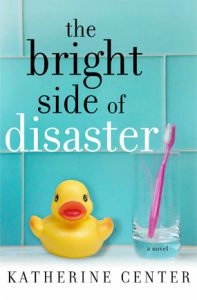 How does your life influence your writing, and vice versa, and what do you love most about your creativity?
Creativity is joy for me. I am always happy when I’m making things. And I love to make lots of different things. I love stories and writing, but I’m also very visual. I almost went to art school, and I love making collages, doing hand-lettering, doing embroidery, and painting. I did black and white darkroom photography while I was in grad school for creative writing. In college, I made art books—using art papers and sewing my own bindings. Leave me alone for any amount of time, and I’ll start making things. As for how my life influences my writing and vice-versa, I’d say that both my books and my life exist as a kind of search for joy. Not short-term thrills, but the slow deepening pleasure that comes with understanding and wisdom. My characters are always struggling to learn the same things that I am struggling to learn—what really matters in life and how to savor every disappearing minute.
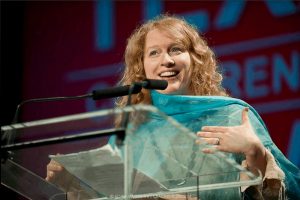 Connect with Katherine:
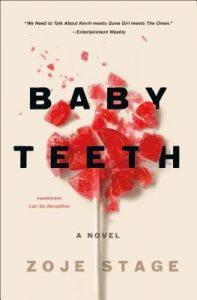 Suzette is convinced that her 7-year-old daughter Hannah is trying to kill her. The child is non-verbal, talking only through an invisible friend, the last “witch” burned in France, a piece of trivia she researched online. Alex, her husband—Hannah’s father, struggles to believe that anything beyond selective mutism is wrong with his beloved daughter, who adores him as much as she abhors her mother. An incident forces him to confront the truth, and they must take drastic measures to save their daughter from herself.
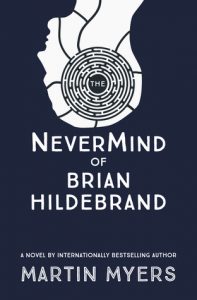 Brian Hildebrand becomes conscious a few days after a bizarre car accident involving him and his car after he stepped out of it. However, this conscious state does not equate to him awaking from a coma. Though psychic, his mother cannot reach him, but her mother’s intuition tells her that he’s in there, aware and listening. An unreliable narrator, he enlightens the reader upon his favorite caregiver, a mysterious stranger, ghosts, psychic connections, and the various new and unorthodox treatments to unlock him.
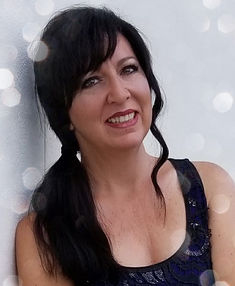 First, let me say thank you for having me, Lael! I love visiting with reader friends and new readers who may not know me yet!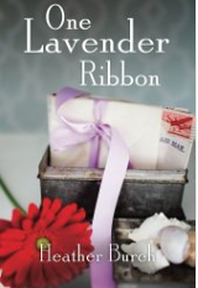

 What do you love most about your creativity, and how does it play into teaching the craft of writing?
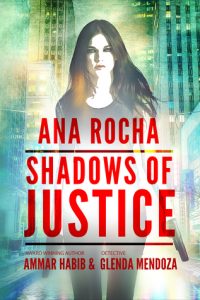 Ana believes the only way to move past her sister’s murder is to find her real killer, the powerful figure behind the cartel’s low-level felons who went to prison for it. Feeling invincible, she joins the police force to clean up the streets, with the secret agenda of tracking down the mysterious murderer. In this endeavor, she misleads her family and oversteps her rookie authority with her new partner. Everyone has their own way of working through grief—Ana’s is exceptionally brutal and insular.
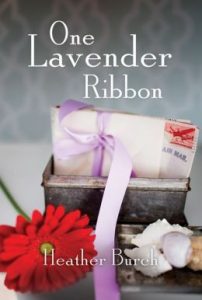 Adrienne leaves an abusive relationship and divorce in Chicago and buys a fixer-upper in Florida, where she starts her new life of independence on the Gulf. A box of eloquently written letters from a WWII soldier in her attic sets Adrienne on a journey to friendship, potential romance, and matchmaking. She exposes decades-old secrets, changing lives and mending relationships while building strong bonds with her new “family.”














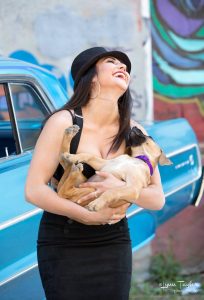


 99.7 The Point’s Red Fashion Show, in partnership with The Americ
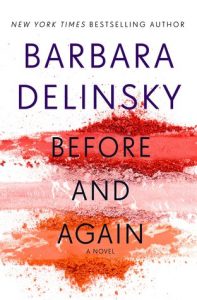 Before—she was Mackenzie Cooper, who had a loving husband and a beautiful daughter; After—she is Maggie Reid, a single woman with a secret past who lives with two cats and a dog and sells confidence through makeup artistry at her job in a resort spa. She can only move forward, away from her family, away from her “crime,” away from her former life…until her ex-husband arrives to manage the resort his business group just purchased, HER resort. At the same time, her friend and co-worker learns that her son hacked into his high school, their spa, and a prominent journalist’s computers, and her friend is terrified that her secret past—a powerful and dangerous man—finds her.
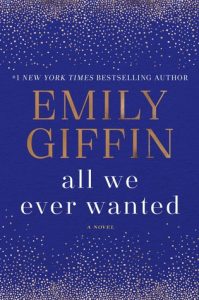 Lyla Volpe doesn’t expect her life to change after her crush takes a drunken, semi-naked photo of her at a party, because she doesn’t want to do anything about it. Tom, her working-class, single father, astonished by her complacency, cannot let it go. The boy’s mother, Nina, is sick over the incident and also cannot let it go, though her wealthy husband attempts to cover it up. The story whips back and forth on who exactly the culprit may be, but eventually the truth comes out, and Nina finally releases her insidious secret in order to save herself, her son, and his victim. The ending wrapped up quickly in a summarized chapter, disappointing readers who expected more about how the boy redeemed himself.