In the quiet of twilight, when everyone else was gone, I went out to Dad’s garage behind the house. He was working on our old Ford Ltd.
Again.
Sitting on a stool in from of his worktable, I posited, “Daddy?”
“Yes, baby?” He responded while putting parts together. He’d tried teaching me mechanics, but it didn’t take, leaving him so frustrated that he yelled at me to go back inside and learn how to cook. I can’t cook neither.
“Daddy, I need a lock on my door.” The silence expanded to fill my head with his rising anger.
“What the hell do you need a lock for? You’re not locking me and your mother out of that room. We pay the rent here. Whatever you’re hiding we’ll find out anyways.” Holding the part, he dropped onto the creeper and rolled under the car.
“Daddy, I’m tired of Sam coming into my room without knocking. He comes in when I’m dressing and won’t leave no matter how much I scream. I gotta grab my clothes and go past him to dress in the bathroom.”
The creeper flew out and Dad sat up, looking at me with his crazy eyes that scared me, but I held my ground. “Are you serious?”
I nodded.
He stood up, wiped his hands on a red rag, and paced the room, shouting, “That little sonuvabitch! That little bastard! I didn’t raise no son of mine to be a pervert. I didn’t raise him to be peeping at his sister.” Daddy stopped, looked me straight in the eye, and asked, “He never touched you, has he?”
“God, no! Ain’t it enough that he’s looking at me? That he’s coming in my room without permission?” I hugged myself and shivered, having not thought of that possibility.
“Alright, baby, I gotcha,” he reassured me as he looked for a lock in his tool box. After picking up his drill, he left the garage, me following him inside and down to my room. A simple latch lock went onto my door in a few minutes. Daddy kissed my head and returned to his garage.
That evening, I was reading in our downstairs family room when my brother got home from his after school job. Daddy was waiting for him. Soon as the door opened, he launched into him, reamed him out clean. He didn’t even show up for dinner.
Halfway through dressing the next morning, Sam’s voice boomed through my door, “You awake in there, Serena?” A little chuckle turned into a BAM as he hit the door that wouldn’t open. I stood quietly in front of my closet, one leg in my pants, as he pounded the door and hollered to be let in.
My journal is filled with possibilities of what coulda happened without that little lock.

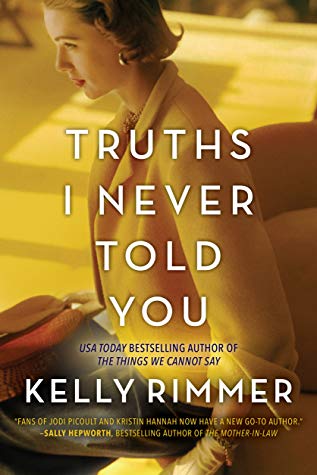

 In Brazil, Nazi fugitive Klaus Holland, aka Matheus Esperanca, raises his son by a prostitute with a Jewish kapo from Udenspul, the concentration camp he commanded. The son, Deus, considers the kapo his mother, and after her death, takes mysterious photos from her to a professor in his US university to research his ancestry, where he learns the true identity of his father and the extent of his crimes. Olokita brilliantly uses the concept of god as a measurement of morality, or rather lack of humanity, as Klaus plays God in determining who dies, though his own religious beliefs remain deliciously ambiguous. The character development is so well done that dear reader will be researching names. Although written in third person for everyone else, Klaus is in first person, bringing the reader up close and personal to a man with his own version of right and wrong based on his complete lack of empathy, exploring the idea of how powerful he believes himself. The ending revelation is quite coincidental and is evidenced only by Klaus’ perception, so it’s not clear why it’s readily believed by Deus and his new love Heidi. It’s anti-climactic after the delightful irony of Klaus’ downfall. With so many rumors, legends, and news items, inspiring a plethora of literature, on the Holocaust, this unique story of a fugitive hiding out in South America is a definite must-read. It’s themes rove beyond the simple good vs. evil and the idea that one can distinguish such traits in anyone, with characters revealing the dangers within themselves. I received a digital copy of this fantastic novel from the author for an honest review.
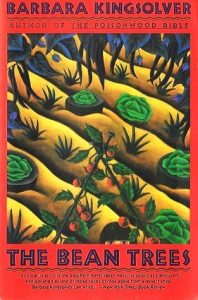 Marietta left Kentucky after high school, changed her name to Taylor, and become a mother through an unexpected incident, ending up in Tucson with a single mother roommate and a job as a tire mechanic for a woman who rescues undocumented immigrants. Selectively mute from obvious chronic abuse, her newly acquired daughter Turtle learns to trust Taylor, who learns to trust in her new friendships as she seeks a way to keep Turtle legally and build their life in Tucson.
 I won Seven Days of Us through Goodreads and devoured it, a story full of complicated family dynamics imploding from mandatory quarantine due to a daughter’s work in treating an epidemic—my review
 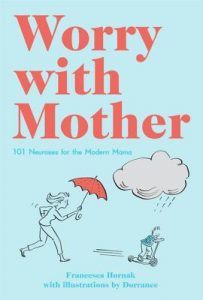 I try to write every weekday morning between 9:15 and 12:15, which is the window when both my children are in nursery. I’m actually glad it’s so regimented, as it enforces a kind of ‘exam conditions’ pressure, which I find easier than if I had all day at my disposal. I could write at home, but I generally go to a café or library, as I like to work surrounded by strangers, and I always get more done in a place where I’m not connected to the Wi-Fi. I usually begin by having a really elaborate breakfast over my laptop, which I definitely wouldn’t recommend as a writing strategy, but I’ve now come to believe that I physically can’t write without a particular kind of coffee/juice/toast/peanut butter etc. Other than that I’m not too particular; I just always avert my eyes from the Wi-Fi password and usually wear earplugs—unless I’m eavesdropping on an especially interesting conversation. Inspiration is a mix of internal and external. It might be something I’ve experienced, that I want to relive through a character., or it might be a news story, or a chance conversation, that sparks an idea.
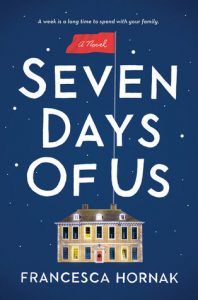 The final product wasn’t hugely different to the final draft, and luckily my editors (I edited UK and US editions simultaneously) agreed on everything. There were two scenes in my draft that we all felt were implausible or melodramatic, so I cut one and changed the other. Jesse’s character (the illegitimate son who gatecrashes his birth father’s quarantine) was also given a little more backstory and depth. The rest of the editing was mostly me finessing the wording. I’d rushed submitting to publishers, as my agent and I were both pregnant and wanted to get the manuscript out before we gave birth. So I wanted to perfect nearly everything—towards the end my US editor did suggest I ‘cease and desist’….
 Connect with Francesca:
 Rae’s a screwup—according to Rae. To her family and friends, she spreads herself too thin and holds unrealistic expectations for herself. When you don’t even fit into your own family, it’s hard to feel at home anywhere. Plus, peopling is hard; animals are easier. Then a woman jerks her bike in front of Rae’s car—the thump and bump of driving over a human drives Rae to feel responsible for her, though eyewitnesses say she couldn’t have avoided hitting her. The mysteriously damaged woman and a houseful of pre-weaned kittens overwhelms Rae. The romantic interest introduces her to his new-agey gran, who explains Rae to herself, guiding her onto a healthier path. This is a wonderful story of the complexities of life, the importance of connecting with others, and how everyone must find their own way, not to mention that communication is key. King’s writing draws you in and wraps you in a big, fluffy blanket of ambiguities, yet dear reader leaves her work somehow better equipped to traverse these gray areas. King’s talent makes the words disappear as the story flows through the reader, while letting us know that often others see us more clearly than we can see ourselves. Highly recommended!
 I met Julie in Bloom, the readers group for Tall Poppy authors. She exudes positivity and encourages everyone to be their best selves, enlightening us with her expertise and wisdom. Listen to her TEDx talk:

 Tell me about your support system and how you came to be a Tall Poppy.
 It’s wonderful how you use your author platform as a medium to serve others through education, disseminating information and raising awareness for social issues. Explain the intertwining of your life, advocacy, and writing.
 My work has tackled tricky issues such as domestic violence, sexual assault, mental illness, suicide, human trafficking, etc. I have been inspired by the many positive reader responses I have received through the years, the conversations my stories have sparked in book club meetings, and the impact these fictional tales have had on the lives of many.
  I am passionate about encouraging others to live the life they were born to live, to establish healthy relationships, and to know the difference between “love” and abuse. If my stories help people heal, find freedom, or love one another, then I am grateful to play a small part of that process.

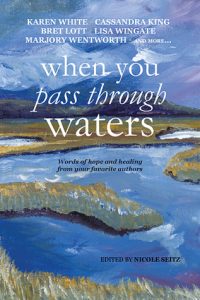
 Life seems to be careening out of control for Sanna Lund, whose sole desire is to live quietly in her ancestral home, creating apple ciders in her unique way of tasting colors. An accident temporarily incapacitates her father Einars, the new hired hand Isaac stirs new feelings she’s not planned on entertaining—his son Sebastion distracts her as well, and her brother Anders, who moved away, urges her to sell the struggling family business. Secrets crack her long-held paradigms and Sanna comes to realize certain truths cannot be ignored, and she opens herself up to more than she imagined was possible, including a mother she’d tried to cut out of her heart.
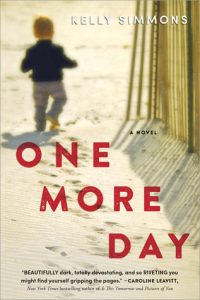 Carrie Morgan turns back to her car after arguing with a parking attendant and finds her toddler Ben gone. Her story seems off to police, family, and friends. Over a year later, she finds him, in his crib, though he’s not aged a year. And he disappears again—from his crib the same night. Now husband John is in on the madness, which he spins into a possible, though improbable, story. An unlikely witness keeps Carrie’s secret, yet it eventually comes out. Carrie’s actions invoke suspicion and mental illness through ambiguous and incredible circumstances and revelations, and she reels from a long-held confession from her mother. Solving the crime may or may not absolve Carrie or prove her sane.