Prompt: impulse buy that starts an intergalactic war

Aftermath of Iggy

I hate this planet. I want to go home. But home is gone. I was lucky to be drawn in the SOA lottery. I forget what SOA stands for, but we called it Save Your Ass lotto, cuz the shuttle took us to Ninger-14A when Imperiaz aimed their super nukes at us. They weren’t kidding with those babies. Those damn things ripped righ through our planet and took out a good portion of Fierasubuta, bringing them and their 1,400 ally planets into the Inter-Galactic War.

We call it Iggy. Apparently, we started it. Commandant Susifruze was having a really bad day. By accident, she bumped the arm of the ShoCo shuttle’s robot too hard against the Triad’s mounting sensor when repairing it. This caused a ricochet, setting off a small missile. It wasn’t aimed, so it hit the nearby Floating Flo’s space diner, taking out 14 Hellyions’ deep space scooters. They had to be rescued. And they were pissed. They blamed all three planets of the Triad. The rescue ship destroyed the Triad Station. Waymarrons had rescued the Hellyions, so that was five planets involved originally. We know how this escalated. We watched planet after planet explode. Now we’re here, scrunched like robot butlers awaiting assignment.

Commandant Susifruze apologized repeatedly, but no one listened. It had already been set in motion. I’ve seen her on dozens of talk shows, crying. A commandant, crying, over a superstition. She always chewed Tangerine Scream gum before every mission. I’m here on Tullivaara Planet Morning to tell Commandant Susifruze what an honor it was to meet her the morning of her last mission at Soar’n’Soar convenience store. And I’m really, really sorry I chose that day to snag the last Tangerine Scream. I never buy it. I didn’t know.

Are those antique manacles?

Where are you taking me?

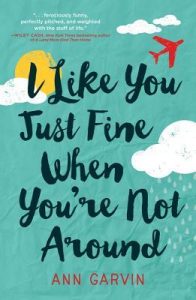
I Like You Just Fine When You’re Not Around (2016 Gallery Books) by Ann Garvin

Tig Monahan just put her mother into a home, lost a boyfriend to Hawaii, and gained a newborn from a runaway sister. After leaving her job for the boyfriend who leaves her, Tig falls into the position of radio psychology host, where she blossoms, but also learns a harsh lesson about the limitations of radio. She must find herself to put her life back in order, and let go of trying to control everything and everyone. When she finally opens up, her family relations, romance, and friendships fuel her rather than burden her.

I love how Garvin sucks the reader into the chaos that is Tig’s life, investing the reader in Tig’s welfare as she comes to realize that she doesn’t have to do everything and she doesn’t have to please everyone. As Tig learns to accept others as they are, as well as herself, things naturally settle down.

Readers who like to see stubborn characters grow and evolve into better versions of themselves will love this book. Garvin brings the reader to an unexpected and promising ending.

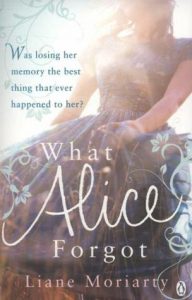
What Alice Forget (2010 PanMacMillan Australia) by Liane Moriarty

Alice wakes from a daydream of the beach to a painful head in an unfamiliar gym, with a colleague peering down at her. She fell off her bike in spin class and misplaced the last decade in her brain. Current events are not so current, and Alice learns some astonishing facts about the world and popular culture. Over the following week, she discovers some harsh truths about that decade from family, friends, and neighbors. As she slowly gains insight into her own life and troubled relations with her loved ones, the soul searching begins. When the memories hit all at once, Alice is stunned and reasserts herself as she merges her 29-year-old self with her 39-year old self.

Now this is how you open a novel! Moriarty begins the story with Alice floating in a pool, listening to a man playing Marco Polo with kids, knowing that the someone next to her with toenails painted different colors like her own is a person she loves. As the dreamlike sequence morphs into a painfully realistic nightmare of Alice’s confusion at finding herself in a gym, where she would never expect to be, the reader is pulled into the confusion and learns the truths as Alice learns them. Brilliant! Along with the facts presented to the memory-challenged Alice, secrets are unveiled, strengthening relationships and urging everyone forward toward positive opportunities.

Readers who wish to be invested deeply in the main character’s life will love this book. If you are fond of secrets, humorous references to current (and not so current) events, and gut-wrenching situations, this book is for you. Moriarty will have you laughing and crying out loud!

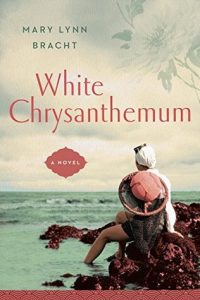
White Chrysanthemums (pub date January 30, 2018 G.P. Putnam’s Sons) by Mary Lynn Bracht

16-year-old Hana dives with her mother as Jeju’s female sea divers “haenyeo” during the Japanese occupation of Korea. One day, she is taken by a Japanese soldier, sacrificing herself to protect her little sister, and ends up as a “comfort woman” for Japanese soldiers in Manchuria. Paralleling her story is her younger sister’s story as a grandma, recounting her life after Hana’s kidnapping, always expecting a reunion with her sister one day.

Bracht’s matter of fact description of the treatment of Korean girls comes across as the brutality it had to be, and it’s a hard, but necessary, read. I had heard of comfort women, but she brings the concept down to an individual level for better understanding. History is woven into the story seamlessly, and characters remain true to themselves while becoming part of that history. Hana is left stronger in a situation that prevents her from returning home, but Bracht gives her a bittersweet ending without romanticizing it (maybe a little bit).

Readers who appreciate historical fiction that paints a less pretty and more realistic portrait of atrocities perpetrated on the most vulnerable of society will like this story that brings it down to a personal level for clarity and emotional response. If you love complex characters in impossible situations, read this story.

I was fortunate to receive this ARC through a Goodreads giveaway.

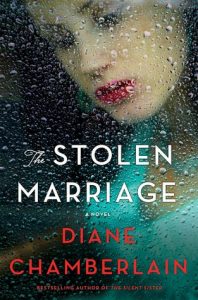
The Stolen Marriage (2017 St. Martin’s Press) by Diane Chamberlain

Tess DeMello abruptly leaves Baltimore’s LIttle Italy and expectations of wedded bliss with a man she grew to love throughout her childhood to marry a man from a small southern town, cutting off the future of his expected marriage to a local girl. She has trapped herself in a loveless marriage, alienated by her husband’s family, their friends, and the townfolk. She slowly learns about the enigmatic man she married as she attempts to find her way back to herself against all obstacles, including him. A polio epidemic changes the town, all hearts and minds focused on treating its victims, and Tess DeMello Kraft becomes a highly respected nurse.

Diane Chamberlain has upped the ante with her historical fiction, weaving her imaginative tale throughout a real event in Hickory, NC, where a polio hospital was built and staffed over two days. Tess becomes a nurse against her wealthy husband’s wishes, and ends up working in this hospital with a doctor who is her childhood true love. I love when an author sets fictional characters into fascinating historical events, so that history comes alive, and I remember details and dates, which often elude me. Chamberlain throws the reader through loop-de-loops and draws everything credibly toward a credible, heartening end.

Readers who love historical fiction based on real events, not necessarily historical figures, will appreciate this novel, with its complicated race relations and laws of the times, and its complex characters true to themselves and to the time. If you fall in love with timeless, relatable characters, read Diane Chamberlain.

Brian Klems – Writer, Blogger, Humorist, Dad

In September, I attended the 34th Western Reserve Writers Conference and Workshop, driving up from NC, eager to hear the keynote speaker, Brian Klems, online editor of Writer’s Digest. The conference was fantastic, and starting in 2016, the Cuyahoga Library sponsors it to support writers. The South Euclid-Lyndhurst branch hosting the conference has a Writer Center that makes me want to live in Cleveland.

In between sessions, I chanced upon Brian and we chatted for a few minutes. He’s a super nice guy, of course, being from the Midwest, like myself. We Midwesterners are so friendly. Brian agreed to a written interview for my blog, and I promised to share links to his work and his book. He’s a pretty funny guy and in his keynote speech, he shared a few stories from his parenting book. If you’re a parent, or even if you’re not and love kids, I recommend it.

Many writers have an unusual and varied employment history. Mine includes framing / remodeling, llama husbandry, job coaching, home health care, and substitute teaching. I’ve also been a barista, a wine steward, and a personal assistant. Brian’s career climb is more logical, with surprising summers.

“During sophomore year of high school, I landed my first job bagging groceries at a local supermarket. One close friend also worked there, so we’d align our shifts to get off at the same time and hang out together after. I spent most of that money at a local Perkins and on CDs. Next, I was selected to take part in the inaugural ArtWorks Apprentice program for young writers in Cincinnati. I not only learned how to refine my writing, but also a bit of photography and film development (which I completely forget now, so thank god for iPhones and Walgreens). During college summers and breaks, I manned the desk at the Hamilton County Courthouse, retrieving daily case files for the magistrates and judges—it was divorce court, so very few were in a good mood (but the judges couldn’t have been nicer to me).

As for my professional writing career, I worked in NYC for a few months in the summer of 2000 for two sporting and health fitness business magazines. After that, I landed a job in Chicago for plumbing trade magazines. I had several editors there who took me under their wings and helped me grow as not just a writer, but as an editor. I also stepped in to oversee their websites, and it was my first real dip into the professional online world. After two years there, I itched to move back to my hometown, and applied for a job at Writer’s Digest—which I landed, and it became my professional home for the next 14 years.”

Every writer must find his / her own style to be productive. Sharing the process inspires other writers and satisfies reader curiosity. Brian offers a look into his creative style and gives some good advice.

“I like to write in chunks as opposed to writing every day. I’m constantly brainstorming and writing down my ideas on notepads and napkins and scrap paper and anything I can find when an idea hits. Then I collect them into Google Drive docs. When I feel inspired and motivated, I sit down and work through the ideas, sorting and writing scenes and essays and whatever I’m ready to write.

As for editing, I find this to be a critical part of the process. Somehow, everything I write seems to be awesome and terrible at the same time. I believe that’s true for many writers. When writing humor, I self-edit as I write. With jokes, every word matters and I have problems leaving a line until it’s perfect. When writing fiction, I attempt to power through until I’m finished and then go back and edit (though I totally get slowed down by my humor writing process, because sometimes I want to get the sentence right the first time). One of the keys for me is, once I have my “first final draft,” I have an editor give it a look. Working at Writer’s Digest, I’m lucky to know several professional editors. While I edit manuscripts professionally too, I want someone with a fresh set of thoughtful eyes who knows the industry and is a professional to let me know what works, what doesn’t, and anything else. Writing and editing is a tough process, but I love it.”

Creatives, whatever their medium, see inspiration everywhere, and often within. We must keep our wells filled in order to continue creating. On this, Brian not only tells what inspires him, but in his words is a subtle reminder to be supportive of other creatives, which also helps fill our wells.

“Reading amazing books by others always inspires me. The creativeness and thoughtfulness that goes into these epic tomes that entertain me or teach me something (or both) make me want to do the same for others. To know that I could write something that makes someone laugh or think, or makes them smile just a little bit, makes me feel good, really motivates me.

Also, my family feeds my writing life. Since I write a lot of creative nonfiction about fatherhood, they feed my stories with life lessons and humor that I couldn’t even make up. It works out perfectly for me, as I’m built really for two things: to be a writer and be a dad. Knowing I can merge both to do something that entertains others is just icing on the cake.

I don’t keep a journal, just a running Google Doc of ideas, jokes and lines that I save and, if I’m lucky, turn into something of value one day.

As for who sees my work before it’s finished, it usually goes through two sets of eyes—an editor and my wife. I send it through an editor for the reason mentioned earlier, and I send it through my wife because she knows me better than anyone and can be brutally honest. Plus, I don’t want to accidentally write something about our family that would bother her (that rarely happens, but I’m smart enough to use her as a buffer to make sure I never publish something that I shouldn’t).”
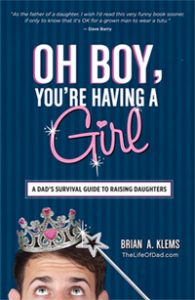
When Brian became a father, his life changed dramatically, and he  desired to share his experience in his humorous book “Oh Boy, You’re Having a Girl: A Dad’s Survival Guide to Raising Daughters” and parenting blog Parenting Blog.

“Like I said, I’m cut out to be a dad—I love everything about it. The hugs and cuddles. The coaching their sports. The reading on the couch before bedtime. The helping them with their school work. The bringing their lunchbox up to school when they forget it. The dirty diapers (OK, so that I could have lived without, though thankfully, those we retired years ago). My wife and I make a great team and being a dad is the best job that I have.

The way that parenting changed my writing process is that I do so much more writing at night after the kids are in bed than I do during the day. I don’t want to miss time with them while they’re young and still like hanging out with me. I’m hopeful they’ll break the stereotypes and still want to (sometimes) spend time with me even in their teenage years, but I’m not banking on it. So spending as much time as I can with them now is what I do.”

Many writers have various interests that come out in different genres and are creative in multiple ways, resulting in blogs, vlogs, non-fiction, fiction, etc. Beyond his editing position and humorous parenting work, Brian has other projects in the works. He shares his wisdom in the truism of gratitude.

“Aside from parenting essays and my book, I’m working on a Young Adult novel right now. It’s the biggest challenge facing me, as novel writing is so eye-opening. In fiction you have endless choices, and I like to debate each one to find the best scenarios I can for my characters. It’s moving slowly, as my fiction writing always does, but I’m making progress.

As far as snail mail or poetry, I don’t write much of either. I wrote poems to my wife when we were still young lovebirds in college, but now I win her affection by cleaning the dishes and keeping the grass cut lower than our neighbors.

And one of the best parts of being a writer is all the fan mail I get, especially from parents who have read my blog or my book. I’ve also received hundreds of kind letters from folks who have read my blog on writing or have seen me speak at an event. Interacting in person with writers is one of my favorite non-writing things that I do. It gives me an opportunity to share what I’ve learned and help other writers navigate and find success in this difficult business. After all, the writing community is the best and most supportive community around. And for that, I am forever grateful to be a part of it.”

He’s a funny guy who loves his kids tremendously and can find the humor in their everday actions. Buy his humorous parenting book “Oh Boy, You’re Having a Girl: A Dad’s Survival Guide to Raising Daughters” and read his parenting blog The Life of Dad.

Find valuable information on his professional website Brian Klems and follow him on Twitter @BrianKlems.

Thank you, Brian Klems, for favoring a new blogger with an industry professional interview. I appreciate your online advice, humor, and especially your support of other writers.
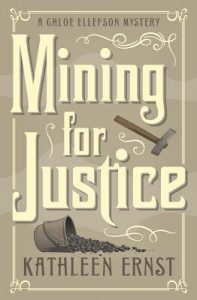
Mining for Justice (2017 Midnight Ink) by Kathleen Ernst

Chloe finds lots of trouble when she visits her fellow curator Claudia in Mineral Springs, where the historical site that her friend works for is at risk of closing due to monies being directed toward Chloe’s worksite Old World Wisconsin. While Chloe researches the mystery of the ancient skeleton found in another friend’s basement, she nearly succumbs to contemporary murderers. The house with the potential murder victim was built by the Pascoe family, whom we follow in a parallel tale on their immigration from Cornwall, England to mineral mining pioneering in Wisconsin.

I’m delighted to discover that this book is part of a series. Unfortunately, I’ve just read the latest, which is actually fine, because it’s self-contained. The author is an excellent storyteller. She takes the reader through the past and present tales, linking them through artifacts, ancestry, and setting. I’m frustrated that clues for Chloe’s epiphanies are not always revealed to the reader, but secrets are released in a timely manner. My questions as I read were all answered by the end, not necessarily where I would have placed them, but satisfying, nonetheless. The history woven throughout made me want to visit the historical sites. She even included photographs and a glossary of Cornish terms.

Readers who love a good mystery and / or well-wrought historical fiction will like this series. I received an ARC through NetGalley.com and the launch date is October 8.

Brian Barr — science fiction / horror writer & punk rock musician

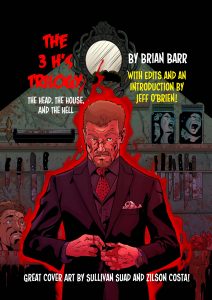
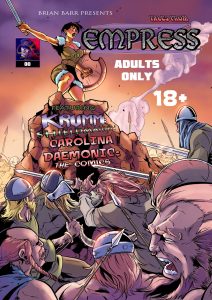
Science fiction and horror writer Brian Barr was my first writer Facebook friend. He sent me a friend request after reading my story in Storyteller, an online literary magazine that has accepted much of his work, and he invited me to follow Dark Chapter Press, who held contests that I entered. I didn’t win any of the contests, but I was welcomed into a supportive group of creatives, several of whom are also now Facebook friends. Brian’s friendliness and positivity launched me fully into an online writerly mindset, and now I’m in several writers’ groups on multiple social media. He inspires fellow writers online by being himself, with his personality shining forth gloriously. He also happens to be a brilliant storyteller. Check out the links, like this one The Head: Book 1 of the 3 H’s Trilogy, to his work and collaborative projects, such as Empress with Chuck Amadori, throughout this blog! Here’s his Amazon Author Page.

All writers must find a sustainable writing process of their own, learning from others for enlightenment and guidance. Brian Barr’s is straightforward, “I type nearly everything, though I may jot notes from time to time as ideas come to me throughout the day. I basically sit down and type in documents, then revise when I’m done and a little as I go along. I’m pretty free-flowing when it comes to writing, and though I have ideas that are planned and notes I reserve for my stories, I’m not a huge outliner or anything like that. So my writing approach is not rigid and I mostly like to have fun and enjoy what I’m writing. If my heart isn’t in it, then I let it go. I like to get invested in what I’m creating.”

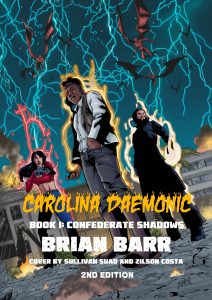
He’s open in his social media use, mixing professional and personal on his Facebook account. He has professional sites for readers: www.facebook.com/brianbarrbooksdotcom and www.brianbarrbooks.com. He says, “I use social media to interact with other writers and readers. A few I know IRl. There are my local friends and a few I’ve grown up with. Most of the people I’ve met on social media are either creators or supporters of books and comics that I haven’t met in person. I also use social media to promote my work and let people know about my books. It’s a way that I can keep tabs on my favorite authors and buy their works as well. That’s the main thing I use it for. There are a lot of Facebook groups that have been supportive from Colors in Darkness to Grimdark Readers and Writers. The two groups I mentioned are my favorite groups at the moment. There is also Queer Sci Fi, which has done a lot to promote Carolina Daemonic [Brian’s dystopian alternative timeline fiction published by J. Ellington Ashton), and various horror groups that have allowed me to share my horror work.”

Independent and ambitious, Brian explains his working style, “I’ve done a few writing workshops here and there, but they’re not my thing. Whenever I’m at one, I feel I could be at home writing, or that it’s time I could use to do other things, like walking, going somewhere, visiting friends, etc. So writing is a very solitary and personal, intimate experience for me. I feel like people at writer’s workshops can be helpful, but it can also become a way that other people tell you how to write to the point that you lose your own voice, so on a personal level, it’s been a balancing act for me to avoid those groups and do my own thing. The last time I joined a writer’s group, I acted on someone else’s advice, and I’ve been learning to respect people’s opinions, but do what’s right for me. I always felt restricted in groups when it comes to my creativity, like it would make me waste time on unneeded rewrites to please other people instead of pleasing myself and whoever would like the stories as I genuinely write them, so I’m solitary when it comes to writing stories.”

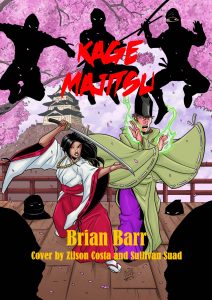
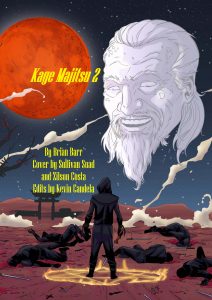
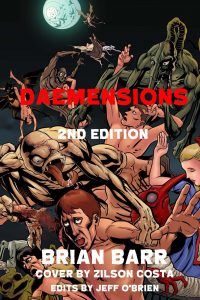
When asked his preference for self-publishing, he states, “I publish with presses along with self-publishing, so I don’t do self-publishing exclusively. I have books published by presses. With self-publishing, I can hire my own editors and cover artists, then release work when I choose. So I like the independence more. I guess that’s also why I’m not a big proponent of writing groups and stuff like that. I like to see people create on their own and put their own experiences and individuality into their own work. I’m self publishing the next books though. They were accepted for publishing, but they wanted me to use in-house artists. I have a certain way I want all my covers to look now, and they use stock photos, so I pulled them. My friends I usually commission are doing the covers and editing. Sullivan Suad and Zilson Costa are my favorite artists. For the first edition of Carolina Daemonic, a few people told me they saw the photo in other places. I want to have original art for all my books. I appreciate the publisher for accepting my work, but as I’ve been self publishing, I found I like it more. I get all the royalties and like the people I work with. It’s just been better for me.”

A highly creative individual, Brian is also a musician in a band called Pig Head Dog. Punk fans can listen to samples and follow the band on www.reverbnation.com/pigheaddog2 and www.facebook.com/pigheaddog. When asked about a connection between his band and writing, he tells me, “Not at this time. Music for now is a collaboration between friends, and I’m thankful to my friends for bringing me into my band. It’s a fun experience for all of us. I’ve written my own songs before in other projects, and I do come up with basslines for songs in this current band, but I’m not the singer or songwriter for the band I’m currently in. Bubbs Ruebella is the singer and songwriter of Pig Head Dog, and the band is his creation. I’m the newest member, and also pretty new to bass playing, which is what I do in the band. We practice on Thursday nights, or Saturdays. We’ll usually meet for 2-3 hours and work on either a set list or, most often, the newer songs we need to get down. I think we’re all fast learners and good collaborators, so after we get a song down, it’s drilled in our memory. Other than our weekly schedule, we do shows from time to time. I’ve only been playing bass for less than a year, so it’s all pretty new to me.”

With optimism, Brian says he’s doing, “pretty good. I’ve just been focused on my creative projects and freelance writing, recharging for the fall, and getting rested. I’ve been reading a lot, since I wrote so much this summer, though I’m still working on stories as well. For fun, he likes to, “write, make music, and travel. I like to watch movies, read books, and I like anything artistic or creative. So I like to look at art, interact with artists, things of that nature. I also like learning, and I study Japanese. I’ve always had a strong interest in Japanese culture, since I grew up in Hawaii, and there were a lot of Asian influences there.”

I haven’t met Brian Barr in person, but online, he’s a super nice guy, positive, and always supportive of other writers and artists. Follow him on his Facebook page www.facebook.com/brianbarrbooksdotcom and website www.brianbarrbooks.com. Feel free to ask him questions about his work, any upcoming projects, or his professional life. His illustrators, Sullivan Suad and Zilson Costa, are also open for commission, so please do inquire if you need cover art. Even if you’re not hooked on his genres, I highly recommend reading Brian Barr’s work, as it transcends those genres due to his storytelling talent.

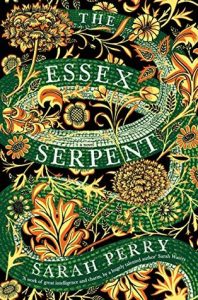
The Essex Serpent (2017 Custom House) by Sarah Perry

Victorian Brit Cora Seaborne tries to hide her relief at her wealthy tyrant husband’s death. She engages fully with the world now without fear, traveling to a small town on the coast in search of the mythological Essex serpent, who becomes a full-fledged, never seen character in its own right. She and the married parson of the town find themselves in a love-hate relationship, fueled by their intellect, curious natures, and singular predicaments. Side characters portray medicinal and surgical protocols and revelations of the time period interwoven through the story.

The characters are delightfully complex, with evolving relationships and growth spurts that are relatable to readers. I loved how the author kept the dreaded serpent always in the background of the story, factoring it into many of the various story lines, while feeding the idealogical argument about it between the main character and the parson. She did a brilliant job of weaving the history of surgery throughout the story as well, which fascinated me. There was also a bit of politics of the times regarding the treatment of poor Londoners based on a morality spectrum.

Readers who love historical fiction that counters advancements with their resistance from the old and established will like this story. Readers who like complicated love stories that aren’t wrapped up neatly in the end, but offer opportunity for reader speculation, will also like this novel.

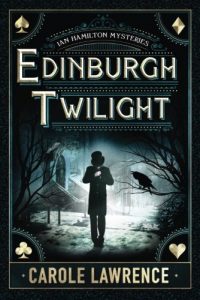
Edinburgh Twilight (2017 Thomas & Mercer) by Carol Lawrence

Detective Inspector Ian Hamilton seeks a serial killer in Edinburgh. DI Hamilton is a quick study of character, clever, and compassionate towards those considered “dregs of society.” A tragedy and unanswered questions spur him toward justice.

Lawrence carefully weaves backstory into the contemporary tale. I wish she had done the same with side characters, instead of introducing each one as they were needed to move the story forward, which makes those chapters feel cleaved from the main story even as they contribute information. All of her characters have distinctive traits, many of them delightfully quirky.

Readers who love mysteries, parallel storylines, complex family characters, and / or 19th century Scotland will like this book.

I appreciate receiving an advanced digital copy from Net Galley at netgalley.com.