TITLE
The Heart of Aleppo: A Story of the Syrian Civil War
AUTHOR
Ammar Habib
GENRE
Young Adult / Contemporary / Current Events
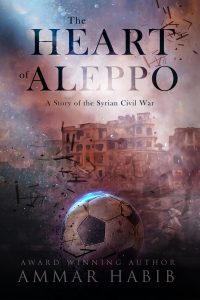 After standing for over 7,000 years, Aleppo’s ruin came overnight. Separated from his family during the night the rebels attacked the city, thirteen-year-old Zaid Kadir is lost in the middle of a war zone. Alongside his friends, he is forced to survive the dangers of a civil war he does not even fully understand. Zaid witnesses the destruction of the brutal Syrian Civil War as it grows more deadly by the day and rips his city apart. However, as he braves this destruction, as he desperately tries to survive this catastrophe, he discovers something. Zaid realizes that it is in the darkest hours when humanity’s spirit of hope burns brightest.
EXCERPT
Two days before Nabeel leaves for the last time, I find him standing at the kitchen counter with his friend, Zakariah. I don’t know his rank, but Zakariah serves directly under Nabeel in the army and only lives two miles down the road. The two of them always seem to be on leave at the same time.
Their voices are low, almost secretive, but I catch the look in Nabeel’s eye. Except back then, I didn’t recognize it.
“What are you guys talking about?”
Seeing me enter and hearing my voice, they both look my way before exchanging glances. That gleam in Nabeel’s eyes disappears.
I excitedly run up to the two of them. “Tell me!”
Nabeel looks back down at me as he stops leaning against the counter. Reaching down, he ruffles my hair. “You’re too young to know about that, Zaid.”
“Aww, what’s that about? I’m not part of the group now—”
My brother playfully flicks me on the forehead as he crouches down a little. “I’m sorry, buddy. Maybe next time.”
“You’re always saying that.”
Zakariah laughs as he comes closer to me. He puts his hand on my shoulder. “That’s just not fair, Nabeel. You’re a horrible brother for leaving Zaid out like that.”
I see a concerned expression momentarily wash over Nabeel’s face.
However, Zakariah glances up at Nabeel and shoots him a quick wink as he continues. “Why don’t I just tell you then?”
My eyes light up. “Really! You’re the best, Zakariah.”
Coming to his knees, he puts his arm around my shoulders and leans close, acting as if he is about to tell me the world’s biggest secret. “You see, Zaid, your brother and I were having a discussion about which one of us would win in a wrestling match. We all know that I’m stronger, but he just won’t admit it.” He sighs and shakes his head as he looks back at Nabeel. “But you agree with me, don’t you, Zaid?”
I don’t hesitate to respond. “No way!”
He moves his head back in surprise. “Huh?”
“Sure you’re pretty strong, but my brother would beat you!”
Zakariah is slow to reply, taken aback by the statement. “C’mon, Zaid. You do realize that I’m older than him—”
“Age has nothing to do with it, Zakariah! My brother was the school’s wrestling champion. He wouldn’t lose to you.” I whip my head to look back at Nabeel. “Right, big brother?”
Nabeel is slightly smiling now.
With a chuckle, Zakariah rises back to his feet. “Alright, alright. Well, I best be off, Nabeel. We can finish our little discussion next time.”
Nabeel shakes his hand. “Give my greetings to your folks.”
“I will.” Zakariah grabs my shoulder and gives it a squeeze. “See you, Zaid—no, sorry: Dr. Zaid.”
Did he really just call me that? How did he know?
Hearing Zakariah’s footsteps grow faint, I turn back to Nabeel. He opens the fridge door and rummages through it.
“You told him?” I ask.
Nabeel doesn’t look my way. “I tell everyone.”
I watch him pull out a pound of chicken meat rolled up in brown paper as he turns back to me.
“Aisha is visiting her parents tonight and Abbi and Ummi are having dinner with friends. So looks like it’ll just be you and me.” Nabeel shoots me a wink. “I’m going to make some shwarma for dinner. Just the way you like it: tomatoes, lettuce, onions, lots of chicken, and even more spices.” He starts setting the ingredients on the countertop. “I went by Sohail’s shop today. The mangoes he was selling were ripe, so I picked some up. We can have them for dessert. That is if we have room.”
He looks back at me with a smile, but it fades when he sees my expression.
“What’s wrong, Zaid?”
I glance at the ground before replying, “I don’t think I want to be a doctor anymore.”
“Why not?”
“…I don’t think I can.”
He takes a few steps towards me before crouching down to come to my eye level, urging me to continue.
“Ms. Farooq said I’m not smart enough.”
“She did?”
“I got the lowest score in the class on the last math test. She said I’m not cut out for it.”
“I didn’t realize Ms. Farooq could tell the future.”
I don’t respond.
“Did you tell Abbi or Ummi?”
I shake my head.
He takes a deep breath and glances down at my feet. His eyes look like he’s weighing something, wondering if he should say it or not. When he does speak, his voice is different. It’s no longer speaking to me as his younger brother but as his friend. “You know, Zaid, Zakariah was joking about what we were talking about.”
“Really?”
He nods before his gaze focuses back on me. “Not even a few weeks ago, my soldiers and I were in a bit of a… well, situation.”
“What happened?”
“We were in Homs. The people we were fighting—the rebels—had heavy control of some neighborhoods. We were trying to take them back. It was…”
A silence ensues as he searches for the word.
“Difficult.” Nabeel pauses. “Some soldiers were pinned. The army tried an airstrike to break the rebel lines. It was a heavy bombardment that leveled entire streets. The cost was high. But we couldn’t break their lines.”
I don’t interrupt him.
“Our intelligence said it was a lost cause. We were ordered to abandon the soldiers. They said we would lose more men than we would save. But even the army’s ‘intelligence’ doesn’t know everything.” He looks away. “Zakariah and I disobeyed our commanding officer. As did our men. Those soldiers that were pinned weren’t just men. They were my friends… my brothers. And I would never abandon them, even if it led to…”
For a moment, his eyes again display that same gleam, but it disappears as quickly as it came.
His gaze again meets mine. It’s firmer this time, stronger. “It doesn’t matter what people say, Zaid. It doesn’t matter what the facts say. All that matters is what you say. And, maybe more importantly, what you do.”
I hang on his words, unable to say anything.
“Why do you want to be a doctor, Zaid?”
“I’ve always wanted to.”
“But why?”
“Because… I don’t want to see people suffer. I… I want to be the one to help others. I want to save lives, make a difference and put others before myself. I want to make this world a better place. Just like the Imam always talks about.”
Nabeel smiles. “Never forget that. And never go back on your word. No matter what happens. Please never forget one thing, Zaid: I love you. No matter the circumstance—no matter if I’m so far from you that you may never see me again, know that I’m with you.” He presses his finger against my heart. “I believe in you, Zaid.”
REVIEWS
Goodreads: https://www.goodreads.com/book/show/40199729-the-heart-of-aleppo
PURCHASE
Amazon: https://www.amazon.com/Heart-Aleppo-Story-Syrian-Civil-ebook/dp/B07D7HQ53C
NOVEL PURPOSE
I, Ammar Habib, personally believe that the Syrian Civil War is one of this generation’s greatest tragedies. With the way it is proceeding, it’ll be remembered by future generations in the same manner that we remember the Rwandan genocide and the Bosnian War of the 1990s.
The motivation for writing this story was simple: I wished to bring more global attention to this crisis. Although the characters are fictitious, this novel accurately depicts the events that transpired in Aleppo during the summer of 2012. I hope that reading this will lead readers to have a greater understanding of the plight those in Syria face, as well as those in other war-torn regions. If this work helps garner more attention for those in Syria, then I will have considered this project a success.
In an over-politicized world, my wish is for this work to humanize those we call “refugees”. This book is not about the politics of the Syrian Civil War or any other conflict. Its aim is not to convince readers to support any faction or political party. Instead, this story is about the unbreakable spirit of humanity. It is about how humanity often shows its true strength during the darkest times
WRITING PLAYLIST
1. “Sadness and Sorrow”
https://www.youtube.com/watch?v=wEWF2xh5E8s&t=0s&list=LLBxVJMhFpqkREP81ev8SIwQ&index=34
2. “Sound of Hugh Glass”
https://www.youtube.com/watch?v=O1qIV3WXZFE&t=0s&list=LLBxVJMhFpqkREP81ev8SIwQ&index=31
3. “Despair”
https://www.youtube.com/watch?v=8O1RTYnzUuo&t=0s&list=LLBxVJMhFpqkREP81ev8SIwQ&index=32
4. “Man of the World”
https://www.youtube.com/watch?v=TkQLJ2KzsKA&t=0s&list=LLBxVJMhFpqkREP81ev8SIwQ&index=2
AUTHOR BIO
 Ammar Habib is a bestselling and award-winning author who was born in Lake Jackson, Texas in 1993. Ammar enjoys crafting stories that are not only entertaining but will also stay with the reader for a long time. Ammar presently resides in his hometown with his family, all of whom are his biggest fans. He draws his inspiration from his family, imagination, and the world around him.
AUTHOR SOCIAL MEDIA LINKS
Website: www.ammarahsenhabib.com
Facebook: https://www.facebook.com/ammarahsenhabib
Twitter: https://twitter.com/AmmarAHabib1 @AmmarAHabib1
Blog: www.ammarhabibblog.wordpress.com
Goodreads: https://www.goodreads.com/Ammar_Habib
Instagram: https://instagram.com/ammar.a.habib/ @Ammar.A.Habib
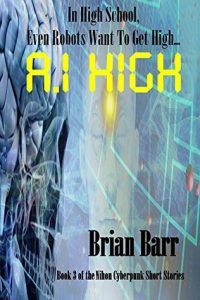 In the not too distant future, at a Japanese high school, teenage android Shinobu purchases the trending drug Spacix. It’s news to the principal that androids can take drugs, downloading a program that simulates the drugs’s effects, including the side effects, which can be devastating for Shinobu and other adolescent androids, as the real life drug has been for human teens.
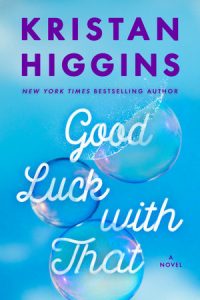 Emerson, Georgia, and Marley meet at fat camp, quickly establishing lifelong friendships. Their weight reflects backgrounds of abuse, neglect, and unrealistic expectations, leading to self-sabotage. One friend’s tragedy spurs the others toward their authentic selves.
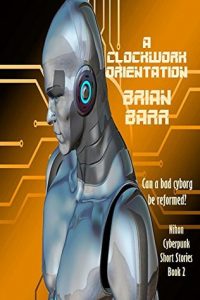 The second short story in his Nihon cyberpunk series, this tale tells of cyborgs gone rogue, culminating in a massacre of human co-workers by the cyborg Mannix. Dr. Nagai and the other Ashita Institute scientists create a program to instill empathy in cyborgs through fabricated experiences of pain and fear. Mannix is too cunning, however, and he is only interested in the officer who deactivated him at the crime scene, turning this digital tall tale into a warped love story.
 In 1965, Carly Sears becomes the physical therapist for an intriguing man who seems to know her. Five years later, as her brother-in-law, Hunter helps her find specialty medical care for her unborn baby—in the future. The events on 9/11 alter her course, causing her to make an agonizing decision regarding her daughter.

 Basically, this book attempts to warn humans that they are being farmed like cattle across planet Earth as food for energy entities, inter-dimensional and extraterrestrial, who wish to eat souls. Redfern, author of 30+ books on UFOs, Bigfoot, and cryptozoology, takes readers through the minutia of anecdotal evidence for cryptids, some timeworn, a bit somewhat newer, all of it always fun and interesting. The book begins with an explanation of supernatural energy, or orgone, as defined by Wilhelm Reich, and immediately launches into soul stealing creatures from around the world. It’s hard to tell if Redfern is writing tongue-in-cheek, or in full belief; Llewellyn is the publisher—the latter is more likely. As with inexplicably grainy (in this day and age of technology?) videos of cryptids, so the personal stories, including those of alleged personnel of mysterious / forbidden locations, such as Area 51 (according to Redfern, there’s a secret facility miles underground in New Mexico), border on requiring suspension of belief. Silently dismissing mental illness or other more pragmatic sources, the author relays seemingly supernatural events as fact. Even with prior knowledge of the medical condition behind experiences of succubi and incubi, the chapters on these sexually demanding night creatures are disturbingly realistic. However, mythological lore is explored through the story of Lilith, who links Paganism, Judaism, and Christianity, as a relevant dark, feminine archetype. The highlight of the book is the concept of a tulpa, an entity created by focused energy of a group of people, with Slenderman being the most well known. Readers who accept spiritual entities for granted will be scared out of their wits by this book. Others who take it with a grain of salt will appreciate it for further forays into global legends, myths, and folklore. I was fortunate to receive an early copy of this fascinating book from the publisher #Lewellyn through #NetGalley.
 In this continuation of the Rosato and DiNunzio series with alphabetized titles, Mary’s pregnancy weighs heavily in the story. Tables are turned on the firm when they are sued, and murder comes too close to home, with one of their own a person of interest. Unrelated to the discrimination case, religious bias seems to crack the fourth wall, as the lawyer for the firm comes across as ineffectual in his lackadaisical, eastern spirituality approach. The clue that exposes the murderer is generic and far-reaching as conclusive evidence. The writing is solid and flows, but the storyline and accoutrements fall short of Scottoline’s brilliance despite her winning formula. With Mary the lead in this book, her family makes broad appearances, which is always welcome to DiNuinzio fans. As a novel in a series, it’s worth reading for the continuity in anticipation of “G***”. I was fortunate to receive an early copy from the publisher #St.Martin’sPress through #NetGalley.
 Sarah’s mother resented her existence, never failing to make her aware of the obstacle she is in life of a woman who believes she gave up fame to be a mother. So she may have been primed for kidnapping a little girl whose mother treated her in a similar manner. After a month on the run with the child, with all that entails—lying to friends and family, shifting work priorities, constant fear—Sarah’s conscience shifts. Coincidentally, her own mother contacts her after a lifetime of absenteeism.
 Joe Lynch espies his wife in a heated debate with their friend Ben at a hotel restaurant after his son sees mommy’s car and they follow her to say hi. After she leaves too quickly to follow, Joe confronts Ben, who laughs off his suspicions. His wife explains away the argument as Ben’s obsession with her; then Ben disappears. Suddenly, Joe is being framed for Ben’s murder, seemingly by Ben himself, so that Joe must find the purposely evasive man to clear his name.