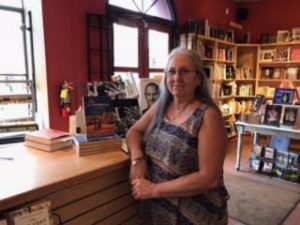
 I met Carmen Baca in the Facebook group Fiction Writing. She’s friendly, helpful, and interesting. Because she quietly soaks up information online the way I do, we didn’t have much interaction for some time. However, she definitely has a presence that stands out, and when I read her short stories, I loved her unique writing style and culturally influenced tales. She believes all writers should support each other, and she shares how another writer encouraged and assisted her in her short story submissions. Sometimes you meet someone who makes you feel as though you’ve found a treasure. Carmen makes me feel that way, so I wanted to share her story and her work.
Tell me about your writing style.
“My daily routine (when I don’t have meetings or major chores planned) is to check my social media platforms to see if I need to respond to any commenters, which usually takes about an hour. Then I write for the next 4 to 6 hours and finish in time for cooking supper. I have a study all to myself, but I’ve taken over a breakfast nook in one corner of our dining room due to the many windows. I can take a break from looking at the keyboard and look up and out to see the very places I describe in my works. The towering pines, the morada across the fields of alfalfa and clover, the mountains where my father and his cousins played in my book and where I used to play with my own cousins are all visible from my little spot, which makes it easy to portray in my writing.
For some reason, I start my long m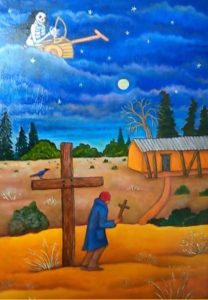 anuscripts in print, and when I’ve written sufficiently to have a couple of pages on my iPad, I revert to keyboarding since I can type (keyboard) so much faster than I write. My short pieces I do completely on my iPad before submission.”
Hometown Reads “El Hermano” page
What strategies do you use if you’re stalled?
“This happened to me for the first time a few months after my debut novel released. In the three months after my launch, I had a book tour, so I spent the time promoting on social media, being interviewed for a magazine and a live radio show, and making myself available for dedications to libraries, that sort of thing. When that was behind me, I suffered a bit of inactivity, a lack of inspiration. I have another book already started, but I wasn’t sure if I wanted to proceed with that or work on a sequel when I realized my debut novel was turning out to be successful. One day a sudden inspiration arose from my book: I missed working on the initial story—the characters, the locations, etc. because they were my parents, the elders from my childhood, and the location, which is right where I live. So I started writing short stories based on them. Steven Carr, a member of Fiction Writing, is a prolific short story author, having produced and published over 100 this past year. I asked him about short story submissions and he provided a resource. I am having so much fun with my short stories, and I have published 7 in the last 4 months, thanks to Steven’s assistance. What I realized is that the majority of them are turning into a serial, as they’re all connected to one another and to my novel. I plan to publish them as a collection this year.”
Author interview by Henry Gonzales Raíces for KUNM radio
Author interview on Dr. Paul Reeves’ Family Talk Radio podcast
Describe incorporating your culture into your writing.
“It was a locked wooden box which inspired my first book. My father (like his own father and grandfather before him) was inducted into and rose to become leader of a fraternity of brothers whose goal was to provide religious services and community service to the remote village where they lived and where I live now. These men are known to this day as Los Hermanos de la Fraternidad de Nuestro Jesús Nazareno (the Brothers of the Fraternity of Our Jesus of Nazarene).Throughout my childhood, I was allowed to join my mother and the community women in acting as their helpmates; called Las Verónicas, we cleaned and prepared the church and their prayer house for their ceremonies, especially during the Lenten season.
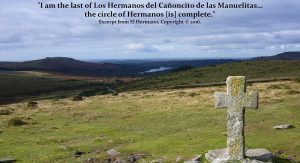 After my father passed, we cleaned out the morada, the prayer house, and since I was the only one living in our little valley, the community members (all way older than I at the time) elected me to house the religious artifacts left behind from the brotherhood, as all the brothers had passed by that time. There was a wooden box I remembered had been in the morada throughout my childhood, but since it was always locked I never knew what was inside. One element of los Hermanos’ practices, which is sensationalized in the websites and in other literary works, is their devotion to Christ, which includes self-flagellation. My father never once disclosed whether he did this or not, and my only clue that he did was once when I was with him at a doctor visit. When the doctor exclaimed, “What happened to your back,” I knew.
So when we opened that box and I saw the handmade horsehair scourges, pieces of glass, and small bits of gravel, the blood-stained trousers, and the biggest confirmation of it all—their rulebook, which guided their membership all the way back to 1850, I knew that my father and those before him were the most devout men I would ever meet in my life. Their very existence and their humility and their piousness was something I wanted to share with the world. I had to tell my father’s story to dispel those other sources which focus on their self-harm instead of their altruism. My book was born of my father’s death.
Now my stories and future books will have the ability to educate, to inform, and to entertain those who know nothing about the New Mexico Hispanic culture which can be traced back to the 1300s. They will keep our cultural traditions, customs, superstitions, etc., alive for generations who will never have the opportunity to experience how wonderful it was to grow up among Los Hermanos in the 1920s to the 1980s.”
Purchase “El Hermano” at Amazon here!
How does writing influence your life?
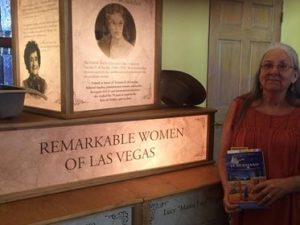 “Now that I’ve got my novel and several short pieces published, writing has given me a purpose, a new career as a story teller in my twilight years. All those decades I spent teaching the classics—short stories, poetry, novels, etc., by my own favorite authors—I am free to create my own literary works which other teachers can use in their own classes. That floors me! To know that my own literature will be taught in English, Spanish, Chicano Studies, and history courses in the same way I used to teach literature just amazes me.
My husband, sons, and many cousins are all thrilled for me. My husband and sons especially know what this means to me—that a manuscript I wrote 25 years ago is now a book and has made my lifelong dream come true. When I received the proofs in the mail and opened that package to reveal my book, my very own book, in my hands was the best feeling I’ve had in a long time. I burst into tears and made my husband blink away tears of his own. One of my sons followed in my footsteps and became a teacher; every teacher and student at his school knows every step of my publishing journey because of him, and I’m pretty sure most either received my book from him or bought their own. My other son, a computer whiz, manages my website, takes me to my readings and videotapes/photographs everything, and prints everything I need for such events. My husband, who works part time, leaves me to my writing for most of the day. Every time there’s a new news article or a short story gone live, they’re all just as giddy as I.
I have no siblings, my parents’ siblings are all gone, so all I have left of extended family are a multitude of cousins. Yes, several have contacted me out of the blue, since we either never met or met as children so long ago. But get this—one cousin is the coordinator for a national book club, so she immediately began promoting my book months before its release and has a place ready for me to go speak to her club in Denver whenever I wish. Another actually came from Denver to my book launch, and she also began promoting my book, since she works for a university up there.
My former colleagues, many of whom are my dearest and oldest friends, and my former students are some of my biggest fans. When I created my Facebook author page and invited everyone, I started with 290. Over the course of last year, my following grew to nearly 600 as more colleagues and students realized what I’d done and began supporting me as an author. I imagine at least half of my books are in the hands of former students, friends, and relatives, most of whom follow my page and read my short works. At least several hundred of these wonderful people knew I’d written a book, so when I finally published it, they were among the first to pre-order a copy directly from me. At first, I feared they might not like it, they might find it boring, they might throw it down without reading to the end; so when great reviews and comments on my page started appearing, I cried like a baby again. To think that I was capable of touching them so profoundly that they laughed and cried and remembered their own ancestors, or in some cases remembered elements of their own pasts they’d forgotten was something I didn’t know I’d accomplished until they told me. Now that’s the part of this publishing journey which always amazes me: the words my own readers use to convey to me how my book made them feel is both indescribable and still unbelievable.”
Tell me about your literary support system.
“I enjoy helping others in the writing groups I found after I published. My only regret is I wish I’d found them before I published, since so many are more experienced than I and offer great advice. I also have a blog where I post chapters of my WIPs for feedback, but unfortunately, not many people see them, which is why I began making them into short stories and publishing some in online literary magazines and two women’s blogs thus far.
I don’t use beta readers; my son, the one who manages my website and assists when I do readings, is my only proofreader. I sometimes run ideas through him, and he’s always got great advice to help move my plots along. He’s my only critique partner.”
You write articles, essays, novels, and short stories. Talk about this diversity in your work.
“When a prolific short story author began communicating with me and offered a few places where I could try my own hand at publishing my shorter pieces, I jumped at the opportunity to get my name out there even more, to establish more publishing credentials, and most importantly, to get my works read by others. Now, remember, I wrote my debut novel twenty-five years ago, and I hadn’t written anything of substance (other than literary analytical essays I used to write when I assigned them to my students) since. So when I decided to write short stories, which quickly became a serial, I tried my hand at third person omniscient. And I loved it! All the short stories, which are either based on folk tales or traditions/customs/superstitions from my culture, are written in that point of view. Part of my impetus for writing my stories is because so many of our traditions are dying out; I want to keep them alive, even if only in literature.
The non-fiction pieces I’ve written are essays based on my teaching experiences and how I learned to communicate effectively with adolescents. They’re written kind of like my short stories, since they’re comprised of anecdotes I put together. For example, my first essay called “Word Play” is based on several instances where puns and innuendos create embarrassing, humorous, awkward, and memorable moments. How we adults choose to deal with them affects the teacher/student relationships.
One other non-fiction essay highlights how I used my culture in creating the romance in my first novel.
There are three more on one of my blogs which I’m determined to rewrite and publish in a writer-type of resource, such as “Authors Talk About It” or others which accept manuscripts on the writing, publishing, or marketing process.”
“Word Play” essay in Prodigal’s Chair
 “Baile de Diablo” story in Across the Margin
“Using Nuestra Cultura in Romance” essay as guest blogger on tartsweet.com
“El Serpiente del Cañón” story in LatinoLA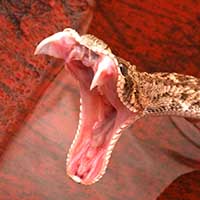
“La Lunática” story in Across the Margin
“Learning to Let Go” essay in The Same
“The Christmas Story” on Wattpad
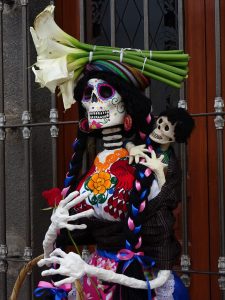
The more I connect with Carmen, the more fascinated I am by her story, which is so different from my own. She is authentic and grounded in her culture. Follow her progress on her Goodreads Author page, “El Hermano” Facebook page, Amazon Author page, and Carmen Baca website.
Purchase “El Hermano” at Amazon here! Look for her collection of stories coming soon!
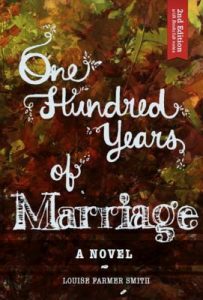 Patricia sacrifices her social life and romance to care for her mother, whom everyone assumes is going through “the change.” Patty knows better, but doesn’t know how to help her mother find herself after accommodating her husband their entire marriage. As she and her siblings come of age, they move on and away from their parents, becoming distinctly different individuals who come together in the end for Patty’s wedding. Told in short story form, going back generations, the women in Patty’s ancestry lay a foundation of accommodation and depression that she is determined to escape. The women in these stories are strong, but historical convention keeps them in check, and they don’t have the tools to continually fight social mores of gender expectations. The writing flows so well that the stories lead right into each other, though they can, and have (and won prizes), stand alone. Together, they show the pattern repeated by each generation of women in choosing partners to “save” them from their families, judging poorly based on immediate escape. That they stay with their ill choices is more a matter of their time in history, as shown by Patty’s mother being unable to get a driver’s license without her husband’s or father’s permission.
 Erica excels as a publicist in NYC. Her love Warren is under contract in DC, while pursuing his true love of jazz whenever he can. They vow their weekends to each other in good faith, but family and work overspill their boundaries. Erica’s alcoholic mother is an emotional vampire, constantly requesting her time and money. Warren’s father is an emotionally inaccessible, strict disciplinarian, whose second marriage exposes a family secret that rips Warren out of time and space. As Erica tries to move up the ladder in her company, special projects snatch her away from her special time with Warren, who renews his contract in DC without discussing it with her. He breaks up with her, setting Erica on a downward spiral. She confronts her mother about her childhood, prompting her mother to reveal her own tragic background. She and Warren must come to terms with the families that they have and find their way back to each other.
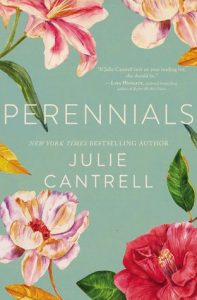 Lovey allows herself to be chased from her childhood home in Oxford, Mississipi by her older sister Bitsy’s inexplicable animosity. Though she calls foul on sibling rivalry, her parents don’t back her up, making Lovey feel damaged. When their mother’s garden shed burns to the ground after their friends Fisher and Finn barely make it out, Bitsy blames Lovey and no one protests, leaving her alone for years wallowing in the injustice. Bitsy uses Finn’s injuries to fuel Lovey’s guilt, prompting her move to another state, another life, away from his brother Fisher, who asked Lovey to marry him. Emotions run rampant through Lovey as she tries to balance her current life and the one she ran scared from decades ago. Her parents convince her to return home for their 50th wedding anniversary party. She complies, facing her lost love and antagonistic sister. When she’s called to return to work to resolve a hostile takeover by the boss of her ad campaign project, her father changes her mind when he confesses that her mother is terminally ill. She stays, determined to treasure every last moment with her mother, making a truce with her sister, and dealing haphazardly with Fisher’s current “it’s complicated” relationship status. Lovey continues to bond with her mother over their shared love of gardening, with life lessons inspired by gardening and favorite local writers Welty and Faulkner sprinkled throughout the book by both parents. Religious themes run a bit strong in this story and can be distracting, assuming that readers are Christian and accepting of religiosity as part of the lessons. Lovey makes a breakthrough with her father after a particularly hurtful encounter with Bitsy, which starts her healing process. She is home. This is her home. Everything comes together, albeit some of it a bit too easily, as there are decades of pent-up hurt to be worked through, especially for the sisters.
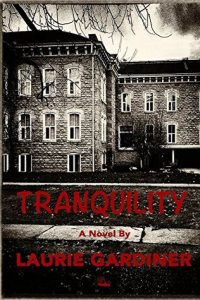 Single mom Sarah starts day shift in the dementia ward of the healthcare facility Tranquilty, moving from nights in palliative care. Her new co-worker Tracey immediately befriends her, introducing her to the “cast of characters” for whom she will be caring: Sam, who randomly prefers nudity, gentle, inquisitive Rose, the bickering twins Lily and Beth, the wheelchair menace Mrs. W, who remembers a concentration camp more vividly than contemporary events, quiet Mrs. Sellers, Italian immigrant Mrs. Gallo, whose husband visits her daily, Alfred, who has a tendency to call for a once beloved cat named Hairball, and Mrs. Amaral, a sweet Portuguese immigrant. Gardiner’s work in such a facility inspired the story, and to ensure accuracy, her research included interviewing employees in all areas of the facility, from bathing to housekeeping. New residents to Tranquility bring a professional dilemma, a dangerous situation, and potential romance for Sarah. Edie, with her soft Scottish brogue, does not appear to be suffering from dementia, but when she fakes it to expose an abusive employee, Sarah keeps an eye on her. After two violent incidents, endangering staff and residents, John is quickly moved again, to the psych ward. With Georgia comes a big family, including her great-grandson Jay, who lights a fire in Sarah. Along with all this, Sarah’s own grandma suffers a second stroke, and her mother must deal with end of life choices, a struggle for a woman who hasn’t really gotten over her husband’s death a decade earlier. The brightest light in this story is Kayla, Sarah’s daughter, who gives her grandma life, and handles great-grandma’s struggle with surprising grace for a 4-year-old. Sarah and Tracey execute a not-quite-legal plan to prove the co-worker’s abuse, but it’s waylaid by Edie’s plan to do the same. Everything comes together in the end in a complicated, bittersweet resolution, just like in real life. Characters learn and grow, while others astonish, but most of all, the ones who need to find themselves do so.
 Aubrey Ellis grew up learning to control the physically ravaging and emotionally draining interactions with ghosts who insist upon her assistance, ghosts who always leave tangible evidence of the encounter. As an adult, she’s settled into a position as a real estate columnist that gives her the opportunity to connect with and aid those who have passed on to continue their journey without too much damage to herself. Then she’s sucked into a decades old unsolved murder after new evidence emerges. Her reluctant partnership with fellow journalist Levi St. John takes her in new and unexpected directions, personally and professionally, and she comes fully into herself.
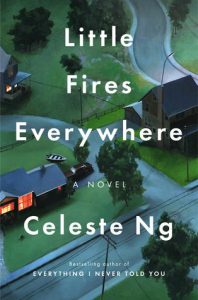 Photography artist Mia Warren moves to Shaker Heights, OH, bringing a new element into the staunchly middle-class, by the rules neighborhood, changing dynamics of two families, her own as a single mom, and her landlady Elena Richardson’s properly planned one as third generation Shaker Heights. Into this volatile blend is thrown teenage hormones, a King Solomon dilemma, and outside the box thinkers, culminating in “something’s gotta give.” Wisdom comes from unlikely sources.
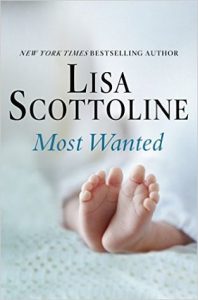 Christine and Marcus want a baby so much that they use a sperm donor. Pregnant Christine sees their donor on the news being arrested for multiple murders. Against Marcus’ wishes, she visits him and helps him with his defense. She vacillates between thinking him innocent and guilty, believing he is her sperm donor and desperately wanting him to be a good person.