She was just a girl.
With a trust fund none knew about.
A girl born into the wrong time.
I should have lived in Victorian America, when melancholy was in high fashion—she’d whisper as I lay spooned around her. More often than not, I found her curled up in bed, staring at the wall. Only I witnessed her bravery in rising after days of feeling like nothing. She remained alive by sheer will.
And my cooking. I loved to cook for her. She ate everything and delighted in it, even when the beast held her tighter than I ever could. Food comforted her, and kept her alive, if not lively.
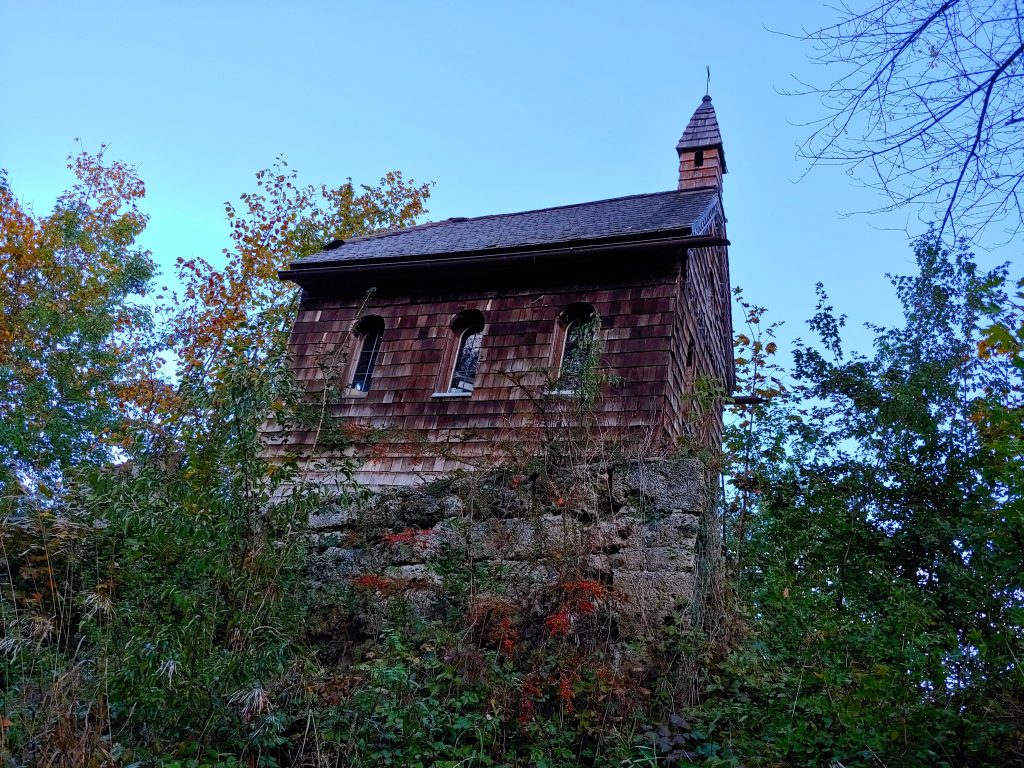
She rarely left her little home overlooking the river. The little house hung like an afterthought upon the bluff, threatening to come unmoored at any moment and tumble into the river. Incredibly, she worried not at all about the inevitable possibility. Her reason—This house will fall when I’m ready.
I love this house—she said quietly—Did you know it used to be a hermitage before this area was developed? I did, but shook my head, encouraging her to continue with the story about our local river king, whom most called a saint for the miraculous happenings during his time in this home.
Susurrations of gossip followed her through town as she walked, head up, eyes straightforward, never lingering to purchase anything beyond necessities.
Until I followed her home one day and she invited me in as though she were expecting me. From that day on, I made her purchases along with my own, but nothing staved off the beast, her modern day melancholy. The conversation that first day immersed us in an ongoing dialogue of slightly differing philosophies and worldviews, with matching intellectual curiosities. Love blossomed that day.
I saw it happen.
On my way up the switchbacks with an angelfood cake and a handful of wildflowers, the ground trembled. A cracked formed on the edge of the bluff just under the overhanging edge of the house. It shook, and slowly shifted downward.
Until it tumbled and slid down into the river. A hand may have appeared out the window. Perhaps not.
There’s no explanation for my continued climb to what was now the top, where I found the beast dangling. It lives in me. I shall not love in that way again.



 Eve’s mom, Brady’s wife, killed herself, imbuing them both with an onslaught of guilt, but also forcing them to examine and restructure their relationship. Fabiaschi drizzles clues to a twist that leaves the reader sitting back watching these beloved characters come to terms with the information. She lays out the complexities of familial dynamics and how suicide exposes cracks in the foundation of relationships. The chaos and isolation of innocence lost is portrayed well for teenage Eve. The best part of this book is the point of view told by Madeline, or Maddy to her friends and family, the mom who died before the opening chapter narrated by her. I love how real the emotions of the characters feel and how the perspectives of each play off the others. All three members of this family keep returning from their various emotions and misunderstandings to the love they have for each other, and it all reads true.
 Blackbird House witnesses unusual love stories throughout its lifetime, from the young wife waiting for her husband to return from the sea to the orphaned young woman who had no home coming to live with the disfigured man who believed he would never feel the warmth of a woman. Often the yearning is only fulfilled when it can later refuse to be acknowledged. The townspeople care for the inhabitants of the isolated home.
 Rupi Kaur divided her poetry collection into five sections. Wilting begins…on the last day of love…my heart cracked inside my body…and continues this part of the story throughout the following poems. Falling exposes the self in an introspection of negativity, moving from grief to the numbness of sudden aloneness. Rooting reaches the stage of connecting with community, recognizing pain and fear, power and strength on a larger scale. Rising expands and contract the self, bringing the strength inward…i will welcome…a partner…who is my equal…celebrating the self and being proud of ancestry. Blooming shares the fruits of the labors of those who have gone before…i am the first woman in my lineage with freedom of choice…praising her parents’ decision to immigrate and allow daughters to fully become themselves. Kaur’s poetry has been derided for being so accessible to the masses, which is a shame, because what then is the point of exclusivity of art…
 Erica excels as a publicist in NYC. Her love Warren is under contract in DC, while pursuing his true love of jazz whenever he can. They vow their weekends to each other in good faith, but family and work overspill their boundaries. Erica’s alcoholic mother is an emotional vampire, constantly requesting her time and money. Warren’s father is an emotionally inaccessible, strict disciplinarian, whose second marriage exposes a family secret that rips Warren out of time and space. As Erica tries to move up the ladder in her company, special projects snatch her away from her special time with Warren, who renews his contract in DC without discussing it with her. He breaks up with her, setting Erica on a downward spiral. She confronts her mother about her childhood, prompting her mother to reveal her own tragic background. She and Warren must come to terms with the families that they have and find their way back to each other.