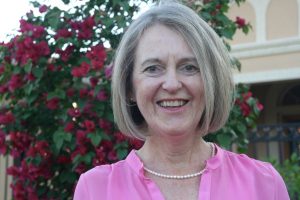
I met Mary Tod, pen name M.K. Tod, through Lake Union’s Facebook group, a supportive online author collective who welcomes readers into their ethereal coffee klatch. She writes historical fiction novels, blogs about history, and creates reader surveys. Her fourth novel “Paris in Ruins,” set in 1870s Paris during the Franco-Prussian war, should be coming out soon! I’m fortunate that she agreed to an interview on my little blogblogblog. I’ll let her take it away…..
First of all, many thanks for inviting me onto your blog today, Lael. It’s a pleasure to spend time with you and your readers.
Tell me about your artistic / writing process, including schedule, environment, and inspirations.
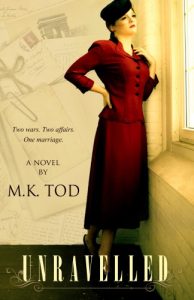
 Writing is a second career for me. After thirty years in sales, technology and consulting, I went with my husband to Hong Kong for three years—a fascinating but dislocating experience. There I was, half way around the world with no job, no family, and no close friends. On a whim, I began researching my grandparents’ lives which ultimately led to my first novel, Unravelled. Thirteen years and almost five novels later, I find that the genesis of a story typically hits me unexpectedly. I jot the idea down and let it ruminate for a while, then bring it up one day with my husband—could be over dinner or while we’re out somewhere or even on a road trip. That conversation puts a little more flesh on the idea. From there, I develop a chapter outline. Once I have an outline that makes sense along with several characters fleshed out as to desires, circumstances, backstory, and conflicts, I begin chapter one.
I work at my desk situated in an alcove in our bedroom almost every day, if not on the latest novel then on marketing, blogging, keeping up with social media, and connecting with readers. I love hearing from readers!
For me, just like most other authors I’ve met, writing is a passionate pursuit. Once I’m in the grip of a story, I get lost in that world with photos of people, places, maps, landscape, homes, clothing, and various articles and fiction and non-fiction books for inspiration. It can be a messy process and, of course, the first draft is only a beginning!
Why does historical fiction intrigue you? Describe your research—elaborate all you wish.
I’ve always loved historical fiction from my first exposure to the novels of authors like Mary Renault, Rosemary Sutcliff, and Jean Plaidy. There was something about travelling back in time that sparked my imagination and perhaps those stories helped with the transition from childhood to gawky teenager with hormones that had no home. Historical fiction has dominated my reading ever since. And then, while in Hong Kong researching the wars and depression my grandparents went through, I became obsessed with World War One.
What I now realize is how much research goes into well-crafted historical fiction. You need to intimately understand the world of your characters—the political, cultural, religious, social, and other beliefs and norms that governed life in whatever time period they live in. You need to appreciate how they thought, what they had for breakfast, the clothes they wore and how long it took to get dressed, the books they might have read, the restrictions governing their lives, how long it took to travel to the next town—the list is endless. To write stories set during WWI, I also had to immerse myself in the tools, techniques, and strategies of war and understand the horrific experience of trench warfare.
Research is a complex, time-consuming process and as a writer you can then select only a few details to paint the picture for your readers just like the deft brush strokes of a Chinese painting can suggest a flower or a mountain or the face of a woman. Over the years, I’ve found sources I return to again and again as well as techniques to make the research more effective.
For example, I love maps. Maps suggest worlds. Whether it’s a map depicting troop movements in northern France, or a map of a small village showing roads radiating out from a central square, or a map of 1871 Paris, each creates an imaginary world and the people within it. When I find a map from long ago, I’m like a kid in a candy store.
I think I spend almost as much time researching as I do writing. Fortunately, I love doing both!
Walk me through your publishing timeline—who does what when, and your responsibilities.
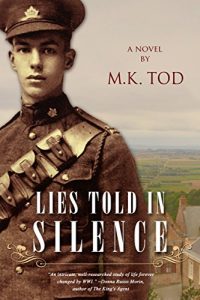 I’ve taken two publishing paths—self-publishing and more traditional publishing. My husband and I published the first two novels, Unravelled and Lies Told in Silence. I worked with a freelance editor who also designed the covers for these novels. Then my husband did the page layout, figured out how to create MOBI and EPUB files for Amazon and other e-book retailers, and worked with a printer to create paperback versions. My role was marketing, which included virtual book tours, all sorts of guest posts, lots of social media activities and so on to get the word out.
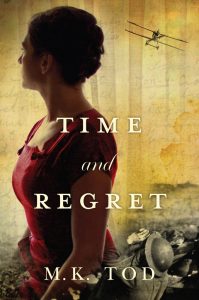
I was delighted when Time and Regret was taken on by Lake Union Publishing (one of Amazon’s publishing imprints). The team there guided me through a smooth, professional process from developmental edit, to cover design, and on to production. On release day, I was ready to go with a round of marketing activities to complement those of Amazon. More than eighteen months since publication, Amazon continues to offer marketing support for Time and Regret.
Talk about your support system: beta readers, ARC reviewers, publishing team, readers, etc.
 Beta readers and ARC reviewers are treasured colleagues. Beta readers give the gift of honesty by answering the questions: Does this story work for you? And if not, why not? They aren’t editors, they’re test readers. ARC reviewers give the precious gift of the first reviews on influential places like reading blogs, Goodreads, Amazon, Kobo and so on. I’m fortunate to have discovered several people who are so generous with their time and effort.
And readers? I can’t say enough about how wonderful it is to have readers who’ve taken the time to read my novels, give their feedback, post reviews, send me notes, leave comments on a blog, encourage me to write another story, and ask when the next novel is going to be available. I’ve had some great jobs over the years but writing is unique. In many ways, it’s a lonely profession, one full of self-doubt and intense periods of what-the-hell-am-I-doing. Readers complete the story, giving it life, breath, and feeling. Without readers, novels are merely words on a page.
What is your favorite thing about your creativity?
This is such a difficult question! I always struggle with the word favorite. But let me answer it this way: the best thing about writing fiction has been discovering that I can. I’m a mathematics and computer science grad who disliked both English and History. To discover the excitement of creating stories and have them read and enjoyed has been both awesome—in the full sense of the word—and fulfilling. I only wish there were more hours in the day.
Author Extra: Reader Surveys
In addition to writing novels and blogging and all the work that goes along with those activities, I also conduct reader surveys. In 2012, I went looking for an answer to the question: Why do people read historical fiction? Finding almost nothing out there in the Google-Sphere, I conceived the notion of conducting a survey. With the help of Sarah Johnson of Reading the Past and a few other authors and bloggers, word of the survey spread. In 2013 and 2015, I also surveyed readers for answers to a range of questions like how many books do you read each year, where do you find recommendations, what’s your favorite type of story, and so on. In 2017, I did a smaller survey focused on WWI fiction. This year, the reader survey will go beyond historical fiction to ask about other genre preferences and topics like the influence of social media. Lael Braday has kindly agreed to publish the survey link when it comes out and I hope you will take a few minutes to respond. Results from past surveys are available on my blog.
Lael, it’s been great fun talking to you and your readers. Many thanks for your questions. You’ve made me think again about how fortunate I am to have discovered a passion for writing stories.
Connect with M.K. Tod:
Although I have a website, the best place to find me is on my blog.


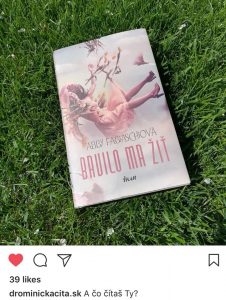
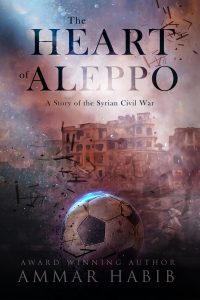 Thirteen-year-old Zaid and his friends, siblings Fatima and Salman, leave innocence behind when their parents send them away at rumors of rebel attacks. The teenagers discover that nowhere is safe, as they are besieged repeatedly by rebels, and learn that the military cannot be trusted—they are alone. Strangers sacrifice their lives; strangers betray them; strangers ask for help…evoking survival instincts and humanity’s courage in the darkest hours. They are children, separated from their parents, who must fear multiple, murderous factions and their own government, kids who days ago were living normal teenage lives, as any teenager in any country.
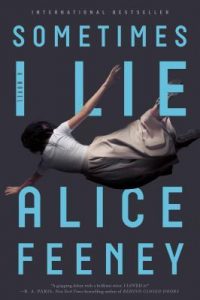 Amber comes to from a coma, but realizes that she is not awake, only aware. While in her hospital bed, she hears her husband and sister discuss mysterious happenings related to her car accident. Flashbacks to a week before bring the reader up to date slowly through an unreliable narrator. Journal entries from childhood fill in blanks and spew a haze of ambiguity regarding the sisters, until the reader is delightfully confused and enlightened repeatedly, like the proverbial roller coaster ride. Feeney plops out a big, ole’ shocker at the end—twice!—that makes the reader go, “Hmm…” It’s a fun read and worth the time to try to figure out what’s going on between the sisters, and if anyone is trustworthy, or if all of them are constantly scheming. The journal is brilliantly done, without revealing anything. Much murder and mayhem ensue, beyond the family, a deliciously wicked family. I was fortunate to receive an advanced copy from the publisher of this fantastic novel.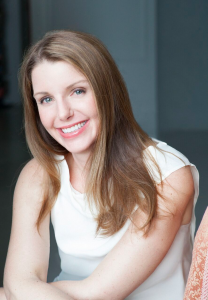
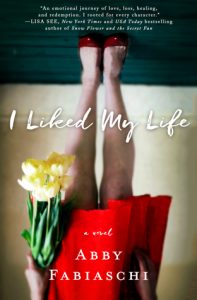
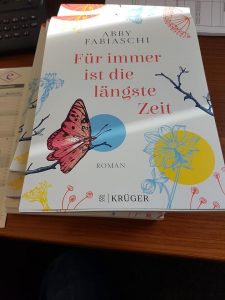
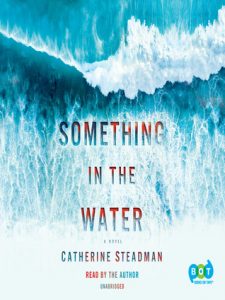 Erin’s fiancee loses his investment banking job just before they marry, causing ripples throughout the wedding planning due to his loss of income. They go ahead and hold the big wedding and go on their intended honeymoon in Tahiti, keeping their hopes up for his future employment. While scuba-diving on honeymoon, they discover a plane wreck in the ocean. A more experienced scuba diver, Erin’s new husband Mark retrieves a dufflebag of money from the wreckage. Despite good intentions, they end up smuggling it home where they begin an ongoing debate on what to do with it, even as they hide it in their home. Mark seeks opportunities while Erin continues her documentary on the before and after of three convicts released from prison: a young girl who turns to terrorism, a middle-aged woman who helped her terminally-ill mother die with dignity, and a professional criminal.
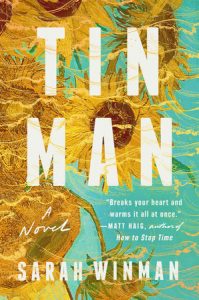 Ellis and Michael begin a lifelong friendship after Michael’s mother dies and he comes to live with his grandmother Mabel, both boys sharing the affection of Mabel and Ellis’ mother Dora. The delicacy of their first love romance shatters as Ellis yields to society’s mores after a turning point in France, and even Michael understands that Annie is “the one.” Loving Annie draws Michael into their orbit, expanding her idea of family to include him and his grandmother. Although readers are familiar with the horrific stories of gay men succumbing to AIDS, Winman carefully portrays Michael’s unique perspective on his friends’ deaths—he returns to France where he grieves for all that he’s lost in his life. The first half of the book focuses on Ellis after all of his losses leave him off-kilter, wondering what to do with himself. The second half flashes back through Michael’s journals, a candid look at a man whose fulfilled expectations disappoint. This is a gorgeous story of how love grows to include those who might be estranged by circumstances. I was fortunate to receive a copy through a Goodreads giveaway.
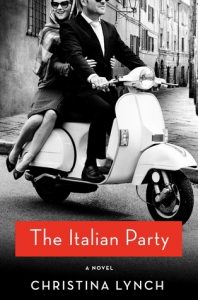 Scottie married Michael and they moved to Siena, Italy, both bringing secrets and gathering more, so that they appear to be a happily married couple, he selling American tractors to Italians and she his adoring housewife. Showing Italians the American Dream fulfills a larger agenda for Michael, while Scottie tries to look behind the curtain and see his true self. She seems to have a lot more freedom than expected for a woman in the mid-50s, and Italian men are portrayed as oversexed political creatures. Homosexuality is handled in a sensitive, if somewhat stereotypical, manner considering the times—adultery is inexplicably given more tolerance. When the couple open up and confess all, they become a team, and Michael learns that political secrets are larger than his own agenda, gobsmacked by his own company. This is a great historical fiction, with Siennese culture, the fallout from being overshadowed by Florence, and the political turmoil of Communism versus pro-Western leaders vividly portrayed. It shows the complexities of the world players’ motives and relationships, and how this plays out in the individual lives of the Italian people.