
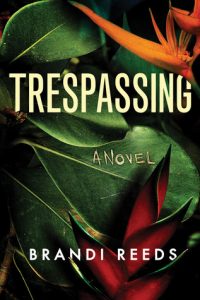
I met Brandi Reeds through the Lake Union Authors Facebook page. She also writes YA under her pen name Sasha Dawn. As you’ll see, she’s truly dedicated to her writing. I’m fortunate that she agreed to allow a peek into her writing life on my little blog. Her adult debut novel “Trespassing” just came out in April.
Describe your writing process, including schedule, environment, and inspirations.
SCHEDULE: Writing isn’t my only career. I have another full-time job, two busy teenagers, three dogs, and an incredibly busy husband, so I have to use every second wisely. I write whenever I have a free moment. A typical day:
● I wake up around 2 or 3 a.m., thinking of something that won’t quit. I’ve been an insomniac most of my life.
● Often, my laptop is open and on my lap, and my fingers are tapping keys before I open my eyes.
● I’ll write in bed for a couple of hours, close the laptop, and catch a quick nap before my day begins. My alarm goes off at 6. My goal is to have 1,500 words written before this moment. I usually meet my goal.
● After my girls are at school, I go for a run if my schedule permits, then work begins. I balance my home design and renovation business with writing. Both are on-demand and involve irregular hours. I have a design office in my home, and my laptop is my mobile writing office. Sometimes I write a sentence here, a sentence there; other times, I carve out blocks of time in a slower design day to write.
● Evenings are for family: dinner, walking puppies, jogging (if I missed my earlier run), and time with my girls—helping with homework (though they rarely need it anymore, they still humor me) and getting them to the dance studio or to the theater, or voice lessons, or wherever else they need to be.
● By the time everyone’s evening activities are over, it’s usually about 10 and time for bed.
● I sleep for a few hours, and repeat.
PROCESS: I outline a book on a high-level basis before I begin to write. The outline isn’t carved in stone; I often find that the book shifts a bit in drafting. But this helps to keep me on track. I don’t always write in order. I find that writing what I’m feeling helps keep me productive. There’s no reason to stall simply because I don’t feel like writing a particularly challenging scene. I’ll come back to it when I feel better about it. Some days, I write only dialogue. Others, I write only setting. I can’t afford not to stay on schedule, as I have deadlines looming.
At present, I have 6 weeks to write a Brandi Reeds book, contracted less than a month ago, a Sasha Dawn novel due in early November, and Brandi’s third release due by July of next year…as well as edits due on other works already in progress I revise as I go, and once I finish the book, I revise twice more before sending it to my agent and editor for commentary.
ENVIRONMENT: I prefer to write in places without distraction, but my schedule doesn’t permit me to be too particular. I’ve written in the car while my husband is driving, in parking lots waiting for my girls, in hospital waiting rooms, in cafes, on trains. I will write anywhere, but I’m most productive between the hours of 2 and 5 a.m., when the world is still asleep.
INSPIRATION: Much of my inspiration comes from dreams (I often dream plots), from places I’ve been, struggles I’ve endured, and my wonderful family. I recently returned from Spain, for example, and I’d love to create a story set on the island of Majorca. That said, I’m a firm believer that writers are not born of safe keeping. I’m a survivor of many battles, and I think that helps me when it comes to creating worlds in which my characters live. My mind goes to crazy places due to what I’ve been through.
 Tell me about your support system: beta readers, publishing team, and any other cheerleaders.
My daughters and my best friend and her daughters read much of what I write before I send it to my agents and publishers. They’re my system for reality-checks and often tell me when something doesn’t ring true (i.e., a teenager wouldn’t use this word here; or wouldn’t she be thinking about her kid at this moment?). I also have a great friend in writer Patrick W. Picciarelli, retired NYPD, who is often my sounding board when it comes to plotting, criminal activity, and the business end of publishing.
My agent, Andrea Somberg of Harvey Klinger Agency is incredible. She often offers suggestions and advisement for books before we send them to my editors. I’ve been blessed to work with some incredible editors and publishing teams. I think every editor I’ve ever worked with will tell you that I’m open to criticism. I’ve never been hung up on a book being solely mine; it’s a team effort, and editors offer brilliant advice.
My mother, siblings, aunts, cousins, friends, and grandmother are cheerleaders AFTER they’ve read my books, which is equally as important. My husband, Joshua, does not read. He says that if he wants to know what happens in my books, he’ll just ask me. This doesn’t offend or bother me in any way, as he’s still an integral part of the process. I discuss plots with him, and I often tell him at the end of the day what my characters managed to accomplish. He and my girls are constant supporters and I am endlessly grateful for them.
 Take me through your publishing process, from final draft to published product.
After we submit a final draft to my editors, the waiting begins. Some weeks later, I receive an email full of praise for what I’ve accomplished and created…and an attached edit letter detailing everything wrong with what I’ve done. My most intense experience with the edit letter entailed about 14 single-spaced pages. (Me at this point: “Ummm….you said you liked the book, right?”) So, after I cry for a few hours (kidding, I’ve never actually cried), I get back on the horse and revise.
Usually a book will go through 2 or 3 rounds of developmental edits. During this process, I’m filling out forms and giving input on cover design, depending on the publisher. Next, we go through a couple of rounds of copy-edits, and then a final polishing for interior design. Around this time, I receive final cover design and copy. And then suddenly, the book is real, tangible, and exciting. Sometimes, as an additional step, a publisher will ask me to check the ARC for errors.
How does your life influence writing and vice versa?
When I’m writing for the teen audience, I draw on my tumultuous teen years for emotional content. There is a little bit of me in every character I write, but I’ve never told my life story through a character. I’ve been writing for as long as I can remember, and for as long as I’ve been writing, it has kept me sane and balanced. As a teenager, I wrote as a sort of therapy. Other kids my age weren’t going through the things I was experiencing—or maybe they were, but back then, we sure didn’t talk about it—and I felt less alone because my characters went through much of what I did.
Now that I’m older, I like to think my writing reaches audiences who need it…and letters from readers support this thought. It means something to tell unconventional stories, because life is not normal. It means something to write people as they truly are, even if they’re often flawed and unlikeable. While some readers hate this about my work, there are more who write and thank me for telling a story through an authentic narrator. I don’t write fairy tales because life is dark and messy, and no person I’ve ever met is all good or all bad. Flaws are what make us interesting and varied, and so these are the stories I tell.
What do you love most about your creativity?
I’ve never considered facets of my creativity as something to love, and even thinking about this question now, I don’t know that I can answer it. Both my careers (writing and designing) require heightened levels of self-awareness, however, and through that awareness, I’m able to dissect struggles, learn from them, and project them onto a bigger canvas. Being a published author certainly puts me in a position to reach others, and I definitely appreciate all that accompanies the connections.
Ergo, due to my creativity, I’m able to extend my reach. For example, last spring, I visited my alma mater (Antioch Community High School in Antioch, Illinois) for writers week. I do this sort of thing whenever I have an opportunity, and I’ve visited high schools all over my home state. I tell my story to captive audiences, who are experiencing the same types of challenges I’d endured as a teen. While I’m sure a few high school students in every crowd are bored with me, or even asleep, the majority walk away from my presentation inspired to overcome whatever it is they’re dealing with. And I LOVE this part of my job.
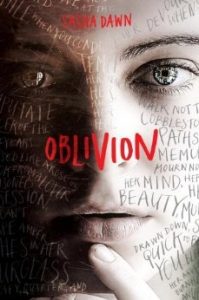
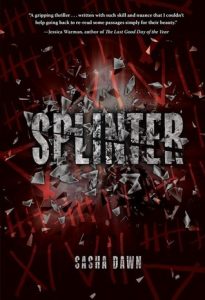
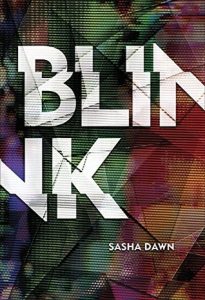
It’s also pretty fun to name characters after people I know. Emily and Andrea in TRESPASSING are named for my nieces; Samantha in SPLINTER is named for my eldest daughter, and all the male characters in SPLINTER are named after my nephews; the main character in BLINK is named for Joshua, and his sisters are named for my best friend’s daughters, Margaret and Caroline; and my upcoming teen release (currently known as PANIC) stars a spunky introvert named Madelaine, for my youngest daughter. I tell people that if they don’t want to find traces of themselves on the pages of my books, they shouldn’t stop by for a chat. I can’t help it. It’s an occupational hazard. 🙂
Brandi Reeds also has a story on the HOOKED app, entitled OFF LIMITS:
http://www.amazingchatstories.com/se/offlimits-1
Brandi Reeds website (under construction—please be patient)

 The diversity in these stories is impressive, from girls facing internal and external religious challenges, to girls pretending to be something they’re not to make their way in a man’s world. These are tales of young women refusing to be a product of their time, yearning to be free of society’s mores. The authors refrain from a black and white picture, with a young Mormon girl questioning her religion, yet continuing to fight her community’s detractors. Secrets abound, as an orphaned girl lives life as a boy to take care of herself, and a young boy trades his secret of being a transgender with a Hispanic girl putting in tremendous effort to pass as white for Hollywood. One story had magical elements that didn’t seem to contribute to the plot, but as a whole, this book offers up a dozen girls as unintentional heroines who fought against patriarchy, misogyny, and other obstacles they intended to overcome.
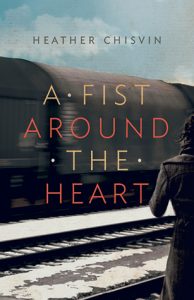 Anna “Bencke” Grieve’s life changed after Tsar Alexander II’s assassination. In fear for their lives as Jews, her mother, a privileged servant, asked her employers Count and Countess Chernovski to take Bencke and her older sister Esther with them to Canada. The Chernovski’s later adopt them, believing their parents to be dead. Bencke does her best to care for Esther, who suffers episodes from traumatic memories that incapacitate her at times, as she herself tries to fit her eccentric personality into Countess Chernovski’s picture perfect household. Decades later, Anna receives a phone call from the Winnipeg police informing her that her sister has committed suicide by stepping in front of a train. She heads to Canada seeking the truth. The story alternates between this investigation and a backstory of a life fully lived, from Anna’s forced relocation to NYC, to circumstances causing her to be deported to Russia during WWI. In the investigation, Anna learns her sister’s secrets and must live with them now.
 I
I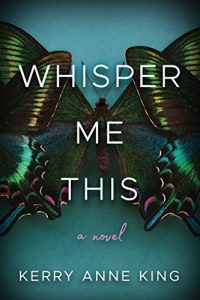 follow
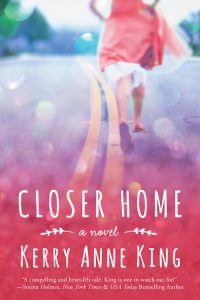
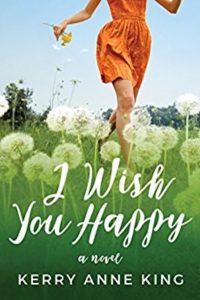 s Kerry Schafer I write fantasy and paranormal thrillers. As Kerry Anne King I write contemporary family dramas (although the book I’m writing now does have a touch of magical realism that makes my fantasy-loving-heart happy). Keeping track is fairly straight forward—Kerry leans to the dark side; Kerry Anne leans toward relationships and emotions.
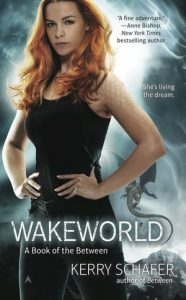
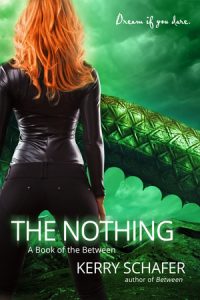

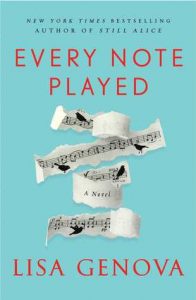 Karina’s musical talent surpasses her boyfriend Richard’s, but she sacrifices her dream to their marriage and child, and then falls in love with jazz, a genre abhorrent to Richard. He builds his career as an international classical pianist, his inflating ego one of many factors in their divorce. He attempts to hide the onset of ALS from his fans, his agent, and Karina. Due to circumstances and finances, Richard moves back in with Karina, who takes over his care with the help of home health aides. In the year that robs Richard of his body, he at last opens up emotionally to his estranged daughter, and eventually he and Karina find a kind of peace.
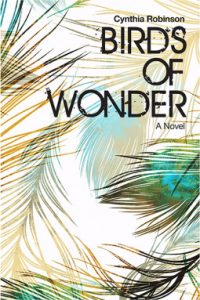 Detective Jesca Ashton has always had a challenging relationship with her mother Beatrice, which does not improve after Beatrice finds her star actress dead on the property of a local lawyer, with whom Jes had a “drive-by.” Jes has held close a secret about her father since her teens that tarnished the memories of her ornithology professor father, who had buffered her childhood from her picture perfect mother. Now she must investigate for murder someone she has known intimately through an adulterous one night stand. The case comes too close to home and Jes makes life-altering decsions.
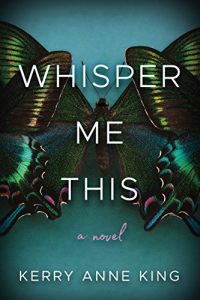 In her childhood, Marley talked Maisey into adventures for which she abandoned Maisey to take the blame. Maisey’s mother told her that Marley wasn’t real, even though she was as real as her mother to Maisey. In her third decade, raising her daughter Elle by herself, Maisey continues to be scatterbrained and unfocused, and has never been normal according to Elle, who wants her to stay that way. Elle is 12 when Maisey receives a phone call that her mother is dying, circumstantial evidence pointing to her father, a man she has always known as a gentle buffer between her mother and herself, as the cause. She must go home and untangle the ugly mess, uncovering a mystery in the process. This sets her off on an adventure to uncover her mother’s secret, revealing much about herself and their relationship in the process. The love interest has his own secrets, and Maisey is the catalyst for his family recognizing his trauma and helping him to move past it. As the EMT / firefighter responding to her family’s emergencies, he is woven into her story as an eventuality.
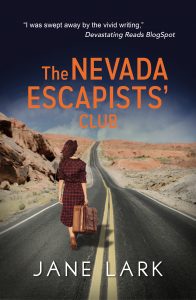

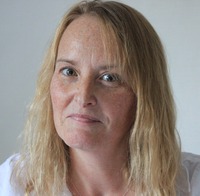 Jane has been shortlisted for several industry and reader awards. She is a Kindle bestselling author and a writer of authentic, passionate, and emotional stories, and she’s a sucker for a love story. “I love the feeling of falling in love and it’s wonderful to be able to do it time and time again in fiction.” She loves writing intense relationships and she is thrilled to be giving her characters life in others’ imaginations.
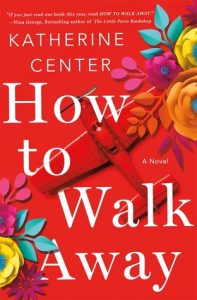
 Brooke Trapnell, the runaway bride in Save the Date, continues her story, having moved back to little town, Georgia, with her son, Henry. The resident wealthy socialite philanthropist of nearby Sea Island, Josephine Bettendorf Warrick, contacts Brooke to represent her against the state of Georgia, who wants her land for a state park. The secrets of nonagenarian Josephine slowly seep out as she lays out her plans to atone for her sins and defend her estate by passing it on to descendants of her long ago best friends. Brooke discovers a related family secret she would have never thought to guess.