 I met Diane in person at a book signing in Topsail Beach at Quarter Moon Books. In my overzealous fangirling,
 I crashed a book club photo and had to be gently shooed away. I’ve been her most awkward fan since, and she’s been the most gracious literary star. I show up for each new book’s signing / reading like a middle-aged stalker who looks so innocent (muahaha), and Diane keeps smiling and signing my new books. If only she could write super fast; I know I will love each new story. I was fortunate to receive an early copy of The Dream Daughter—my review—coming out October 2.
Tell me about your writing process—any tricks / nuances to keep you on track, inspirations material or abstract, where you write (Topsail!) and when.
 I usually write either in my Raleigh area sunroom or at my condo on Topsail Island. I generally have a year to write a book. The first few months, I think about my idea and start doing research, often visiting the area where the story takes place. I begin picturing scenes and putting them on post it notes that I move around on a big presentation board until I like the arc of the story, thus creating an outline. At the same time, I think about my characters, specifically what type of person will have the hardest time dealing with whatever dilemma I’ve come up with for the story.
  If there is no personal struggle, there is no story. I think about which characters will have a point of view in the story and will they have a first person or third person point of view and will I write the story in present or past tense. I sometimes look on the internet for pictures of people who make me think of my characters. I find this a huge help in creating characters who feel very real to me and hopefully to my readers. These are all decisions I make before I start writing.
 Finally, I start writing about 6 months before my deadline. I usually listen to movie soundtracks as I write because I like the emotional ups and downs of the music. I’m always doing research as I write. Also, I listen to my characters because they frequently go astray from my outline and I’ve learned to pay attention to them. I write three to five drafts. Finally, often a bit late, I turn in the book. That’s where my dynamite editor comes in. She reads the book, looking at the big picture. What works and what doesn’t? She makes many suggestions, sometimes requiring a big change in the book. I’ve learned to listen to her, and I rewrite. And perhaps rewrite yet again.
Lead me through your publishing process, as in who does what when, and your marketing responsibilities (book tours! What else?).
 Here’s how it works. First I write a book. Then I have an agent who is responsible for finding the publisher she thinks will do the best job with that book. She is also responsible for negotiating the contract with that publisher. You can see in my answer above some of the work the editor does with regard to my book. The publisher then, of course, publishes the book. If the publisher feels strongly that they can make the book a bestseller, they will give it a lot of advertising and other support before and during publication. My publisher for the last six books, St. Martins Press, does a great deal of promotion for me. I try to hold up my end by keeping up with social media (which I enjoy), giving interviews, touring to speak to groups and do book signings, where I get to meet my readers, the best part of the process!
Before the Storm series

Describe your support system: groups online and IRL (MKA, another favorite author of mine)—your biggest cheerleaders…
 My biggest supporter is my significant other, John. He’s a photographer and understands the creative process and doesn’t complain that once a year, as deadline nears, I disappear from real life into my imagination, 24/7. Aside from him, I have many local writer friends who I get together with often. And then I have my “official group.” We call ourselves The Weymouth Seven because we originally met up at the Weymouth mansion in Southern Pines, NC, where authors are invited to work for up to two weeks each year. Now we usually meet up on Topsail Island. You’re right that Mary Kay Andrews is a big part of our group. She’s our ringleader, the one who keeps us on track during the week that we meet. Other members are mystery writer Margaret Maron, historical mystery writer, Sarah Shaber, horror and thriller writer Alexandra Sokoloff, and mystery writers, Brenda Witchger and Katy Munger. We have fun but we work hard at the same time.
Keeper of the Light series


You’ve always had touches of history in your novels. Recently, you’ve opened up to historical fiction, and now sci-fi / fantasy with your latest book about time travel. How did this come about; in what ways do your life and work influence each other, and how did your previous profession prepare you for fiction writing? Also talk about secrets, their importance to you and your work, and what kind of secrets you like best to weave into your stories.
 When I heard about the eugenics (forced sterilization) program in North Carolina, I knew I had to write about it. That meant setting the story during the years of the program, so I selected 1960 and thus wrote my first novel (Necessary Lies) with a totally historical setting and I found I really enjoyed it. Two books later, I decided I wanted to write about the 1944 polio outbreak in Hickory, NC during which the town built a functioning polio hospital in 54 hours (The Stolen Marriage). So I would say, if the idea that comes to me is historical, I will happily write it, but I am still perfectly happy writing contemporary books as well.
 When it comes to The Dream Daughter, that is a whole different subject! For years, I had the idea that’s central in The Dream Daughter: a woman is told that her unborn baby will die, but she learns that if she’s willing to take a huge risk and travel to the future, her baby could very well live. I put this idea off for years because it is so unlike my other books, but finally, I talked to my editor and she gave me the go-ahead. The book was tremendous fun to write and the early reviews have been amazing. I’m grateful to readers who dislike time travel for giving this book a try because it’s still “vintage Diane Chamberlain” and people seem to be loving it.
 I think your question about my previous profession (clinical social work) and secrets actually go together. I worked in hospitals and then in a private psychotherapy practice with adolescents and their families, and one thing I learned is how destructive secrets can be in a family. I was fascinated by that topic, so it often appears in my stories.
What do you love most about your creativity?
 I’m very grateful for my imagination. It got me into tons of trouble as a kid, but now pays off. I might be stopped at a traffic light and see a woman pushing a baby carriage across the street and within 30 seconds, I imagine a car hitting them, and the police discover it was on purpose and there was a connection between the woman and the driver, or maybe even between the baby and the driver . . . it’s exhausting having a brain like this, but it often pays off in the end if it means I can entertain my readers.
Connect with Diane:
 Website
Book series in order of publication




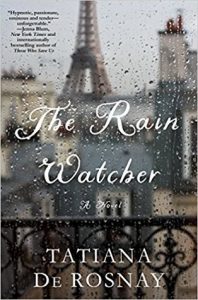 Franco-American Linden Malegarde travels to Paris to celebrate with family his father’s 70th birthday to find himself trapped in a flood and more than one family crisis preventing their evacuation. Over a few deluge-filled days, the Malegarde family bursts at the seams, spewing secrets and long-held hurts, with deadly descriptive flashbacks and a horrifying centimeter-by-centimeter account of a real-life flood. De Rosnay’s writing flows like the Seine spilling over its banks, sparing no characters of their integrity in situations that require fortitude beyond their human frailty. She takes on more than one social issue, in Linden alone being an outsider in more than one way, in more than one country, his saving graces being a successful creative and having a supportive partner. Readers of historical fiction, Francophiles, and fans of Liane Moriarty and Thritty Umrigar will appreciate this novel. I was fortunate to receive an early copy of #TheRainWatcher from #St.Martin’sPress through #NetGalley.
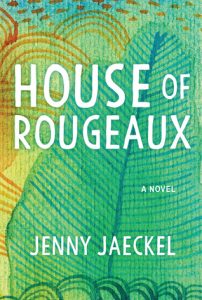 After a glimpse into her future as a leader of her people, this family saga opens with the childhood of the great Obeah, Meme Abeje, who lives to see the official end of slavery in her homeland of Martinque, and her niece Hetty’s migration to Canada, where she becomes an abolitionist with husband Dax Rougeaux. After a quick (and confusing) foray into the future of the Rougeaux family in the mid-1940s, Hetty’s granddaughter Eleanor brings the story full circle, when she visits Martinique to honor her Obeah great-great aunt at the end of the 19th century.
 I met Mary Tod, pen name M.K. Tod, through Lake Union’s Facebook group, a supportive online author collective who welcomes readers into their ethereal coffee klatch. She writes historical fiction novels, blogs about history, and creates reader surveys. Her fourth novel “Paris in Ruins,” set in 1870s Paris during the Franco-Prussian war, should be coming out soon! I’m fortunate that she agreed to an interview on my little blogblogblog. I’ll let her take it away…..
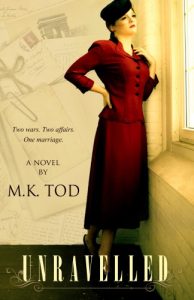
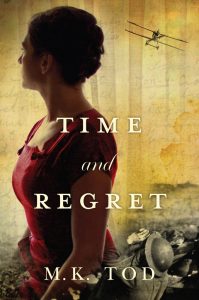 Writing is a second career for me. After thirty years in sales, technology and consulting, I went with my husband to Hong Kong for three years—a fascinating but dislocating experience. There I was, half way around the world with no job, no family, and no close friends. On a whim, I began researching my grandparents’ lives which ultimately led to my first novel, Unravelled. Thirteen years and almost five novels later, I find that the genesis of a story typically hits me unexpectedly. I jot the idea down and let it ruminate for a while, then bring it up one day with my husband—could be over dinner or while we’re out somewhere or even on a road trip. That conversation puts a little more flesh on the idea. From there, I develop a chapter outline. Once I have an outline that makes sense along with several characters fleshed out as to desires, circumstances, backstory, and conflicts, I begin chapter one.
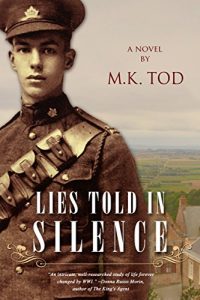 I’ve taken two publishing paths—self-publishing and more traditional publishing. My husband and I published the first two novels, Unravelled and Lies Told in Silence. I worked with a freelance editor who also designed the covers for these novels. Then my husband did the page layout, figured out how to create MOBI and EPUB files for Amazon and other e-book retailers, and worked with a printer to create paperback versions. My role was marketing, which included virtual book tours, all sorts of guest posts, lots of social media activities and so on to get the word out.
 Beta readers and ARC reviewers are treasured colleagues. Beta readers give the gift of honesty by answering the questions: Does this story work for you? And if not, why not? They aren’t editors, they’re test readers. ARC reviewers give the precious gift of the first reviews on influential places like reading blogs, Goodreads, Amazon, Kobo and so on. I’m fortunate to have discovered several people who are so generous with their time and effort.
 Scottie married Michael and they moved to Siena, Italy, both bringing secrets and gathering more, so that they appear to be a happily married couple, he selling American tractors to Italians and she his adoring housewife. Showing Italians the American Dream fulfills a larger agenda for Michael, while Scottie tries to look behind the curtain and see his true self. She seems to have a lot more freedom than expected for a woman in the mid-50s, and Italian men are portrayed as oversexed political creatures. Homosexuality is handled in a sensitive, if somewhat stereotypical, manner considering the times—adultery is inexplicably given more tolerance. When the couple open up and confess all, they become a team, and Michael learns that political secrets are larger than his own agenda, gobsmacked by his own company. This is a great historical fiction, with Siennese culture, the fallout from being overshadowed by Florence, and the political turmoil of Communism versus pro-Western leaders vividly portrayed. It shows the complexities of the world players’ motives and relationships, and how this plays out in the individual lives of the Italian people.
 The diversity in these stories is impressive, from girls facing internal and external religious challenges, to girls pretending to be something they’re not to make their way in a man’s world. These are tales of young women refusing to be a product of their time, yearning to be free of society’s mores. The authors refrain from a black and white picture, with a young Mormon girl questioning her religion, yet continuing to fight her community’s detractors. Secrets abound, as an orphaned girl lives life as a boy to take care of herself, and a young boy trades his secret of being a transgender with a Hispanic girl putting in tremendous effort to pass as white for Hollywood. One story had magical elements that didn’t seem to contribute to the plot, but as a whole, this book offers up a dozen girls as unintentional heroines who fought against patriarchy, misogyny, and other obstacles they intended to overcome.
 Echo Moon finishes the Ghost Gifts trilogy, beginning with Aubrey and her souvenirs from ghosts she helps that she calls “ghost gifts,” through her marriage to journalist Levi St. John, to their son’s story of his past life, wherein he envisions shooting his true love Esmerelda Moon—Esme. Spinella pulls the reader into an early 20th-century culture of supper clubs and amusement parks, showcasing Luna Park of Coney Island, with its rides, performers and customers. We even witness the shadier “rides,” “performers,” and “customers” of the Elephant Hotel, a brothel set on the edge of the park. The hotel is real, but turned brothel after the heyday of the family-oriented park, and pulls Spinella’s story into the historical fiction genre as she carefully blends it into her novel.
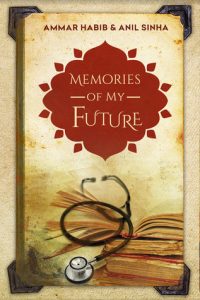 Surgeon Avinash Singh loses a child during surgery to heart failure caused by a new virus. Having accepted always being the best at everything he does, this harsh reality devastates him. His nurse Martha, a second mother in his adopted country, tells him to find a way to deal with it and get back to work. He seeks resolution in the journal of his ancestry given to him by his grandfather. He reads of Khau, the Lion of Bihar, a 13th-century warrior ancestor, who must find a way to save Bihar from the Mongols. Those barbarians destroy everything in their path, because they are unbeatable archers on horseback. Khau determines their weakness and defeats them. The inspirational story motivates Avinash to develop a cure. From this breakthrough, Avinash receives two offers: a position at a coveted medical center in NYC and a chance to offer his skills to a humanitarian effort. He returns to the journal to learn about Veeresh, the leader of his people who did not break under torture by the East India Company’s best “negotiator.” From this lesson, Avi knows he must follow his heart. On this path, he finds true love and faces a challenge that calls out to his warrior blood.
 The pa of the Glass children, Jimmy and Flower, dies of smallpox in a pestilent tent hospital in Deadwood, South Dakota. They had pulled him into town from their shack on his gold claim, proving their mettle. Madame Dora DuFran takes charge, and Calamity Jane, who’d followed Wild Bill Hickok to Deadwood, works in the pest tent, caring for their pa, watching him slowly fade. Jimmy and Flower, who goes by Hour, sleep in DuFran’s storage room, which previously housed Jane, who prefers to sleep off her routine drunks outside under the stars, anyway. Hour’s mom, a Lakota, visits Jimmy in his dreams to offer wisdom as he confronts challenges (one of which is first love) in their few weeks at DuFran’s brothel, until their pa passes. Jane holds a fundraiser for her “daughter” Hour’s education, receiving enough to send both children to a convent school, giving them a good start in life. Jimmy channels Jane in a life of constant travel, but Hour marries and raises a family in Kansas City. While working as a storyteller in the Buffalo Bill Wild West Show, Jane meets up with Jimmy and they catch each other up on their lives. Jimmy sees her only once more, in a small town where she was put off the train, at a hotel on her deathbed. The happily ever after comes to Jimmy when his first love finally leaves prostitution for marriage.