In September, I attended the 34th Western Reserve Writers Conference and Workshop, driving up from NC, eager to hear the keynote speaker, Brian Klems, online editor of Writer’s Digest. The conference was fantastic, and starting in 2016, the Cuyahoga Library sponsors it to support writers. The South Euclid-Lyndhurst branch hosting the conference has a Writer Center that makes me want to live in Cleveland.
In between sessions, I chanced upon Brian and we chatted for a few minutes. He’s a super nice guy, of course, being from the Midwest, like myself. We Midwesterners are so friendly. Brian agreed to a written interview for my blog, and I promised to share links to his work and his book. He’s a pretty funny guy and in his keynote speech, he shared a few stories from his parenting book. If you’re a parent, or even if you’re not and love kids, I recommend it.
 Many writers have an unusual and varied employment history. Mine includes framing / remodeling, llama husbandry, job coaching, home health care, and substitute teaching. I’ve also been a barista, a wine steward, and a personal assistant. Brian’s career climb is more logical, with surprising summers.
“During sophomore year of high school, I landed my first job bagging groceries at a local supermarket. One close friend also worked there, so we’d align our shifts to get off at the same time and hang out together after. I spent most of that money at a local Perkins and on CDs. Next, I was selected to take part in the inaugural ArtWorks Apprentice program for young writers in Cincinnati. I not only learned how to refine my writing, but also a bit of photography and film development (which I completely forget now, so thank god for iPhones and Walgreens). During college summers and breaks, I manned the desk at the Hamilton County Courthouse, retrieving daily case files for the magistrates and judges—it was divorce court, so very few were in a good mood (but the judges couldn’t have been nicer to me).
As for my professional writing career, I worked in NYC for a few months in the summer of 2000 for two sporting and health fitness business magazines. After that, I landed a job in Chicago for plumbing trade magazines. I had several editors there who took me under their wings and helped me grow as not just a writer, but as an editor. I also stepped in to oversee their websites, and it was my first real dip into the professional online world. After two years there, I itched to move back to my hometown, and applied for a job at Writer’s Digest—which I landed, and it became my professional home for the next 14 years.”
Every writer must find his / her own style to be productive. Sharing the process inspires other writers and satisfies reader curiosity. Brian offers a look into his creative style and gives some good advice.
“I like to write in chunks as opposed to writing every day. I’m constantly brainstorming and writing down my ideas on notepads and napkins and scrap paper and anything I can find when an idea hits. Then I collect them into Google Drive docs. When I feel inspired and motivated, I sit down and work through the ideas, sorting and writing scenes and essays and whatever I’m ready to write.
As for editing, I find this to be a critical part of the process. Somehow, everything I write seems to be awesome and terrible at the same time. I believe that’s true for many writers. When writing humor, I self-edit as I write. With jokes, every word matters and I have problems leaving a line until it’s perfect. When writing fiction, I attempt to power through until I’m finished and then go back and edit (though I totally get slowed down by my humor writing process, because sometimes I want to get the sentence right the first time). One of the keys for me is, once I have my “first final draft,” I have an editor give it a look. Working at Writer’s Digest, I’m lucky to know several professional editors. While I edit manuscripts professionally too, I want someone with a fresh set of thoughtful eyes who knows the industry and is a professional to let me know what works, what doesn’t, and anything else. Writing and editing is a tough process, but I love it.”
Creatives, whatever their medium, see inspiration everywhere, and often within. We must keep our wells filled in order to continue creating. On this, Brian not only tells what inspires him, but in his words is a subtle reminder to be supportive of other creatives, which also helps fill our wells.
“Reading amazing books by others always inspires me. The creativeness and thoughtfulness that goes into these epic tomes that entertain me or teach me something (or both) make me want to do the same for others. To know that I could write something that makes someone laugh or think, or makes them smile just a little bit, makes me feel good, really motivates me.
Also, my family feeds my writing life. Since I write a lot of creative nonfiction about fatherhood, they feed my stories with life lessons and humor that I couldn’t even make up. It works out perfectly for me, as I’m built really for two things: to be a writer and be a dad. Knowing I can merge both to do something that entertains others is just icing on the cake.
I don’t keep a journal, just a running Google Doc of ideas, jokes and lines that I save and, if I’m lucky, turn into something of value one day.
As for who sees my work before it’s finished, it usually goes through two sets of eyes—an editor and my wife. I send it through an editor for the reason mentioned earlier, and I send it through my wife because she knows me better than anyone and can be brutally honest. Plus, I don’t want to accidentally write something about our family that would bother her (that rarely happens, but I’m smart enough to use her as a buffer to make sure I never publish something that I shouldn’t).”
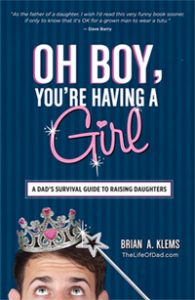 When Brian became a father, his life changed dramatically, and he desired to share his experience in his humorous book “Oh Boy, You’re Having a Girl: A Dad’s Survival Guide to Raising Daughters” and parenting blog Parenting Blog.
“Like I said, I’m cut out to be a dad—I love everything about it. The hugs and cuddles. The coaching their sports. The reading on the couch before bedtime. The helping them with their school work. The bringing their lunchbox up to school when they forget it. The dirty diapers (OK, so that I could have lived without, though thankfully, those we retired years ago). My wife and I make a great team and being a dad is the best job that I have.
The way that parenting changed my writing process is that I do so much more writing at night after the kids are in bed than I do during the day. I don’t want to miss time with them while they’re young and still like hanging out with me. I’m hopeful they’ll break the stereotypes and still want to (sometimes) spend time with me even in their teenage years, but I’m not banking on it. So spending as much time as I can with them now is what I do.”
Many writers have various interests that come out in different genres and are creative in multiple ways, resulting in blogs, vlogs, non-fiction, fiction, etc. Beyond his editing position and humorous parenting work, Brian has other projects in the works. He shares his wisdom in the truism of gratitude.
“Aside from parenting essays and my book, I’m working on a Young Adult novel right now. It’s the biggest challenge facing me, as novel writing is so eye-opening. In fiction you have endless choices, and I like to debate each one to find the best scenarios I can for my characters. It’s moving slowly, as my fiction writing always does, but I’m making progress.
As far as snail mail or poetry, I don’t write much of either. I wrote poems to my wife when we were still young lovebirds in college, but now I win her affection by cleaning the dishes and keeping the grass cut lower than our neighbors.
And one of the best parts of being a writer is all the fan mail I get, especially from parents who have read my blog or my book. I’ve also received hundreds of kind letters from folks who have read my blog on writing or have seen me speak at an event. Interacting in person with writers is one of my favorite non-writing things that I do. It gives me an opportunity to share what I’ve learned and help other writers navigate and find success in this difficult business. After all, the writing community is the best and most supportive community around. And for that, I am forever grateful to be a part of it.”
He’s a funny guy who loves his kids tremendously and can find the humor in their everday actions. Buy his humorous parenting book “Oh Boy, You’re Having a Girl: A Dad’s Survival Guide to Raising Daughters” and read his parenting blog The Life of Dad.
Find valuable information on his professional website Brian Klems and follow him on Twitter @BrianKlems.
Thank you, Brian Klems, for favoring a new blogger with an industry professional interview. I appreciate your online advice, humor, and especially your support of other writers.
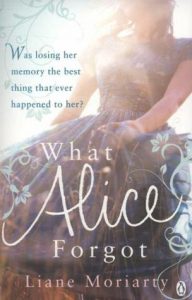 Alice wakes from a daydream of the beach to a painful head in an unfamiliar gym, with a colleague peering down at her. She fell off her bike in spin class and misplaced the last decade in her brain. Current events are not so current, and Alice learns some astonishing facts about the world and popular culture. Over the following week, she discovers some harsh truths about that decade from family, friends, and neighbors. As she slowly gains insight into her own life and troubled relations with her loved ones, the soul searching begins. When the memories hit all at once, Alice is stunned and reasserts herself as she merges her 29-year-old self with her 39-year old self.
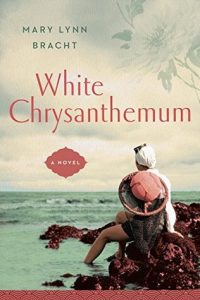 16-year-old Hana dives with her mother as Jeju’s female sea divers “haenyeo” during the Japanese occupation of Korea. One day, she is taken by a Japanese soldier, sacrificing herself to protect her little sister, and ends up as a “comfort woman” for Japanese soldiers in Manchuria. Paralleling her story is her younger sister’s story as a grandma, recounting her life after Hana’s kidnapping, always expecting a reunion with her sister one day.
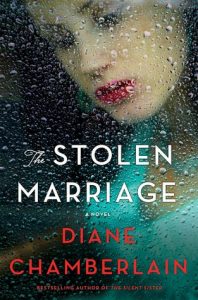 Tess DeMello abruptly leaves Baltimore’s LIttle Italy and expectations of wedded bliss with a man she grew to love throughout her childhood to marry a man from a small southern town, cutting off the future of his expected marriage to a local girl. She has trapped herself in a loveless marriage, alienated by her husband’s family, their friends, and the townfolk. She slowly learns about the enigmatic man she married as she attempts to find her way back to herself against all obstacles, including him. A polio epidemic changes the town, all hearts and minds focused on treating its victims, and Tess DeMello Kraft becomes a highly respected nurse.