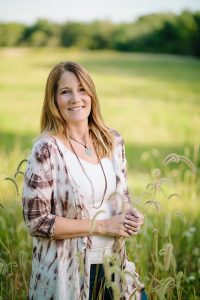
I met Kelly in Bloom, the Tall Poppy author collective readers’ page on Facebook. She’s friendly, frank, and a talented writer. Here’s my review of One More Day. T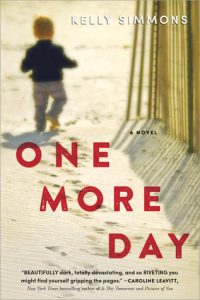 ake a peek into her magic making, which turns out to be quite pragmatic. I’m so pleased to share her process and work with readers.
Describe your writing process, including schedule, environment, and inspirations material and intangible. What’s in your office? What’s in your head?
Oh, my head is a very dangerous place! Hahaha. I don’t have a physical office; our house is not that big. I tend to take over coffee tables with laptop, books for research, books for blurbing, books to be sent for marketing purposes. I don’t need a room, a view, a special pen, a desk. I can write on a train, at a café, or at someone else’s dining room table. I put in the hours wherever I am, and am not precious about conditions, ever.
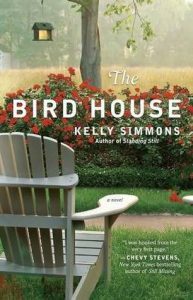
Walk me through your publishing process, elaborating upon marketing and what you as the author do to promote your book. What surprised you about the process? What surprised you about your marketing responsibility? Honestly, not much has surprised me, because I work in marketing, and I was part of a vast writers’ community before publication, and I was warned! So all the things that may overwhelm others–build a website, participate in social media, book your own signings, etc.–none of that fazes me. I guess what surprised me though, was the lack of enthusiasm from a lot of bookstores and libraries. In many cases, no one gives a sh—t about your book. 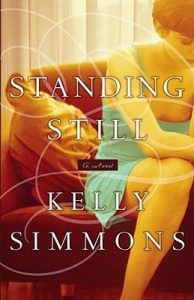 Doesn’t matter how big your publisher is, how many great reviews you got, or even if you wrote it in their library. If you’re not famous, many people just don’t care. They don’t want to put you on a panel, they don’t want to do an event, they don’t want your bookmarks, they’re like, meh. There are too many writers, traditionally published and self-published, and they are inundated, and they don’t care. That being said, some booksellers are wildly supportive. You have to focus on the positives, yet be prepared for the negatives. And not take any of it personally. The business, and the internet, have created a world where being an author is not that special anymore. Everybody’s an author.
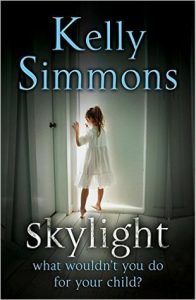
Tell me about your support system online—how you became a Tall Poppy—and IRL, expounding upon the Liars Club and other organizations to which you contribute. Who are your biggest cheerleaders? Well, The Liars Club is an author support and mentoring group. It’s published writers helping the unpublished, and guiding them to resources. We run free monthly networking meetings in I think, at last count, maybe 15 cities across the U.S. We also run a weekly podcast, 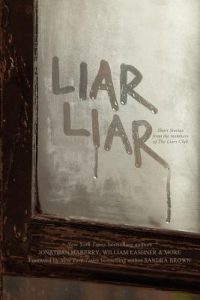 and interview all kinds of people related to the business, which is super fun. And The Tall Poppies are an author marketing collective, and that’s about marketing savvy and selling books in innovative ways. That’s about readers, and adding value. I also have a ton of writer friends from literary magazines, colleges, workshops, and writers’ conferences, who write in lots of different modalities–and I value those friendships dearly. When young writers say to me, what’s the first step? I always say, find community. Writing is lonely, and publishing is tough. You need drinking companions.
 I think you are maybe on your third or fourth career; how have previous positions prepared you for the writing life. How does your writing influence your life?
I started out in journalism and swiftly made a switch to advertising, for financial reasons. I still work in advertising, for financial reasons haha, and weirdly, when you get published, there’s a sudden entrée to writing articles and essays, so there’s always a tad of journalism here and there. The deadlines and editing abilities from both advertising and journalism are excellent warm-ups for publishing. You just get on with it. You put your ass in a chair. You slash whole paragraphs and chapters to make something fit a space. You don’t wait for inspiration; it’s due tomorrow!

What do you love most about your creativity? I just enjoy making things. I always have. I liked art projects and high-concept things in school. I like to knit. I like to refinish furniture. My dad went to architecture school and built the house I grew up in; I know I get it from him. It’s satisfying to hold that book in your hand, just like woodworking or anything else. I’m a whittler!
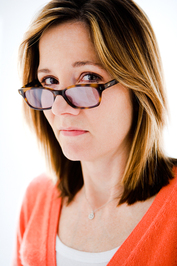
Connect with Kelly:
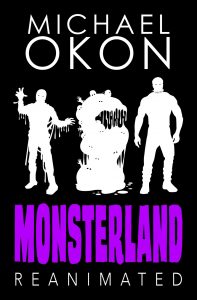
 Michael Okon is an award-winning and best-selling author of multiple genres including paranormal, thriller, horror, action/adventure and self-help. He graduated from Long Island University with a degree in English, and then later received his MBA in business and finance. Coming from a family of writers, he has storytelling in his DNA. Michael has been writing from as far back as he can remember, his inspiration being his love for films and their impact on his life. From the time he saw The Goonies, he was hooked on the idea of entertaining people through unforgettable characters.
 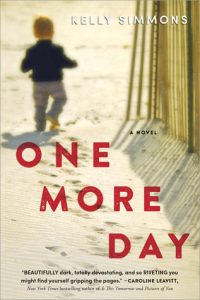 Carrie Morgan turns back to her car after arguing with a parking attendant and finds her toddler Ben gone. Her story seems off to police, family, and friends. Over a year later, she finds him, in his crib, though he’s not aged a year. And he disappears again—from his crib the same night. Now husband John is in on the madness, which he spins into a possible, though improbable, story. An unlikely witness keeps Carrie’s secret, yet it eventually comes out. Carrie’s actions invoke suspicion and mental illness through ambiguous and incredible circumstances and revelations, and she reels from a long-held confession from her mother. Solving the crime may or may not absolve Carrie or prove her sane.
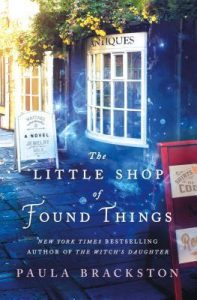 Starting over, Xanthe and her mother Flora purchase an antique store in a small town, where Xanthe’s extra-sensory connections to antiques impel her into a time travel mystery to rescue a young woman in the 17th century to save her mother’s life. Details of time travel are cleverly meted out through Xanthe’s discoveries and conclusions, increasing tension by placing credible limitations on Xanthe’s experiences. Urged on (and threatened) by the ghost of the young woman’s mother, Xanthe makes difficult decisions with every move, resolving impossible conflicts with verve and panache, even sacrificing romance for her mother, which is as it should be. Repeated references to the injustice in her own history could have been more subtle. The ghost mother could have been developed a bit more. The damsel in distress was a lovely vision of mystery even after the reader meets her in person. That she was rescued by a woman is a brilliant move on the author’s part. Readers who love time travel and / or female antagonists who save the day will appreciate this story. I received this wonderful story from the publisher through #NetGalley.
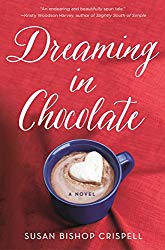
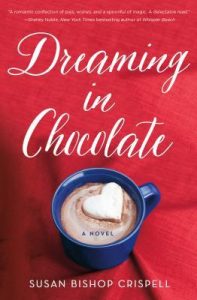 Penelope Dalton inherited a magical table that offers her special chocolate recipes for her chocolate cafe, including the Kismet hot chocolate for the Festival of Fate, a drink that offers townspeople a chance to redirect their fate. It doesn’t work for her little girl Ella, whose illness is fatal. The secret of her father’s identity is harder to contain when he returns to town to assist his injured brother run their bar Rehab. The secret of Ella’s imminent demise spills out of Penelope at a town meeting after she cancels the hot chocolate for the festival. At the same time, Sabine, her mother and business partner, seeks her deceased husband through a chocolaty, magically-induced memory loss. Penelope slowly learns to release her fears and open her heart.
 Famous artist Masuto grows weary of digital painting in the mental institution where he lives only in his mind with his AI guide TOKI. Salvation appears in the form of Endo Ichiro hacking into his system and offering to free him and create a cyborg body for him to paint again in real life. Ichiro shares astonishing revelations to encourage cooperation, but salvation does not live up to expectations, and Masuto must seek release from his savior.
 Next came line edits. In this round of editing, Kat made suggestions and changes at the sentence level to help with clarity and word choice and flow, and I updated the manuscript as needed based on those notes. From there, the book went to the copyeditor, who went through the book with a fine-tooth comb, marking inconsistencies (for example, a character said something on page 10 but something on page 200 seemed to contradict it), places where I used the same word within a short span, questioning confusing/unclear sentences, and generally cleaning up anything that was out of place. After copy edits, I received my first pass pages, the typeset/designed book printed out for hardcopy edits. (At this point, it’s the last chance to make any changes to a book.) The production team incorporated my changes into the designed text and sent it off to the proofreader, who sent me a handful of final questions/clarifications before it was out of my hands for good.
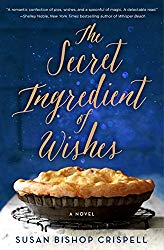 With all the edits complete, it was time to shift the focus to marketing. The design team created a cover I adore. The only input I had was to tell them up front I wanted a pie on the cover (since the book involves magical, secret-keeping pie!). I’m sure they did a few mock ups of different ideas before deciding on the final one, but I did not see anything until the final cover. I worked with the marketing team to write a few articles that they placed with blogs and websites as part of a blog tour around my release date, and they designed bookmarks and social media teasers for me to use as well. They also hosted two 100-book giveaways on Goodreads, which got my book out there to bloggers, reviewers, and readers and generated buzz ahead of launch. Outside of their efforts, I hosted giveaways and created my own graphics to promote the book online and set up a local book signing.
 Another group I am grateful for is the Pitch Wars community. For those who don’t know,
  Karma is also how I became a
  And our Facebook group,
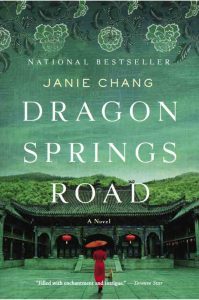 Abandoned by her mother at 7, Jialing comes of age as a bond servant to a wealthy family. The education provided her through extraordinary circumstances is for naught, for she is zazhong—Eurasian, an outsider. A fox spirit guides Jialing through a hostile culture as the young woman discovers that she can take no one’s identity at face value. In the tumultuous times of early 20th century China, a politically-motivated murder endangers her life and the man she loves.
 In the not too distant future, at a Japanese high school, teenage android Shinobu purchases the trending drug Spacix. It’s news to the principal that androids can take drugs, downloading a program that simulates the drugs’s effects, including the side effects, which can be devastating for Shinobu and other adolescent androids, as the real life drug has been for human teens.
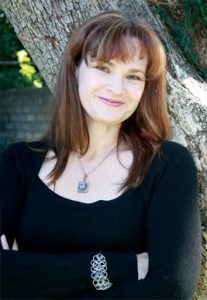 I became familiar with Angela through her short story collections, which I believe are brilliant. Then I
 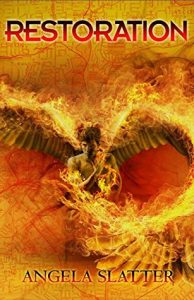 found her on Facebook and she is super nice. So, after fangirling like crazy, I asked her for an interview, and a new favorite author of mine is on my little blog. If you love speculative fiction, fairytales (think Grimm, not Disney), and suspenseful horror, read Angela Slatter’s work, which can be find on her website, Goodreads, and Amazon (links below). She launches now Restoration, the third book in her urban fantasy series starring Verity Fassbinder.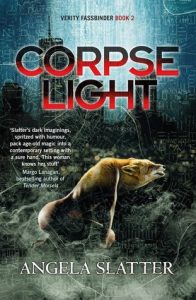
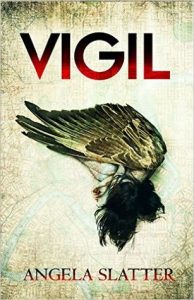
 I always need to have an image or a line or a character…sometimes I don’t know what the story is going to be, but I do have a really strong image or action in mind, so I’ll start writing from there. I don’t “push” at it, just let the words roll out and give me some idea of what might be happening with this character or in this place, or the consequences of this act. Sometimes I know exactly what will happen in the story, and I’ll just write the whole thing in a day or two
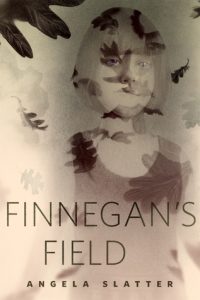 I have a bunch of notebooks I scribble ideas into, also post-its, and occasionally cocktail napkins with rambling notations slightly smudged by whiskey. I have a desktop in the office, but I also carry the laptop around the house; sometimes I write by the pool; sometimes I sit in front of the television, ignore the program, and just write (but those are times when I kind of want “white noise”). Sometimes I write to music, but that’s generally if a project’s been inspired by song lyrics or a tune.
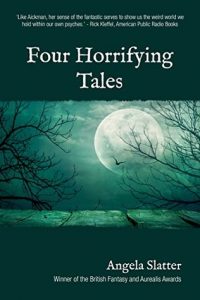 When I’m writing a novel, there’s a lot more planning required—I have a spreadsheet that I use to get myself to the turning points in the story. They’re always just suggestions (like the Pirates’ Code), but they give me goalposts to write towards, and they can and generally do change depending on how the story progresses. Short stories—I always just have a rough idea of a three act structure, but I don’t worry too much about that in the first draft—I just brainvomit it out, and then the editing phase is where everything gets made “pretty” and logical.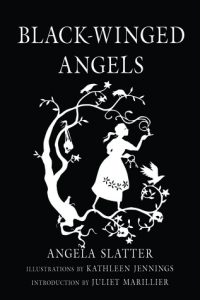

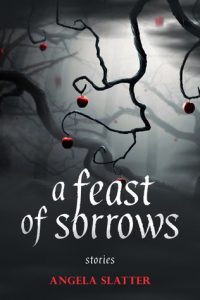
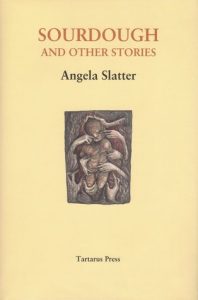

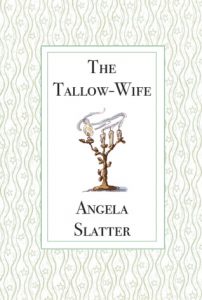

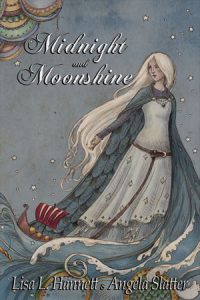

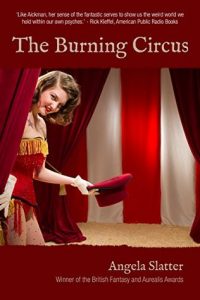 My family are always there for me, whether it’s to listen to me cry, or to listen to good news. My friend Lisa L. Hannett always has the pompoms out, and my beta readers Peter M. Ball and Alan Baxter are great sounding boards. And Kathleen Jennings, my frequent illustrator, is also a terrific person to talk to as she’s very calm. My housemates and their dogs look after me, and make sure I’m fed and watered regularly, and other friends make sure I leave the house at regular intervals, so I remember how to put on trousers the right way and talk to other human beings!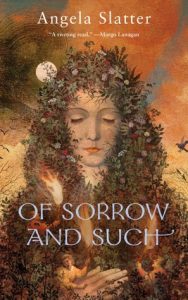
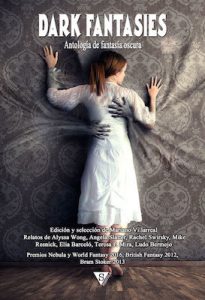 I was at the Bendigo Writers Festival this weekend just gone and that question about darkness came up a lot! My mother used to read me fairy tales, and they were the proper old Grimm ones, so they made a lasting impression. And my father was a police officer, and he used to leave his police journals around, which had reports of murder investigations and autopsy photos in them, and as I was a voracious reader from a young age, I saw a lot of interesting things! I have always been obsessed with true crime, and reading crime novels is what I do as a “break” from my usual genres. But I read it so much I think that it bleeds through into everything I write, subtly or otherwise.
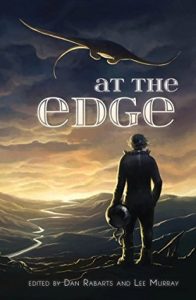 I love that I can escape from whatever is going on in the world that’s bothering me, for a while at least. It gives me a bit of respite where I can sort things out, take a breather, and work out some solutions rather than feeling panicked or pressured all the time. I love that I get to create worlds, that I am making stories other people are loving. I especially love that I get to be part of a long line of fairy talers, that I have had stories handed on to me—I will re-work them to my own tastes, and then I’ll pass them on to someone new, who will continue to pass them on and transform them. That makes me happy.