New England Symphony
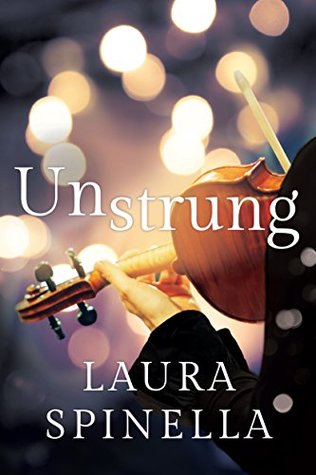
violinist Olivia Klein Van Doren destroys her husband’s Porsche
after he places her mother’s house in financial jeopardy. For her
community work, she chooses to volunteer in the class of an inner
city high school music teacher, who is the key to her secret, and a
lifeline to someone from her past.
Spinella excels at complex characters—Olivia is less endearing than interesting, and yet elicits sympathy. She also presents a marriage of larger-than-life personas who have developed a unique, symbiotic relationship, which does not preclude financial disaster, and survives volatile behavior. The story hinges on Olivia’s ability to finally communicate her needs and be honest with loved ones. A novel by a talented writer inevitably includes a life lesson or two, and a huge takeaway from this one, beyond communication being key, is foregoing judgment on what appears to be obvious. Plus, it’s a good story! I won this novel in a giveaway on Facebook and fell more in love with this author.
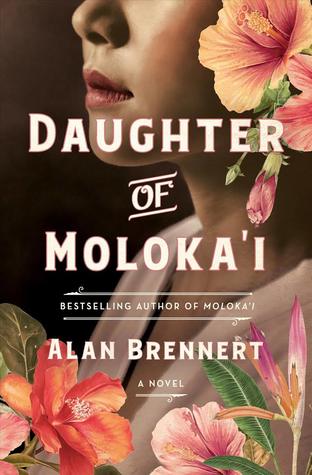
Moloka’i told the
story of Rachel Utagawa, nee Kalama, who lived in the Kalaupapa
lazaretto from age 7 when she was diagnosed with leprosy. This book
follows her daughter Ruth’s life, from the moment she was taken
away from Rachel and her husband Kenji, for her health’s sake. Dear
Reader watches her adoptive parents choose her, the half-Japanese,
half-Hawaiian 5-year-old at the orphanage, sees her come of age on a
California farm, and witnesses her incarceration in the Japanese
internment camps in the US during WWII, along with her parents,
brothers, husband, and children. This novel connects with the first
one when Ruth meets Rachel, in the same scene from Ruth’s
perspective this time, a brilliant and heartening re-telling of an
emotionally charged meeting.
Brennert traverses
the nuances of racism, fear of contagion, and human rights as he
tells of the horror of being found out as a victim of leprosy in late
19th / early 20th century Hawai’i, and the
dread of a child separated from her family to live with strangers. As
with especially well-written historical fiction, the setting of
Hawai’i / Moloka’i becomes its own character, showing Hawai’i’s
children growing up surfing, the US stealing the islands from the
last monarch, Queen Lili’uokalani, and the evolution of the
lazaretto. Brennert touches upon Hawai’ian and Japanese honor, race
relations and the lack of internment camps for Japanese in Hawai’i.
He digs deep into Hawai’ian folklore, with a supporting character
who is a native healer, how the “separating sickness” destroys
families, and how friendship blends into family.
I was fortunate to
receive a copy of this beautiful novel from St. Martin’s Press. I
highly recommend reading Moloka’i for full immersion into the
multi-generational story.
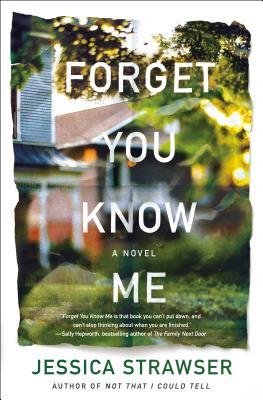
Liza witnesses, via
Skype, a masked man entering her friend’s home while her friend is
upstairs tending to a child. She drives all night to make sure she’s
okay after her friend doesn’t answer the phone, but Molly, the
friend, dismisses the idea that a man came into her house, and she
break’s Liza’s heart. Returning home to a life-changing event
sends Liza back to her hometown, where no investigation is proceeding
for the mystery man. Strawser digs deep into the fears of a married
couple in multitudes of trouble, the evolution of friendship, and a
reluctant return to one’s roots. She brilliantly intertwines the
consequences of the characters’ actions as they rush headlong into
premature conclusions. This novel is a great look into love
resurrected and the ability to access romantic love after a trauma.
Strawser is a talented storyteller. I was fortunate to receive a copy
of this wonderful book from the publisher Macmillan through
NetGalley.
John beckoned me over to look at mom’s birthday gift, a photo of
all of us kids. She’d hung it on her dining room wall above her
grandma’s buffet. I looked in the bottom right corner where he
pointed.
“Is that a cat?”
“No way. I don’t
own a cat. I’m allergic.”
“It looks like a
black cat.”
“If it were, I
would be dead. You know my allergy.”
“I do. That’s
why it seems so weird.”
I looked closer. It
must be a shadow, but it sure did look like a black cat. His eyes
were glowing green from the flash.
Shelley took a
selfie of us, with her hand held in front to show off the engagement
ring, for her parents, who lived across the country. After texting it
to them, her dad called, concerned.
“Daddy! Isn’t it
exciting? Wait. What? There’s no cat. No, no, Tim’s allergic.
What? Of course, I’m sure.” She hung up and went to her text.
There was indeed a black cat on her lap, her arm just above its head,
engagement ring accentuating her smile. What the hell?
Now I lie in bed,
the creature sitting on my chest. It’s weight feels so real, yet my
allergies are not activated by its presence. I cannot go to sleep. I
cannot move. My phone is in the living room.
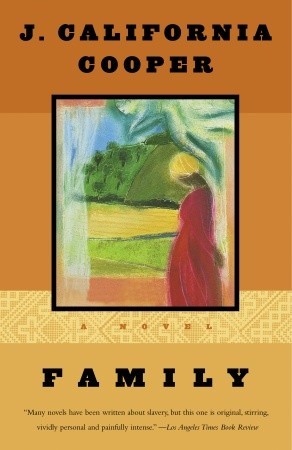
From a cosmopolitan family are beget descendants who are stolen for
slavery in the American South, bringing dear reader to Fammy, who
begets Clora by a black man because she wanted a black baby for her
own, after enduring her master’s rapes and the selling of her
children. She takes her life, as does Clora, when she envisions the
future of her daughter Always. Yet Clora persists as a spiritual
entity, watching her family throughout their lives. This is the story
of Always, unable to follow her siblings in their escape by passing
for white, who rises above her veneer of subjugation, fully prepared
to live free after emancipation. Clora witnesses her family branch
out again across the globe.
Cooper explicitly
presents the vicarious existence of slaves, and the various ways that
could procure a safer passage, as well as the intricately convoluted
familial connections betwixt white masters / mistresses and slaves.
The hint of dialect bumps through both races, showing the blending of
cultures based on proximity, and religion also bleeds across the
barriers, represented by Clora’s routine references to the
Christian God. This novel offers a valuable lesson in how the
foundation for systemic racism was laid and on what our country was
built, in spite of the whitewashed American dream. Read it with a
careful eye toward the small references and unspoken understandings
between characters.
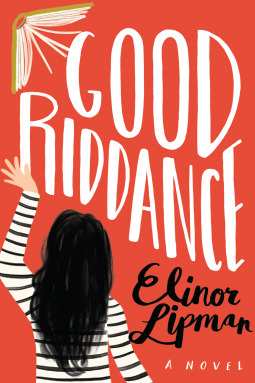
Daphne Maritch
inherits the yearbook that the class of 1969 dedicated to her mother,
their teacher. Attending every class reunion of that year’s class,
her mom dashed off judgment calls in that yearbook, while alienating
her family further. Daphne has no use for it and tosses it in
recycling, only to discover her neighbor has rescued it and has
documentary plans for it, focusing on her mother’s life. In her
attempt to repossess it, Daphne learns exactly how much she didn’t
know about her mother, and how much better her father knows her than
she realized. Secrets explode, Daphne explodes…romance ensues.
Lipman creates a
character whose complexity makes her less endearing than interesting,
leading dear reader to enjoy her ups and downs from outside the
emotions, yet still root for her as she makes terrible life
decisions. Choices made by all family members in the past reverberate
in the presence, causing confusion and offering challenging choices.
The integrity of the characters remains resolute as they fluffercate
over “9/10 of the law” and “right to know.” This is an
absolutely FUN story, whipping back and forth in allegiances, and up
and down in storyline. I was fortunate to receive a copy of this
fabulous book from the publisher Houghton Mifflin Harcourt through a
Goodreads giveaway.
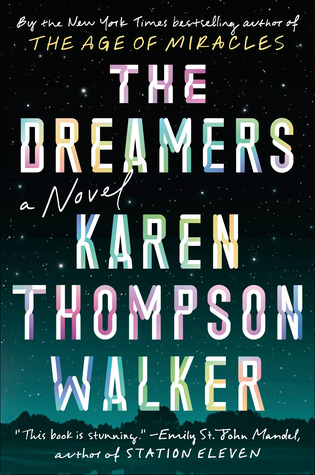
A sleeping sickness befalls the little college town of Santa Lora, CA, starting with Mei’s roommate Kara, prompting a quarantine of their dorm. Quickly overwhelmed, the hospital sets up the children who succumb in the public library. The patients wake up in random order with time span and chronology confusion, or they never wake up—dying or coming to consciousness days, weeks, months after succumbing. Mei becomes part of the relief effort by those immune to the illness. Thompson Walker brilliantly moves in and out of the epidemic containment through cordon sanitaire and the sleepers’ astonishingly realistic dreams. Graphic descriptions of virtual long lives lived for decades and anomalies that persist after awakening draw the reader into the deep wells of grief and confusion of those who wake to a lesser reality. The frustrated anger and desperation of family and friends prevented from contacting loved ones is credibly shown by such irrational actions as climbing the quarantine fence and rushing the police. The author references other such unusual occurrences, and how conspiracy theories can easily form from a frightening epidemic never diagnosed by doctors. It brings to mind the sleepy sickness brought on by the Spanish flu epidemic of the early 20th century, whose victims remained catatonic for decades. I was fortunate to receive a copy of this well-written, wonderfully told novel from the publisher Random House through a Goodreads giveaway.
Anna Roux’s life changed drastically when her husband moved them
from Paris to the American Midwest. Her profession as a dancer fades
to history, and she disappears inside herself, despair manifesting as
anorexia. In a holiday visit home, her family’s shocked reaction to
her appearance prompts her husband to commit her to a strict program
at 17 Swann Street, where Anna learns the hard way to eat again.
There’s so much more going on than Anna feeling fat, so much
involved in succumbing to an insidious disease. Zgheib carefully
maneuvers through the complexity of her character’s inner turmoil.
As a contributing factor as well as an integral part of Anna’s
support system, her husband is explored through his emotional roller
coaster, denial, and finally, tough love response to her illness.
This story paints a
detailed description of a unique life with an unfortunately common
disease, where one cannot point to any one action as a causation.
Readers with no connection to this illness still will reel from the
pain of a young woman who feels out of control of her own life, who
cannot reconcile her less than desirable circumstances with the love
she feels for her husband, sympathizing with her as she is forced to
confront the voice of anorexia telling her that she is not enough.
The slow, challenging journey is well told by a talented writer. This
is a must-read for the awareness and understanding it brings. If
anorexia has touched your life in any way, offer this story to
friends and family. Even if it hasn’t, read and share for the
compassion invoked.
Yara Zgheib’s poetic and poignant debut novel is a haunting portrait of a young woman’s struggle with anorexia on an intimate journey to reclaim her life.
The chocolate went first, then the cheese, the fries, the ice cream. The bread was more difficult, but if she could just lose a little more weight, perhaps she would make the soloists’ list. Perhaps if she were lighter, danced better, tried harder, she would be good enough. Perhaps if she just ran for one more mile, lost just one more pound.
Anna Roux was a professional dancer who followed the man of her dreams from Paris to Missouri. There, alone with her biggest fears—imperfection, failure, loneliness—she spirals down anorexia and depression till she weighs a mere eighty-eight pounds. Forced to seek treatment, she is admitted as a patient at 17 Swann Street, a peach pink house where pale, fragile women with life-threatening eating disorders live: women like Emm, the veteran; quiet Valerie; Julia, always hungry. Together, they must fight their diseases and face six meals a day. Every bite causes anxiety. Every flavor induces guilt. And every step Anna takes toward recovery will require strength, endurance, and the support of the girls at 17 Swann Street.
Yara Zgheib is a Fulbright scholar with a Masters degree in Security Studies from Georgetown University and a PhD in International Affairs in Diplomacy from Centre D’études Diplomatiques et Stratégiques in Paris. She is fluent in English, Arabic, French, and Spanish. Yara is a writer for several US and European magazines, including The Huffington Post, The Four Seasons Magazine, A Woman’s Paris, The Idea List, and Holiday Magazine. She writes on culture, art, travel, and philosophy on her blog, “Aristotle at Afternoon Tea” (http://www.aristotleatafternoontea.com/).