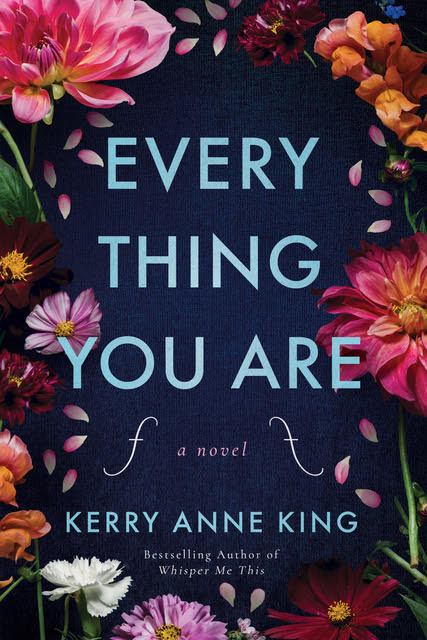
One
tragic twist of fate destroyed Braden Healey’s hands, his musical
career, and his family. Now, unable to play, adrift in an alcoholic
daze, and with only fragmented memories of his past, all Braden wants
is to escape the darkness of the last eleven years.
When his ex-wife and son are killed in car accident, Braden
returns home hoping to forge a relationship with his troubled
seventeen-year-old daughter, Allie. But how can he hope to rescue her
from the curse that seems to be shadowing his family?
Ophelia “Phee” MacPhee, granddaughter of the eccentric old man
who sold Braden his cello, believes the curse is real. She swore an
oath to her dying grandfather that she would ensure that Braden plays
the cello as long as he lives. But he can’t play, and as the
shadows deepen and Phee finds herself falling for Braden, she’ll do
anything to save him. It will take a miracle of forgiveness and love
to bring all three of them back to the healing power of music.
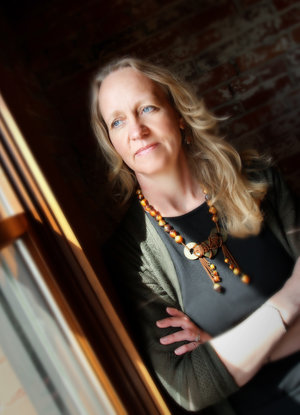
Kerry Anne King lives with her Viking in a little house surrounded by
trees, the perfect place for writing books and daylight dreaming.
She spends her days working as an RN in a clinic, spinning her
tales early in the morning and in the evenings after work. She
believes passionately in the idea of the “whole self” and
is ever in pursuit of balancing mind, body, and spirit. She also
writes fantasy and mystery novels as Kerry
Schafer and provides coaching
services to creatives who are experiencing procrastination,
overwhelm, and other blocks that get in the way of their important
creative work.
Six
bestselling and award-winning authors bring to life a breathtaking
epic novel illuminating the hopes, desires, and destinies of
princesses and peasants, harlots and wives, fanatics and
philosophers—six unforgettable women whose paths cross during one
of the most tumultuous and transformative events in history: the
French Revolution.
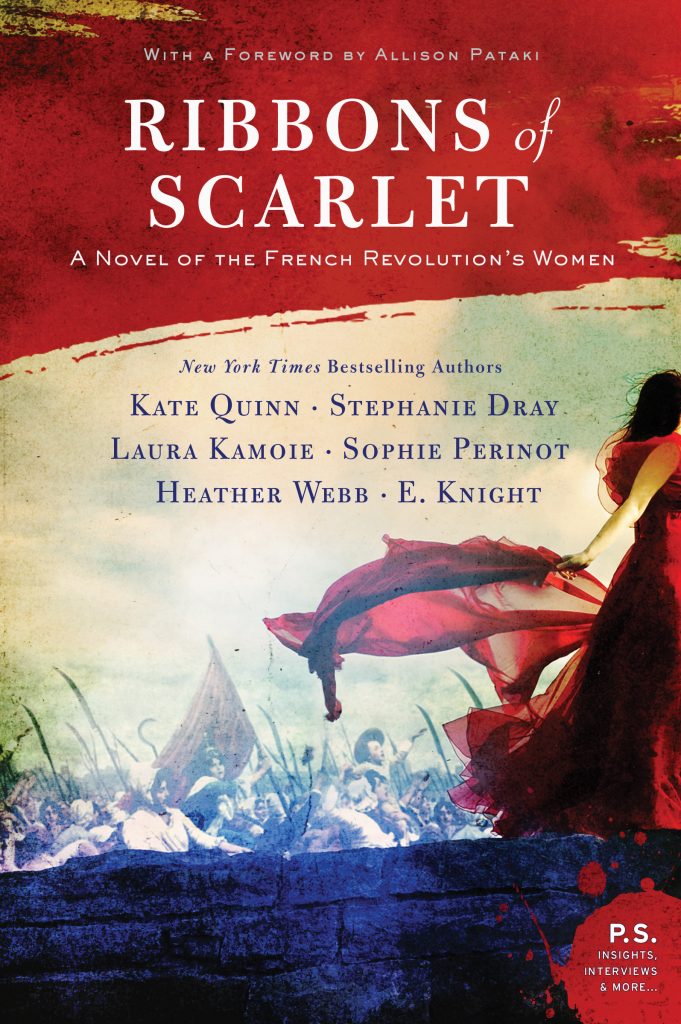
RIBBONS
OF SCARLET: A Novel of the French Revolution, releases October 1st,
2019! Check out the amazing cover below and pre-order your copy
today!
About
RIBBONS OF SCARLET: A Novel of the French Revolution (Coming
October 1, 2019)
Ribbons
of Scarlet is a timely story of the power of women to start a
revolution—and change the world.
In
late eighteenth-century France, women do not have a place in
politics. But as the tide of revolution rises, women from gilded
salons to the streets of Paris decide otherwise—upending a world
order that has long oppressed them.
Blue-blooded
Sophie de Grouchy believes in democracy, education, and equal rights
for women, and marries the only man in Paris who agrees. Emboldened
to fight the injustices of King Louis XVI, Sophie aims to prove that
an educated populace can govern itself–but one of her students,
fruit-seller Louise Audu, is hungrier for bread and vengeance than
learning. When the Bastille falls and Louise leads a women’s march
to Versailles, the monarchy is forced to bend, but not without a
fight. The king’s pious sister Princess Elisabeth takes a stand to
defend her brother, spirit her family to safety, and restore the old
order, even at the risk of her head.
But
when fanatics use the newspapers to twist the revolution’s ideals
into a new tyranny, even the women who toppled the monarchy are
threatened by the guillotine. Putting her faith in the pen, brilliant
political wife Manon Roland tries to write a way out of France’s
blood-soaked Reign of Terror while pike-bearing Pauline Leon and
steely Charlotte Corday embrace violence as the only way to save the
nation. With justice corrupted by revenge, all the women must make
impossible choices to survive–unless unlikely heroine and
courtesan’s daughter Emilie de Sainte-Amaranthe can sway the man
who controls France’s fate: the fearsome Robespierre.
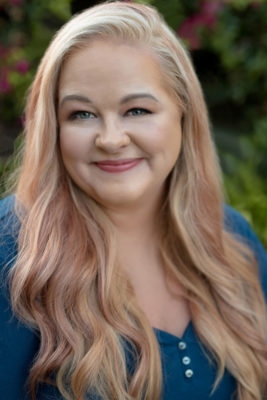
Kate
Quinn is
the New
York Times
and USA
Today
bestselling author of historical fiction. A native of southern
California, she attended Boston University where she earned a
Bachelor’s and Master’s degree in Classical Voice. She has written
four novels in the Empress of Rome Saga, and two books in the Italian
Renaissance, before turning to the 20th century with “The Alice
Network” and “The Huntress.” All have been translated
into multiple languages. Kate and her husband now live in San Diego
with two rescue dogs named Caesar and Calpurnia, and her interests
include opera, action movies, cooking, and the Boston Red Sox.
Stephanie
Dray is
a New
York Times,
Wall
Street Journal
& USA
Today
bestselling author of historical women’s fiction. Her award-winning
work has been translated into eight languages and tops lists for the
most anticipated reads of the year. She lives near the nation’s
capital with her husband, cats, and history books.
A
New
York Times,
Wall
Street Journal,
and USA
Today
bestselling author of historical fiction, Laura
Kamoie has
always been fascinated by the people, stories, and physical presence
of the past, which led her to a lifetime of historical and
archaeological study and training. She holds a doctoral degree in
early American history from The College of William and Mary,
published two non-fiction books on early America, and most recently
held the position of Associate Professor of History at the U.S. Naval
Academy before transitioning to a full-time career writing genre
fiction. She is the author of AMERICA’S FIRST DAUGHTER and MY DEAR
HAMILTON, co-authored with Stephanie Dray, allowing her the exciting
opportunity to combine her love of history with her passion for
storytelling. Laura lives among the colonial charm of Annapolis,
Maryland with her husband and two daughters. www.LauraKamoie.com
Sophie
Perinot is
an award-winning, multi-published author of female-centered
historical fiction, who holds both a Bachelors in History and a law
degree. With two previous books set in France—during the 13th and
16th centuries—Sophie has a passion for French history that began
more than thirty years ago when she first explored the storied
châteaux of the Loire Valley. She lives in the Washington DC
metropolitan area with her husband, children and a small menagerie of
pets.
Heather
Webb is
the award-winning and international bestselling author of six
historical novels set in France, including the upcoming Meet
Me in Monaco, set
to the backdrop of Grace Kelly’s wedding releasing in summer 2019,
and Ribbons
of Scarlet,
a novel of the French Revolution’s women in Oct 2019. In
2015, Rodin’s
Lover was
selected as a Goodreads Top Pick, and in 2017, Last
Christmas in Paris became
a Globe
& Mail bestseller
and also won the 2018 Women’s Fiction Writers Association STAR
Award. Her works have received national starred reviews, and have
been sold in over a dozen countries worldwide. When not writing, you
may find Heather collecting cookbooks or looking for excuses to
travel. She lives in New England with her family and one feisty
rabbit.
E.
KNIGHT is
a USA
Today
bestselling author of rip-your-heart-out historical women’s fiction
that crosses the landscapes of Europe. Her love of history began as a
young girl when she traipsed the halls of Versailles and ran through
the fields in Southern France. She can still remember standing before
the great golden palace, and imagining what life must have been like.
She is the owner of the acclaimed blog History Undressed. Eliza lives
in Maryland atop a small mountain with a knight, three princesses and
two very naughty newfies. Visit Eliza at www.eknightauthor.com/,
or her historical blog, History Undressed, www..
You can follow her on Twitter: @EKHistoricalFic,
Facebook: https://www.,
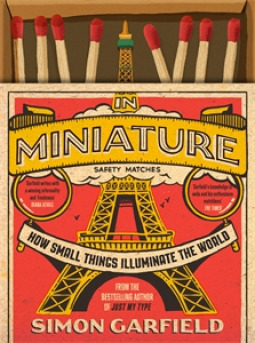
One would expect a book on miniatures to target a specific audience, but Garfield offers a holistic look, broadening the concept of miniature, from souvenirs and model planes / ships to tiny books and staged crime scenes. In a surprise opening, Garfield shares the psychological obsession with recreations of the iconic Eiffel Tower, some models larger than a person, so not an expected miniature, but still tiny versions of the beloved landmark. He moves on to intricately detailed and blue-printed miniature villages and cities of astounding square footage. And from there, Garfield flies high to explore tiny portraits of royals and young Queen Mary’s dollhouse, for display only. More surprises enchant the reader upon finding out the rockstars who also happen to be model train fans, architect models famous for the intended structure not being built, and the elaborate theater that was, Garfield meandering out to mini stage sets. The book wraps up with a microscopic matrix-like painting within a painting within a painting, micro-sculptures, and of course, rice drawings and eye of the needle scenes, but also mini-cooking YouTube videos and contemporary artists. The Epilogue wanders through popular culture’s take on miniatures, and a retelling of Prussian victory at Waterloo, the final note an 8” 3D Mini-Me of the author himself.
At the end of every
chapter is a “mini-break” enlightening readers upon such obscure
miniatures as Egyptian shabtis, slave ship models, flea circuses,
floor games / play rooms presaging Simcity, LSD tab art, Temple of
Jerusalem, Las Vegas’ idea of world culture reduced to a resort, a
shock artist’s work, and designer chair samples.
Extensive research was done for this book, with thorough timelines, respectful interviews, and photos. Garfield describes the inspiration, effort, finances, and passion involved in all aspects of the miniatures he’s investigated, relaying the history as a storyteller. The book is global in its scope and astonishing in its depth and content, a fun read for anyone interested in extraordinary things, reminiscent of The Museum of Interesting Things in NYC.
I received a copy of
this fascinating book from the publisher Atria Books through
NetGalley.
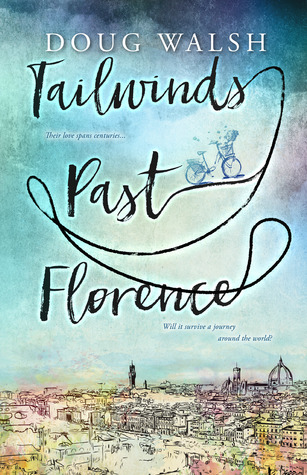
Edward surprises Kara with the bicycling-around-the-world trip she’s been planning for years, failing to inform her that it’s a flight response from being let go from his position and blacklisted in the financial sector. On the US leg of the tour, Edward is offered a job by a host, who insists on an earlier starting time than Kara’s expected two years, forcing Edward to speed up their trip without explanation. In alternate chapters, Italian Alessio and Japanese Hirosama have traveled to the present from earlier centuries and are connected to Kara, as are the Native American and French-Canadian Edward and Kara came across in the American Midwest. Alessio works for Hirosama in Florence as Edward rushes Kara through Europe. In Florence, things reach a breaking point when Kara’s life is endangered and Edward must make a life-changing decision. Walsh portrays well a marriage unraveling from Edward’s hidden agenda, and the confusion wrought by a supernatural experience. While the paranormal aspect brings intriguing elements, it’s superfluous, as Edward’s subterfuge provides a sufficient story arc, and those elements are not explored. However, they could make for an interesting series, with sequels going deeper into the stories of Allessio, Hirosama, the French-Canadian, and the Native American. Dear reader could then find out what happened to the Native American, who was but a footnote in this tale. I received a digital copy of this fascinating story by the publisher Snoke Valley Books through a Goodreads giveaway.
“The
ring, please.” Father Monahan turned to Jeffrey, whose gaze sent
everyone’s eyes to the back of the room. Whatever he was looking at
was not apparent, and all returned their attention to the couple.
“Jeffrey,” the
groom stage-whispered angrily at his best man. He couldn’t be
bothered right now that his lifelong friend’s unrequited love
hadn’t shown. For god’s sake, it was his wedding. If Jeffrey
ruined it, their friendship was in question. It had been faltering
ever more as this obsession had grown.
Laila slowly opened
the heavy church door, hoping for a quiet entrance. She was late,
hadn’t been expecting to come at all. Susanna had begged her to
come. Her little sister’s wedding was a must, but she understood
that HE would be there. They agreed that no one wanted the commotion
that would ensue from her presence. Yet she desperately wished to see
her baby girl she helped raise marry the man of her dreams. The door
squeak echoed around the three-stories’ tall ceiling. Acoustics
were fantastic in here—as a singer, she was impressed. Then all
eyes turned again to the back of the room.
Halfway up, Laila’s
ex-husband Henri sat with two of their children, both of them excited
about baby sister as flower girl. Upon seeing Laila in the doorway,
with sunlight haloing her auburn hair, he stood up, snapped his
fingers for the kids to follow, and headed to the door. As he walked
down the aisle, he heard a gasp from the front, but didn’t turn to
find out from who. In his peripheral vision, he noted a tall man in
black on the left get up and head in the same direction. He did not
want to know who this guy was. Henri reached back for his children.
The sound of little feet running behind him assured him that all his
kids were coming.
Tell me about your writing process, including schedule, environment, and inspirations material and abstract.
Now that I’m a student, I write mostly during spring and summer breaks. I call these my “on” periods. During my “on” periods, I have a rigid schedule: work, gym, dinner, 1 hour writing, and then 1 hour reading (though, I often read for longer). During my “off” periods, I’ve been trying to introduce a simple 500 words a day to maintain momentum without interfering with my school work.
As for environment, I write in my bedroom on my laptop while sitting on my bed. I know, super classy. I live in a small apartment, so there’s not a lot of options, and this is the most comfortable spot to me.
I find my inspiration from everywhere, but my favorite source of inspiration is real life. I read a lot of news, history, mythology, and true life stories—and when I read these I get ideas for stories. It might just be from a person’s or town’s name, or maybe the local lore of a lake. I find that stuff to be a goldmine of inspiration. For example, I read about an ancient underground city that went seven floors deep that was discovered in the middle east. From that I built a fantasy story of a hidden magical city under San Diego.
Walk me through creating and maintaining Writing Bad.
When I first created Writing Bad, I did so because I was tired of the
pretentious belittling I’d see in other writing groups. I would see more
developed writers just tearing the newbies apart limb to limb,
destroying their self-esteem, and it pissed me off. I wanted to create a
group where everybody felt welcome to share their writing, regardless
of their skill level. I wanted to ensure we branded the group properly.
The colors were black and white, the atmosphere friendly, chill, laid
back, edgy cool, with a bite. We weren’t afraid of profanity, and we
didn’t censor. We allowed freedom of expression. That was what separated
us, and what separates us. The first year I spent every hour checking
in on the group. I have had to shift through some admins, though my lead
admin Samantha has remained loyal and reliable (couldn’t have done it
without her), until we finally reached today’s team. I’m not as involved
today as I used to be, or as I’d like to be, but the group has
continued to flourish and grow. It’s beautiful to see what it’s become.
I love that my creativity allows me to see outside the box. I love to
read, and I read so many different things. I’m not the type that only
reads something that is in line with their beliefs—rather, I enjoy
challenging my beliefs. I enjoy challenging the limits. I love reading
fiction, nonfiction, politics, science, history, and more. I honestly
just love to learn, and the more I learn, the more I love to share what I
learn.
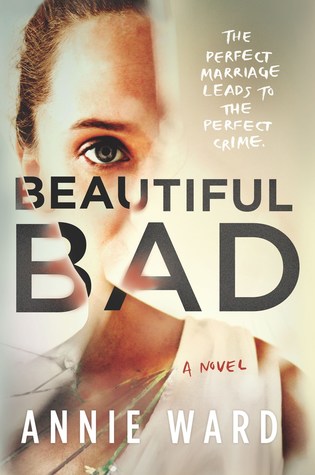
Maddie fell hard for Ian, British security detail, when she taught
English in Bulgaria and her BFF Joanna was a humanitarian working in
Macedonia before and during their civil war. He’s hard to pin down,
even after she marries him despite Joanna’s inexplicable hostility
toward him. He insists on moving from NYC to her small, Kansas
hometown, though he spends much of his time in the Eastern bloc,
working in a security business he started with his brother after
leaving his government position. The story unfolds in layers as it
goes back and forth in time and around the globe to explain the
horrible murder. Ward does an excellent job evoking sympathy for
Maddie, who appears to be on the receiving end of Ian’s PTSD. This
novel portrays young American idealists who get caught up in tragedy,
differences in maturity levels of best friends, and how lack of
self-awareness contributes to obfuscation, as a mismatched romance
leads to its horrifying conclusion. I was fortunate to receive this
brilliant story from the publisher Park Row Books through NetGalley.
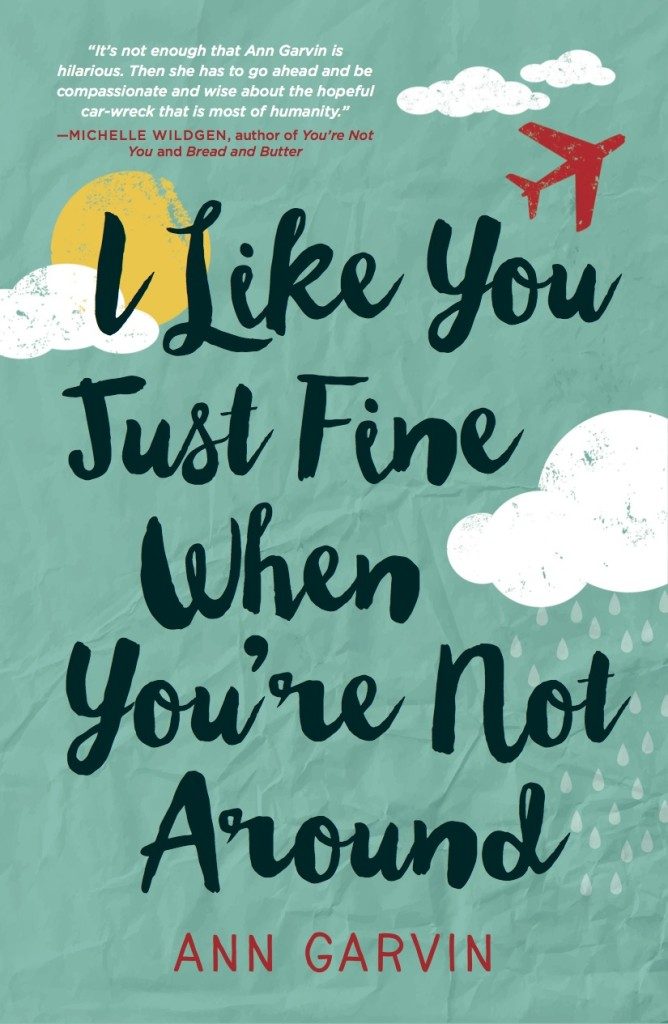
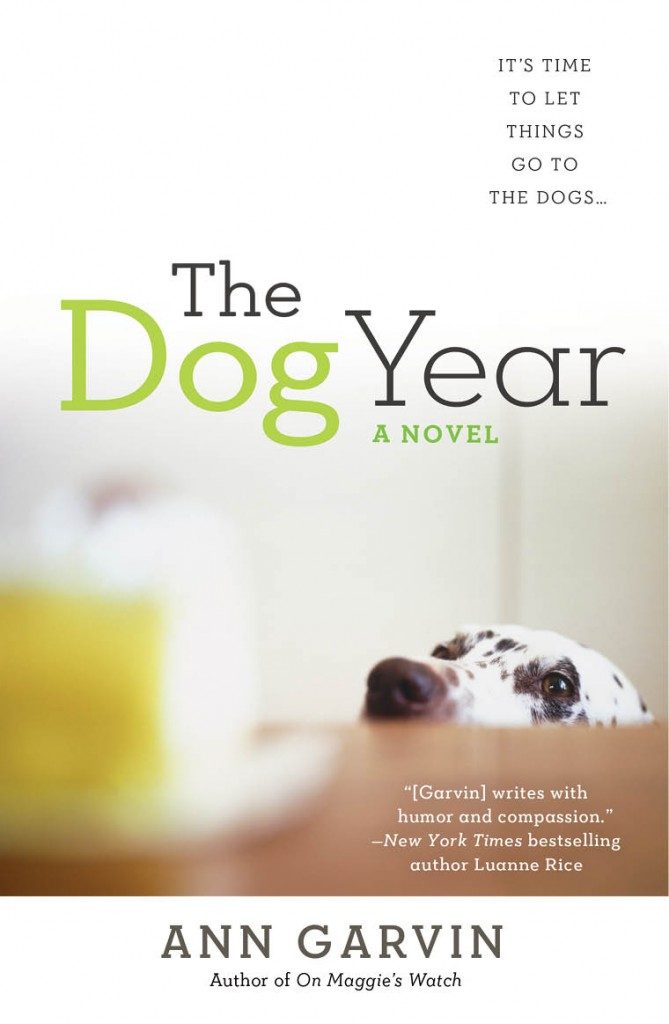
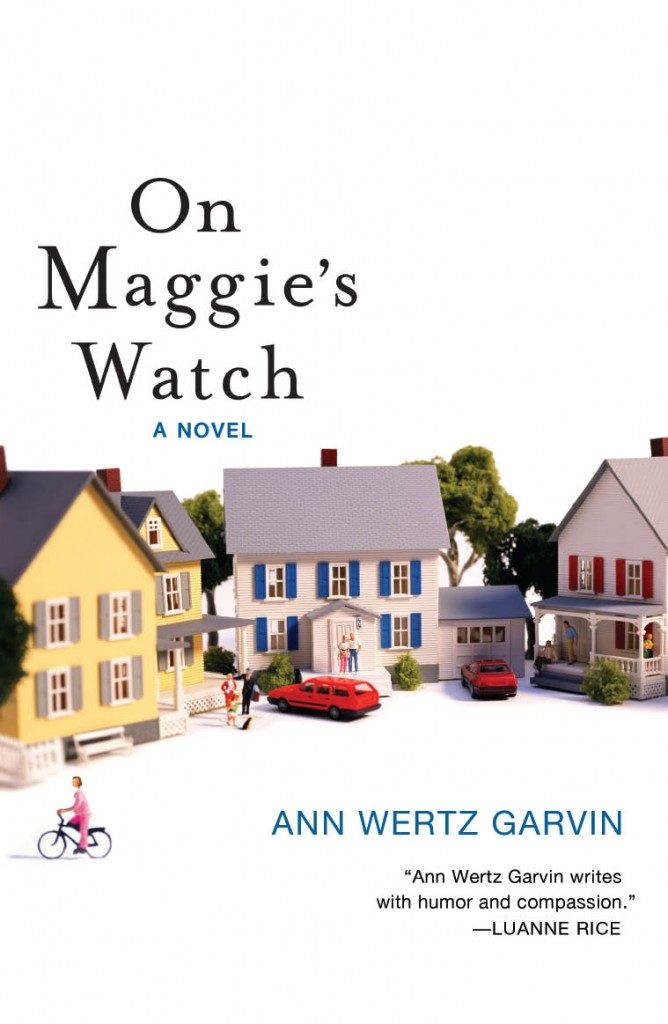
I met Tall Poppy
founder Ann Garvin in Bloom. She is approachable, super supportive of
other writers, and apparently has amazing stamina. She’s
astonishingly friendly and unsurprisingly witty. She’s a
Renaissance woman of our times. We’re lucky to have her, really.
Describe your
writing process—schedule, environment, techniques / strategies /
magic spells, and inspirations material and abstract (what’s in
your office? who’s in your head?).
When I’m deep into a book, it’s all I can think about. I get behind on everything. I love to write early in the AM. I get up, get coffee and start to write, and I’m astonished to see how much time passes so quickly. I like quiet, sunshine and my dog at my side. Otherwise I just need a computer and an idea.
Walk me through
your publishing process, from final draft to final product: who does
what when and what marketing you do as the author.
Oh Lord, it seems like the longest road. And sometimes I don’t know what is happening behind the scenes. Eventually I get the cover idea, which seems like the most fun of the process, as long as I like the art work. Usually I love it. I’ve been lucky. Then it’s a lot of fact checking and proofing and waiting. I spend a fair amount of time figuring out what I’ll do for speaking, promoting, travelling and marketing. I line up readers for early reviews and call bookstores. I dream about what dress I’ll wear to the Oscars after the movie based on my book gets nominated. I write another book. I spend a lot of time hoping and praying.
Tell me about
your support system online and IRL, including the steps in founding
Tall Poppies and Bloom.
The Tall Poppies are a life saver. They are my tribe, my information base, my support system and my reality check. They really are my number one support system. I have a lot of wonderful non-writer friends, and while they cheer me on, they aren’t part of the publishing world, so don’t know how to help in that regard. I like keeping them a little separate, so that I am reminded that writing isn’t the only thing in my life.
It’s been six years since I started the Tall Poppy Writers and it’s been quite the learning experience. We went from a few writers helping each other to a much more organized system of support across the board. We started with a website, a few authors and a lot of energy, and we are still here today working to lift up women writers wherever we can.
How does your
life influence your writing and vice versa?
When my parents died
last year I couldn’t do much of anything. My life has been so busy
lately and it has slowed my writing down. This year I worked really
hard to cut things out and make more room for writing. I’m hoping
it worked and I’ll have more books soon.
What do you love
most about your creativity?
I love that my
impulse is to go kind of zany, but my style is a little more down to
earth. I think that is a good place to be. Aim high, but hit a little
less out of the park; it lends itself to a more balanced life and
story.
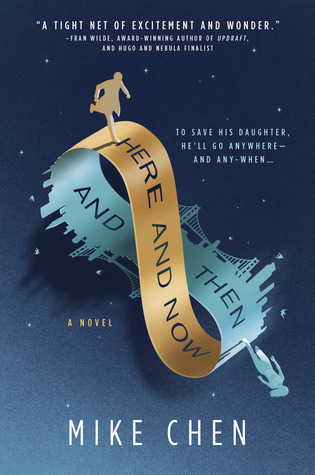
A time travel criminal shot Kin’s Temporal Corruption Bureau retrieval beacon, stranding him in 1996. In the two decades it took his colleagues from 2142 to find him, he built a life with a wife and daughter. Regulations force him back to the future, where he’s been missing for only weeks from his work and his fiancee. His inexplicable disappearance, and her mother’s death, sends his daughter spiraling downward. He breaches protocol, reaching out to her digitally, endangering both. Chen brilliantly maintains time travel integrity, with its possibilities and limitations, placing his main character in an organization enforcing law throughout time, with strict safety policies for agents preventing him from aiding his daughter. This is a family drama that just happens to have a time travel element—a well-written, speculative suspense novel. I was fortunate to receive a digital copy from the publisher Mira Books through NetGalley.
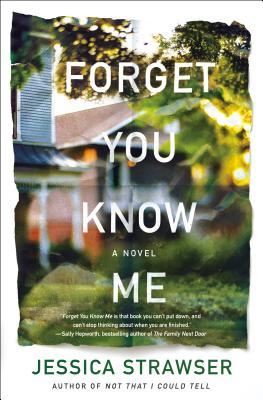
Tell
me about your writing process: schedule, environment, strategies /
techniques, and inspirations material and abstract.
I’m
an organic writer—I think a lot ahead of time about the characters
and what my story’s central questions will be, but don’t outline
in detail or swear by any particular tools or strategies, beyond
reading voraciously, as much as I’m able. I’m very disciplined,
with daily and weekly goals, and believe firmly in the power of
forward momentum once I get going on a manuscript.
I
wrote my first two novels by night, as my babies/toddlers slept,
while working a demanding day job as editorial director for Writer’s
Digest magazine. Not long after signing the contract for Forget
You Know Me, I scaled back my role at the magazine and shifted to
writing by day as my primary focus. A writing career involves a fair
amount of evenings and weekends for things like book clubs,
conferences and festivals, so this is a much more workable focus for
my family, which always comes first.
Describe
your publishing process, from final draft to final product, including
publishing team and timeline. How did your work in the industry
prepare you for the writing world as an author?
It’s
been a little different for every book, particularly as staffing
changes at my publisher have led to a few editorial team transitions,
but I’m working at the pace of about a book a year. I refine a
draft until I think (hope) it’s close to working as what I
envisioned for the story, then get feedback from a few trusted
readers and revise yet again before turning it over to my editor.
Then comes another round to incorporate the excellent suggestions
from her professional eye.
My
work in the industry taught me what a team effort publishing is; I
have enormous respect for my editors, having been one, and deep
gratitude for the efforts of the hardworking support teams—marketing,
publicity, design and beyond.
Who
are your biggest cheerleaders online and IRL, and how did you get
into the Tall Poppies (beyond being an excellent storyteller)?
My
family and friends—who’ve seen firsthand my dedication to this
craft since long before I ever got published—are my biggest
cheerleaders, and their warm support means the world to me.
Also, at the start, were my colleagues at Writer’s Digest—we
were all writers with a genuine love for the work we were doing
there, and it was humbling to have them so enthusiastically in my
corner—as well as a debut author group called 17 Scribes—it was
invaluable to be tapped into a network of other authors publishing
their first novels in 2017, and many of us remain connected today.
I’d
met some of the Tall Poppy Writers through conferences, WD, the
Women’s Fiction Writers Association, and online, and had admired
their collaborative spirit and talented body of work for years; I was
elated when they invited me to join.
How
does your life influence your writing and vice versa? Please share
fun details about being the 2019 Writer-in-Residence for Public
Library of Cincinnati and Hamilton County.
While
I don’t write directly from life experiences, of course we all are
heavily influenced by the phases of life in which we find ourselves
and the beautiful (and not so beautiful) aspects of human nature that
turn our heads. I’d find it impossible to separate the two!
It’s
a wonderful honor to be serving as the newly minted
Writer-in-Residence for the Cincinnati library system this year; it
encompasses more than 40 branches, and I’ll doing community
engagement with local readers (visiting library branch book clubs and
hosting a podcast) as well as aspiring writers (teaching free
workshops and holding office hours, for instance).
What
do you love most about your creativity?
Through
dreaming up a story from pure imagination, somehow, I end up feeling
more like me.