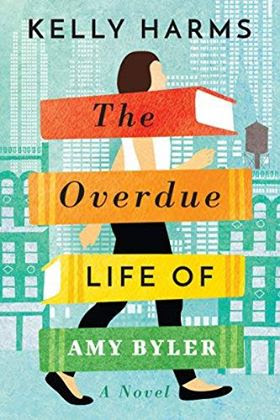
At her local drugstore, Amy Byler runs into her husband, who went on
a business trip to Hong Kong and stayed for three years. He’s
returned to make things right and be the father his children deserve.
School Librarian Amy signs up to present her reading program at a
conference in NYC, where she plans to reconnect with her college
roommate, during the kids’ week with their father. She meets a hot
librarian, makes a new friend, and starts a movement. Harms cleverly
uses the modern-day epistolary of email and texting in this humorous
exploration of a single mom becoming her own woman. Fans of Ann
Garvin, Katherine Center, and Kerry Anne King will appreciate Harms’
voice. I received a digital copy of this wonderful story from Lake
Union through NetGalley.
What happens when an overworked, underappreciated single mother of two
gets an opportunity to spend a week away from reality in NYC? What
happens when that week turns into an entire summer? And, what happens
when this rare gift of personal freedom, self-reflection, and fun comes
to an end?
These are the questions at the heart of former editor and literary agent
Kelly Harms’ delightful and empowering new novel, THE OVERDUE LIFE OF AMY BYLER
(Lake Union Publishing; May 1, 2019; hardcover), about a middle-aged
woman’s much-needed Momspringa.* Full of wit, heart, bookish-references,
and romance, THE OVERDUE LIFE OF AMY BYLER is next year’s feel-good read!
*Momspringa (n.): A period of time when moms are given time away from
the demands of daily life, including their children, so they can
recharge and reconnect with themselves as human women. Inspired by the
Amish term Rumspringa.
Describe your
writing process: schedule, environment, strategies, and inspirations.
I write from 9-4
during the workweek, and sometimes earlier in the morning or on the
weekends (especially when I’m editing). I’m a creature of habit,
so I work almost exclusively in my home office—I’m not a coffee
shop or kitchen table kind of writer. I need silence (which I don’t
always get; my “assistant” happens to be my dog, and she barks
her head off when the delivery trucks come down our street) and long
chunks of time dedicated just to writing in order to produce a book.
As for inspiration,
I find it everywhere—conversations I’ve had, things that have
happened in my own life, trips I’ve taken. At any given time, I
have two or three novel ideas I’m contemplating even as I’m
writing another draft.
Walk me through
your publishing process from “final” draft to final product,
including your publishing team and marketing that you are expected to
do as the author.
I write about one novel a year, and I’m currently working on my
sixth, which comes out next February. I can tell you that there’s
no set process … it’s a little different for every book I’ve
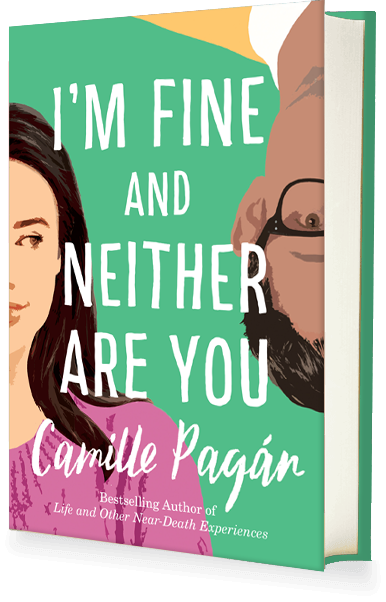
written. For example, I wrote all of I’m Fine and Neither Are
You before selling it to my publisher. But I sold my sixth book,
This Won’t End Well, based on a few chapters and an outline,
and then wrote a draft. After polishing my first draft (which usually
takes 4-6 months to write), I then turn it in to my agent and editor,
and go through three intense edits before going through proofreading
and copyedits. Marketing starts months before a novel comes out, and
lasts … well, it never really ends. That can include connecting
with readers through social media, speaking to book clubs, and doing
talks at libraries, bookstores, and other organizations, just to name
a few.
Who are your
biggest cheerleaders online and IRL?
I’m a member of
the Tall Poppy Writers, which is a wonderful marketing collective of
approximately 40 women authors, and that’s a huge source of support
for me. My husband, my sisters, and my best friend are my IRL
cheerleaders—I couldn’t do this without them. I’m also a member
of numerous online reader and author groups, like Great Thoughts
Great Readers (which is on Facebook) and the Women Fiction Writers
Association. For a fairly social person who works by herself at home,
connecting with others in these groups keeps me sane.
How does your
writing influence your life and vice versa?
Well, writing is
almost like an act of therapy for me. It’s not that I write about
what’s happening in my life so much as I examine themes that are on
my mind—honesty, connection, commitment, desire.
What do you love
most about your creativity?
That my career is
centered around my creativity. I’ve always wanted to be a novelist,
and I have to pinch myself sometimes when I realize that’s become
my full-time job. I worked as a health journalist for 20 years (and
still occasionally write articles for outlets like Health and
WebMD.com), and as much as I like research and facts, it’s so fun
to create an entire world in 300 pages.
Describe your writing process: schedule, environment, strategies, and inspirations tangible and abstract.
I’m a creature of habit, so when I’m writing well, I’m writing every day. When I’m not writing, I may find it difficult to reconnect with the habit, which almost always leaves me feeling anxious and unfulfilled. So while I know I don’t have to write, I also know I’m my best self when I am writing. Knowing that, you may not be surprised to learn that when I’m writing, I tend to dedicate many hours a day to the page. I have an office with a regular desk, but I also have a treadmill desk in our family room; you might find me in either of those places, or even in the kitchen writing and watching the birds. (If you follow me on Instagram, you’ll know I’m a big bird-watcher and amateur photographer.) When I feel stuck–whether or not I’d call it writer’s block–it’s usually because I’ve made a mistake somewhere. This might mean a character behaved unnaturally, or I forced a plot point, or (name your infraction)! Sometimes it takes a few days to figure out where I’ve erred, but other times it’s a longer process. It’s always frustrating for me, and I can’t seem to move beyond the problem scene until I’ve figured it out.
Walk me through your publishing process from final draft to final product, including publishing team and marketing expectations of yourself as the author.
Is any draft a “final draft” when you’re traditionally published? Eventually, yes, but once you submit your polished “final” draft to your editor, you are bound to see that draft again—and probably change it again, too. That draft goes to your copy editor, who’ll return the draft to you with scads of notes and questions, which you’ll need to turn around with a “stet” (leave that word or phrase as originally written) or with a change that makes your story more concise or clearer/better in some way. After, your manuscript will be presented to you with those changes in the style of the actual book but with loose pages. At this stage—and through second- and sometimes third-pass pages—it’s important that you don’t make significant changes to the story. But sometimes you or your editor will catch errors/inconsistencies, or have a last-minute inspiration, and you’ll work something into the manuscript. Meanwhile, meetings with marketing and publicity may begin, in person or by phone, or even a combination of the two. That’s when you’ll hear the team’s plan for your book, and have the opportunity to ask questions and make suggestions.
For my part, I try to supplement whatever in-house initiatives are ongoing, usually by reaching out to bloggers, by sending myself on a tour (real and/or online), and especially by making inroads with my local arts community. I make sure my local bookstore(s) know when my book will be releasing, and I work in conjunction with my publisher to plan some events. It’s important that you try not to burn out once you move into full-time publicity mode, because it can be exhausting. But it can also be exhilarating, once your book arrives and is in your hands—first in the form of advance reader copies (ARCs) and later as early copies of your truly final draft, bound and covered and reader-ready. Always take time to appreciate this milestone. Personally, I like to throw a release-day party, usually to follow my first book signing.
Tell me about your support system online and IRL; who are your biggest cheerleaders?
My husband is my
biggest cheerleader, followed by my kids and extended family. But I
also see a lot of support behind the scenes from several author
friends—people I trust with my early scenes and chapters, who know
I need fuel and encouragement but will tell me if there are issues
with the story. I also see a lot of support through the community of
writers at Writer Unboxed; some of my most potent fuel comes from
them.
How does
writing influence your life and vice versa?
Writer
Unboxed, which I co-founded with Kathleen Bolton thirteen years ago,
has had a tremendous influence on my life as a writer. It has kept me
tethered to writing during tough times, when I might otherwise have
given up. In a broader way, my life informs my writing, because I
tend to process ideas through my writing. And my writing influences
my life because, on the other side of “The End,” I have a clearer
understanding about an idea or a problem, or even my own human
capabilities and limits.
What do you love most about your creativity?
I love the way it
can surprise me, whether it’s a mid-scene revelation or a way of
tying up a scene that springs up seemingly out of nowhere. Times like
that, I feel like there’s a ghost over my shoulder, typing in those
words, because it feels more than a little otherworldly and outside
of myself. That’s when I feel luckiest to be a writer.
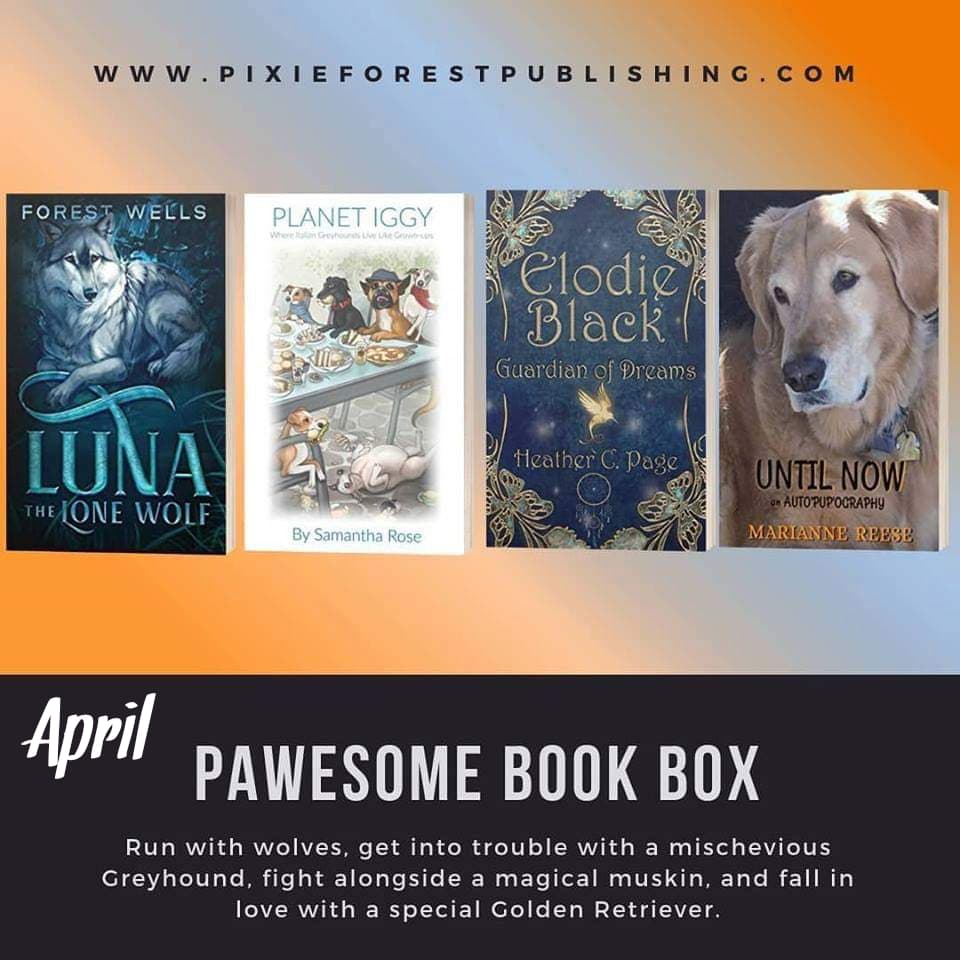
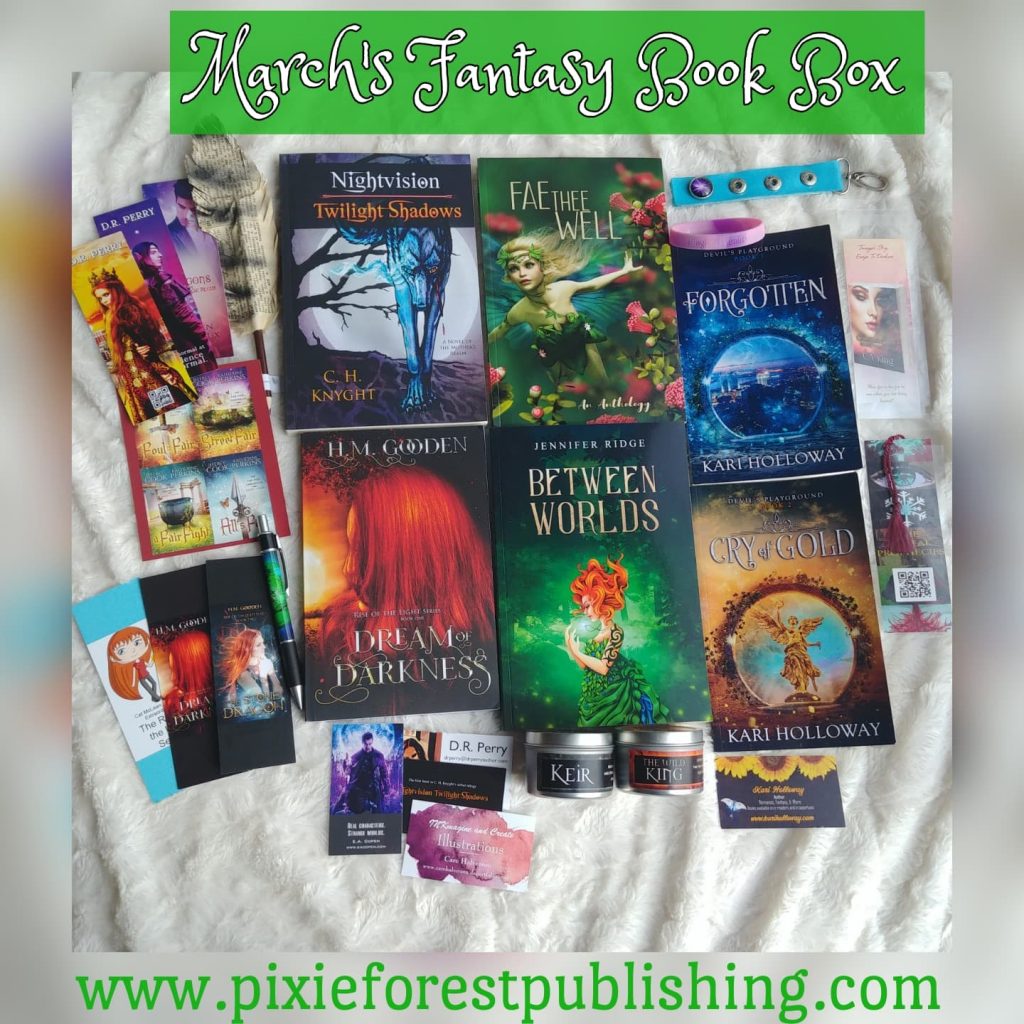
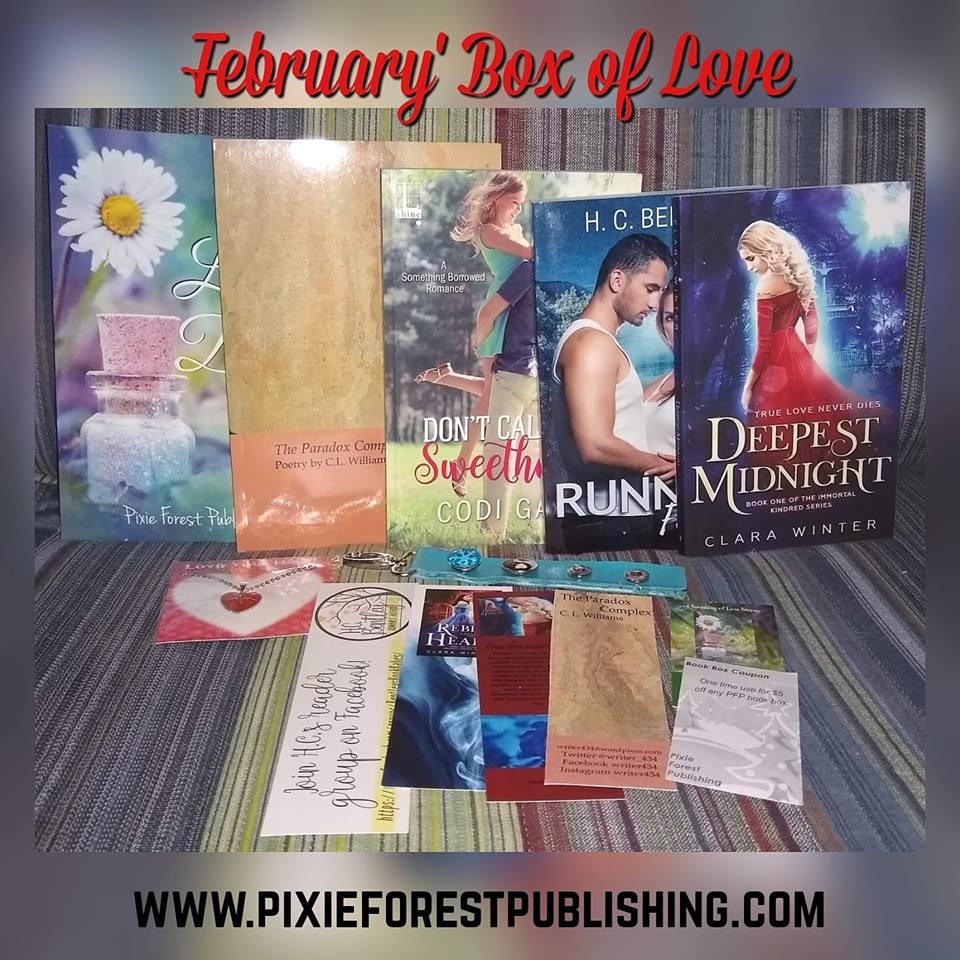
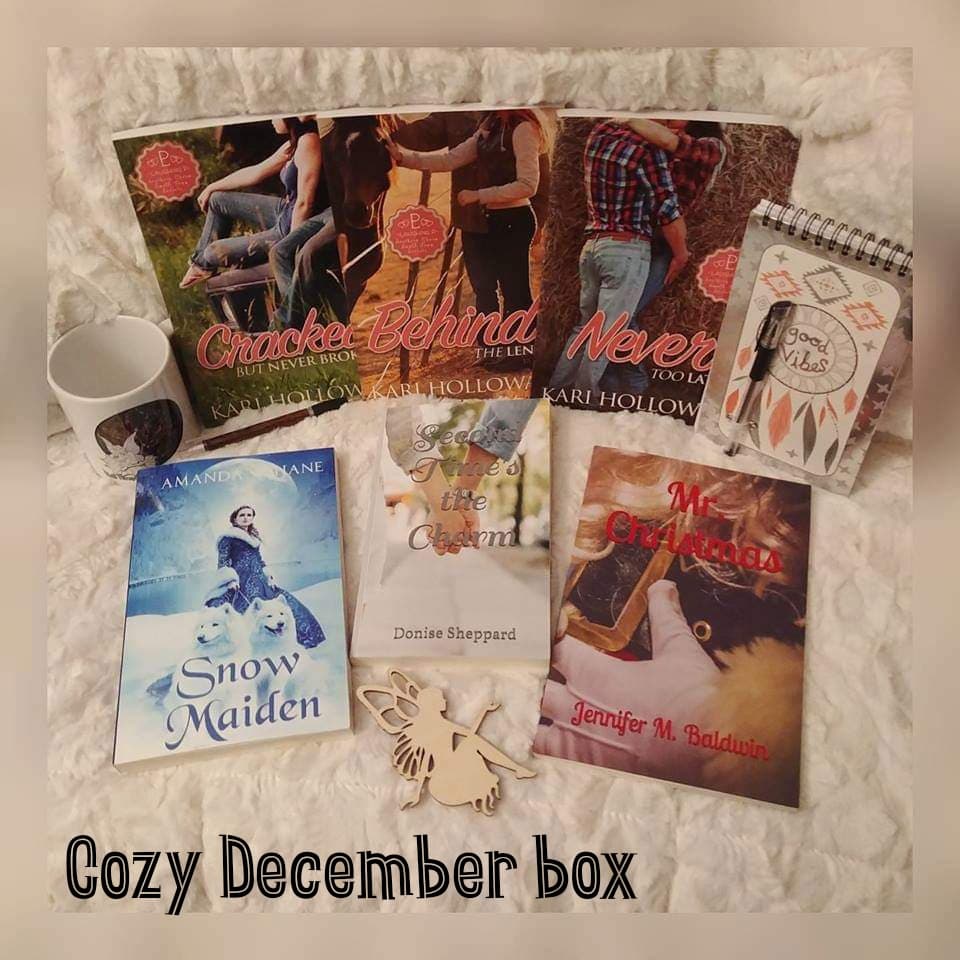
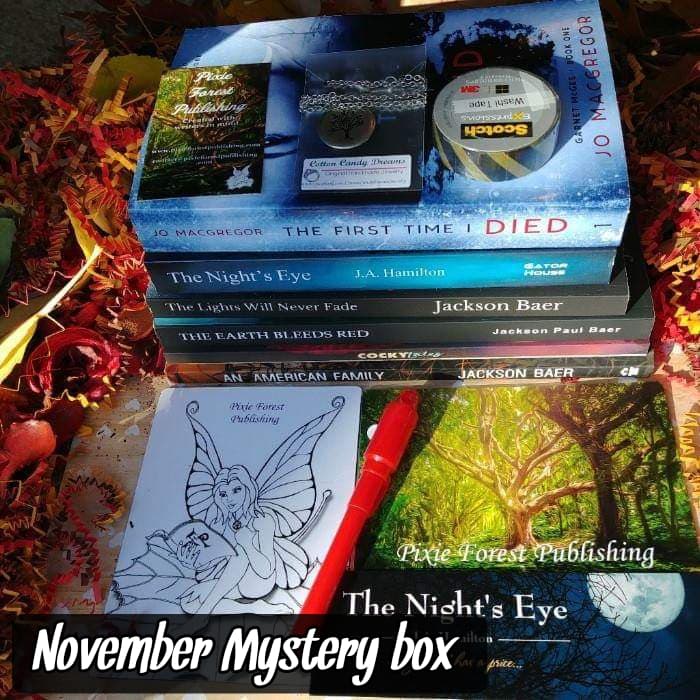
Pixie Forest Publishing loves the idea of spreading awareness of
indie books and anthologies by offering book boxes! Almost all of the
books are signed by the authors, who provide swag like bookmarks,
candles, pens, necklaces, and more. PFP adds in their own unique swag
that’s centered around that month’s theme as well!
They offer up to
five boxes of each theme every month. Some past themes include
fantasy, horror, romance, kid’s, and young adult. To date they’ve
sold nine different boxes! Upcoming themes include another fantasy
box, a Mother’s Day box, vacation themed, sci-fi, and dystopian.
Boxes range from
$30-$40 depending on the contents. Every box includes a $5 off coupon
for a future box and a collectible snap-charm keyring.
Miss a month?
Don’t worry! All the individual books are linked to Amazon on their
website for a month following the box it appeared in, along with the
author’s information.
Interested in
being a part of a box? Email Jensen and Donise at
contact@pixieforestpublishing.com
to learn more and have a chance at being a featured book box author,
poet, or fellow publisher.
Want to stay up to date with all things Pixie Forest? Join their
newsletter and check them out across social media:
Yellow air dusted everyone who dared go outside. We all looked sickly, most of us miserable. Sneezes caused the powdery tree sperm to be flung off as a wet dog shakes off the water. Snorfling followed, a disgusting, yet necessary action. The spores lingered throughout summer. Hearts clenched.
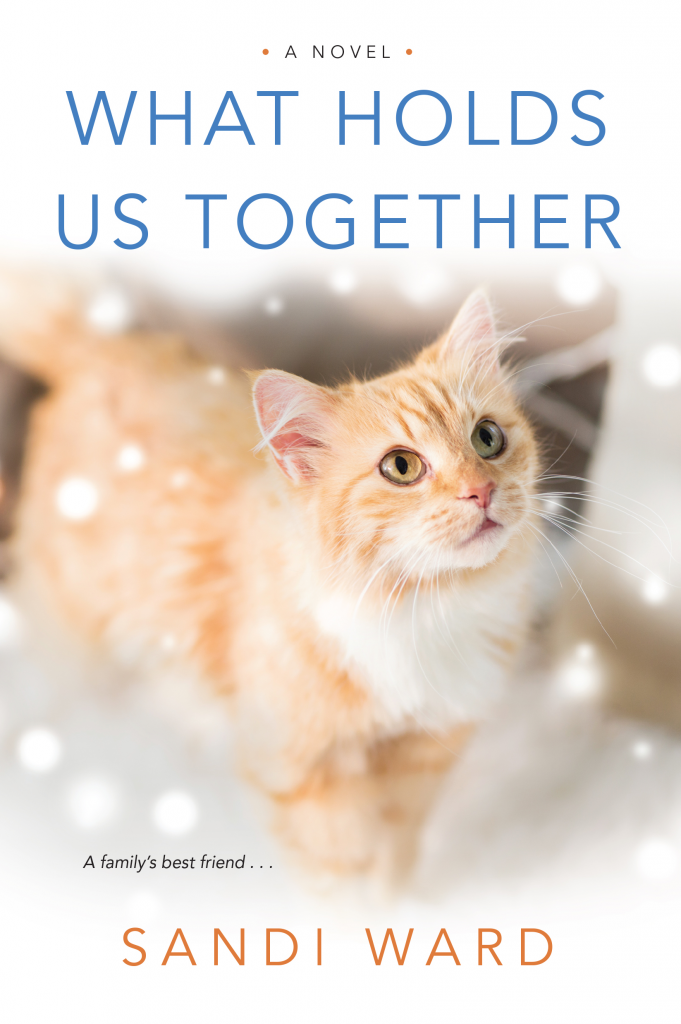
They say that cats don’t like change. But Luna, an imaginative tabby, understands that sometimes it’s necessary. When her owner, Annika, moved back to her small New England hometown six months ago along with her sixteen-year-old twins, Luna knew it was for the best. Ever since Annika’s husband, Peter, died suddenly, the family has been floundering. Luna, too, is guilt-ridden, sure she could have done more to save her favorite person. Luna also knows something the others don’t know. Peter’s spirit is still with them, and Luna believes there is something he needs her help to do . . .
Annika has been struggling to move on. It doesn’t help that her son, Donovan, blames her for his father’s death. Peter always told Annika that they had the best love story going, yet the fact is that much of their story has been hidden away, even from their children. When Annika’s first love, Sam, arrives to plow them out during an intensifying storm, the truth begins to emerge at last. And Luna—watchful and unwavering in her affection—may be her family’s best hope of learning how to forgive and to heal . . .
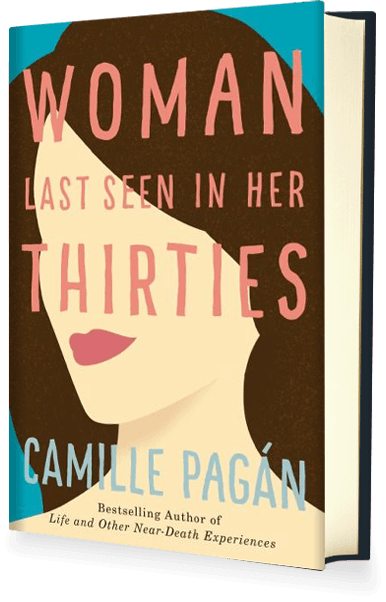
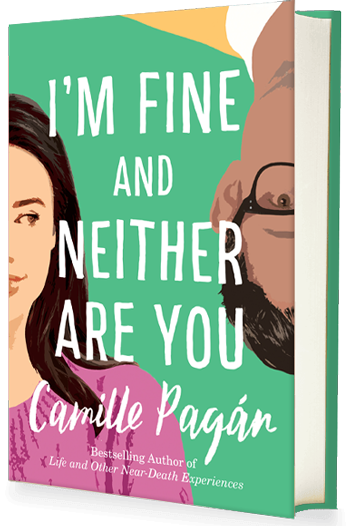
Wife. Mother. Breadwinner. Penelope Ruiz-Kar is doing it all—and barely keeping it together. Meanwhile, her best friend, Jenny Sweet, appears to be sailing through life. As close as the two women are, Jenny’s passionate marriage, pristine house, and ultra-polite child stand in stark contrast to Penelope’s underemployed husband, Sanjay, their unruly brood, and the daily grind she calls a career.
Then a shocking
tragedy reveals that Jenny’s life is far from perfect. Reeling,
Penelope vows to stop keeping the peace and finally deal with the
issues in her relationship. So she and Sanjay agree to a radical
proposal: both will write a list of changes they want each other to
make—then commit to complete and total honesty.
What seems like a
smart idea quickly spirals out of control, revealing new rifts and
even deeper secrets. As Penelope stares down the possible implosion
of her marriage, she must ask herself: When it comes to love, is
honesty really the best policy?
My Review
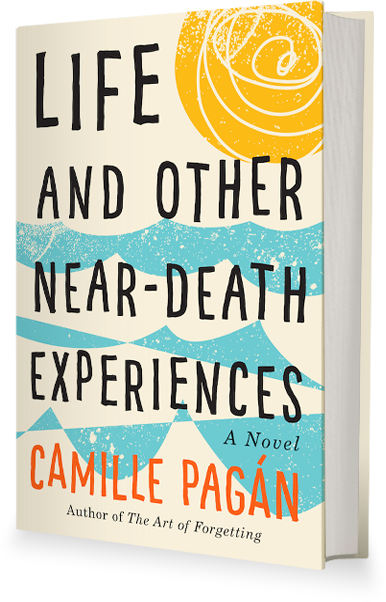
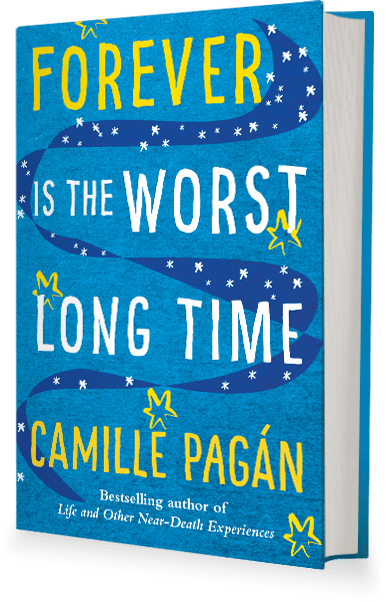
Penelope believes her life as a wife and mother inferior to her always perfectly put together friend Jenny, whose daughter is just as seemingly pristine as her mother. She is blindsided by the tragedy of her friend’s life, causing her to re-evaluate her own marriage and motherhood. Pagan brilliantly portrays the chaos that is raising children, with an opening scene of Penelope in the bathroom asking if she will ever have a moment of peace. The disconnect between spouses blares from the pages as they discuss who’s to blame for the lack of toilet paper, and Penelope notes that Sanjay barely looks at her to confirm that her appearance is satisfactory. Her re-evaluation puts them on a bumpy road back to each other and a cohesive family unit. Pagan juxtaposes the consequences of social comparison and lack of connection with an ever-increasing social problem in a credible and empathetic manner. This story is a reminder to pay closer attention to the ones you love. It’s a 5-star lesson in life.
Something was crawling on my back inside my shirt. I ripped off my shirt. Standing there in my bra, I flicked the shirt across my back until the creepy crawly feeling diminished to a tolerable level. Then I saw the spider on the last button, wrapped around it like a child clinging to the head of the person holding him on her shoulders. I dropped the shirt, then snatched it back up and ran to the washer. Only after I threw it in, and listened to it fill up, did I realize that the dead spider would not go down the drain with the rinse water, but need to be removed by hand. I shivered. Probably I could procrastinate for a couple days. Maybe someone would drop by in that time.
That night a sleep
paralysis nightmare washed over me like a thousand spiders. It felt
literally like spiders walking all over me, an army of them, a family
of them. Oh, God! Its family! The spider’s family. How many spiders
could there be in one family? I’ve seen those eggs hatch; it seems
like a never-ending supply of baby spiders, far worse than all those
horrifying clowns popping out of that stupid little car.
In the morning I
felt itchy everywhere, but not the itchy that cries out for
scratching, rather the kind that makes you feel as though you’re
being watched. I forced myself to check the washer. I gently pulled
the damp shirt from the belly of the beast, shaking it frantically
and tossing it in the dryer. Half-expecting the spider to launch
itself at my face, I peered in slowly. It was nowhere inside my
machine. Maybe I needed a better look. I grabbed a flashlight from
the whatsit drawer in the kitchen and aimed it in the washer. The
light circled the barrel, faster in case the little critter was still
actually alive and running from the light. I did the same in the
dryer, shaking the shirt again like a woman on meth, not that I knew
anything about that. No spider. No carcass.
Again the same sleep paralysis nightmare overtook me. I woke breathlessly, crying. The spiders crawled all over me, as I lay there unable to move or even open my eyes, repeatedly all night, alternating with gasping wakefulness, great gulping sobs by morning. The itchiness continued unabated. The paralysis attacks me nightly. My work is suffering. What can I tell people? Where is that stupid little spider?
Describe your writing process: schedule, environment, and inspirations abstract and material.
My mind takes me where it wants to go. So as a non-linear thinker, process is fleeting and I would rather be free to have useful and stupid thoughts than be a slave to a schedule. As I no longer work for others and I am an insomniac, my work hours often include time between 2am to 5am. I do put in many hours trying to round my ideas into cogent and alluring sentences and paragraphs. I never know where ideas come from. A friend made a joke 30 years ago and I used it as the basis of a chapter of my book and an award-winning short story.
We live in a small but wonderful apartment in Manhattan, thus my work area is more practical and compact than comfortable. We try to keep our library to 400 books, but we are willfully neglect about that number.
Walk me through your publishing process, from final draft to final product, and marketing.
I am sorry to disappoint but this will be terribly pedestrian. Almost everyone I know in the arts finds the business side odious. And as I have only completed one novel, my experience is limited. I have had short stories, poems, and photographs published, but that was purely a hit and miss proposition of submissions to selected publications.
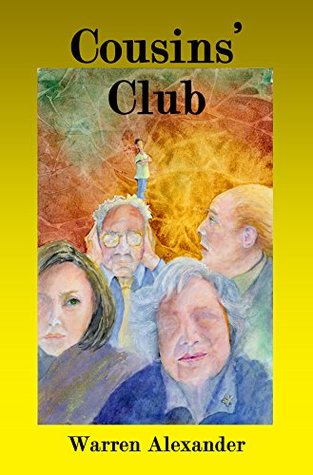
But I am already thinking about the marketing for my work in progress, a satire on business, which I believe has commercial potential. I will ultimately want to appeal to an agent or a traditional publisher; thus I have been gathering bits that may help. My current publisher, Creativia, of my novel “Cousins’ Club” believes in free downloads as a means of marketing and 12,000 people have taken advantage. I have written poems for the first time in 45 years and had them published and I have photographs appearing in art magazines. I also participate in select on-line writing boards where the atmosphere is collegial, solicit reviews for my Amazon page, and appear at book events. I think of each as being one inch closer to my goal. Obviously I do not know how many inches will be needed.
Tell me about your support system online and IRL; who are your biggest cheerleaders?
My wife of 47 years is absurdly supportive. She’s an artist and an inveterate reader and we both understand our need to be creative. My friends and family have gone out of their way to help. Many have used their good names on social media to alert others of my work, others organized events, others submit reviews and buy books, and others offer literary advice. I like to think of myself as a curmudgeon and lacking sentimentality, but I have been genuinely moved by the efforts of so many.
How does your life influence your writing and vice versa; how has your life prepared you for writing?
I have always been an independent spirit and thinker, whose benefits and limitations I have long understood and accepted. I approach things with a great ferocity which I think also appears in my work. Cautious people do not change the world. My creativity and my ability to analyze and connect disparate events and facts stood me well in business and in school. But my “I do not care about your arbitrary rules” has not. One boss used to say to me, “You’re not one of us.” To which I replied, “Why would I want to be.” Accordingly, why would I want to write what has been written or photograph what has already been shot.
What do you love most about your creativity?
I apply creativity to every aspect of my life. There are few things I do as routine, for I think how can I do this differently. They call it conventional wisdom because it comes from drunks at conventions.
Writing is problem solving. How can I create characters that are true to their purpose but are still different, vivid, and believable? How do I create dialogue that is witty and distinct, yet propels the story? How do I create events that are new and fresh, yet relevant and germane of the story? How do I create consequences for people’s actions that the reader will accept? As I write satire, how do I amuse a reader for hundreds of pages? I embrace all these challenges and quietly celebrate every victory. But you can never become smug, because the next sentence is just a keystroke away.