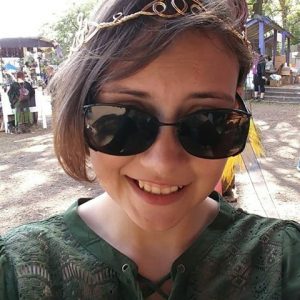
 I met Jensen in the best writers group on Facebook—Writing Bad—for which she is Lead Admin and does a fabulous job. She is smart, funny, and a talented writer, and she loves Halloween as much as I do. She co-owns Pixie Forest Publishing with Donise Sheppard, putting out beautiful anthologies filled with other talented writers. Read her interview, follow her online, and buy those anthologies!
Tell me about your writing process, including schedule, environment, and inspirations tangible and abstract.
I usually listen to music beforehand (a playlist that fits the story I’m working on) but I can’t have it on while I’m writing or I get too distracted. I used to only write at night once my kids were in bed, but now they are both in school, so I have 2.5 hours a couple days a week to work on stuff during preschool, and I have been taking Sundays as personal time while my husband wrangles the kiddos.
I pull inspiration from all over. Dreams, music, people-watching, Pinterest, and weird things like browning meat on the stove.
 Describe the publishing process from the perspective of the author versus the owner / editor. Explain how you created Pixie Forest Publishing with Donise.
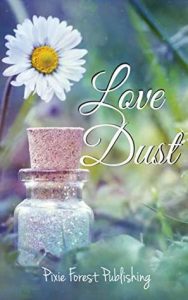
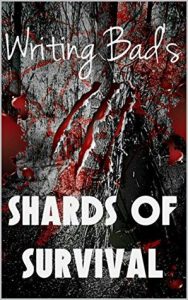
I have only ever published anthologies at this point. I edited and formatted Shards of Survival, which is Writing Bad’s first anthology. You’ll find eight stories in it, including ones from Lael and myself 😉 I took that knowledge with me into PFP, but Donise has published her own books already, so even though we both edited, she did the formatting for Love Dust. I will probably do so for the next one, because it’s a lot of work and stressful.
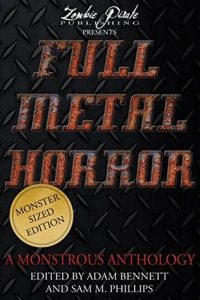
 We were talking one night about our publications and anthologies. We are both in Full Metal Horror and were just getting to know each other more. Then we both expressed interest in creating our own anthologies, something we had separately wanted to do for a while, and ended up joining forces to create PFP. With our combined followings and some great support from friends, PFP has really grown since April. We have a different set of strengths and they combine well, and PFP’s success so far is proof.
 How did you build your support system—your tribe, and how did you become Lead Admin for the best writers group on Facebook?
Well, most of my tribe is online. I met them through groups, or a few I’ve known since school. A lot of my reading / writing tribe members are also my best friends. I was in a writing group / admin, but it was stagnant, so I went in search of a new one. I stumbled upon Writing Bad and joined, and within a couple weeks, there was an ad for new admin to help. I dissolved the stagnant group into WB and ended up applying to be admin. I’ve been an admin for well over a year now and we’ve grown a lot. We have a promotions group now too, and are constantly filling the website with resources and helpful articles.
 How does your life influence your art and vice versa—what has led you to the delicious, delightful darkness? Do you scare your children?
LOL. They know I write, but they don’t really know what. The short story “Pancake Spiders” was inspired by my oldest son, and I read it to him regularly upon his request. I just censor it a bit to fit a five-year-old.
I’m not sure how life influences my writing. I know that I feed a little of myself and those I know into the characters I create. I read a lot. I observe a ton. It all gets woven into the stories and characters.
 What do you love most about your creativity?
That it can elicit emotional responses from other people and myself! Read the ending of Ranch, the first book in my zombie apocalypse series, to two of my best friends / betas, and one literally walked out of the house. That is amazing.
I love the times where I go to reread a certain part of Ranch, and end up reading for chapters and chapters, because I get sucked into the story—even though I wrote it and have been re-reading and writing it for years.
Write a 50-word flash fiction, right here, right now!
“Katie!” Ward’s yell echoed across the ravine as the edge gave way beneath his daughter’s feet. She began to fall towards the rocky ledge he was sprawled out on, and he urged his useless, broken leg to work as he struggled to reach her before she tumbled past him.
Connect with Jensen:
https://www.facebook.com/authorjensenreed/
https://www.instagram.com/authorjensenreed/?hl=en
https://www.amazon.com/Jensen-Reed/e/B07BTKK4ZM
https://twitter.com/AuthrJensenReed?s=09
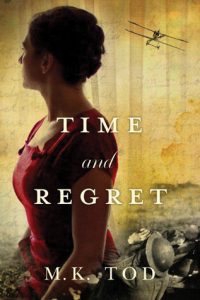 In a post-divorce cleansing, Grace Hansen finds a tackle box her grandpa asked her to keep. Inside she finds mementos from his WWI experience and a letter with a puzzle for her to solve for his redemption. She travels to France to walk through the same towns he did according to the diaries he kept during the war. Her life is in danger as she is stalked and burgled, deepening her grandpa’s mystery, fervently urging her toward resolution. Of course there is a French love interest, an unlikely but not impossible coincidence making the world smaller. Tod’s writing flows so well it seems the reader is walking with Grace through small French towns in her grandpa’s shoes. Fans of Tatiana de Rosnay and Diane Chamberlain, and lovers of history, art, and culture will appreciate this novel. Follow Tod’s forays into her own grandfather’s war experience on her blog
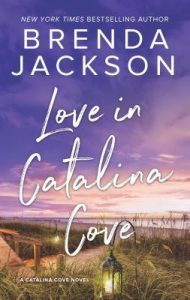 Vashti Alcindor inherits her aunt’s B&B in Catalina Cove, where she grew up, and where she ran away from over a decade ago. She wants to sell the business and put her hometown behind her for good. Enter the sexy, widowed sheriff. Then secrets come flying out of the past, changing Vashti in ways she would never have expected. The secrets are not so surprising, and some are a bit too coincidental, but in the end, a good story is hidden among the unnecessary repetition by multiple characters of Vashtis’ background and overly emoted revelations. A good beach read, a nice weekend romance read, Catalina Cove also shares a bit of Creole history, as it’s set on the coast of Louisiana, with a creole main character. I was graciously given an early copy by Harlequin through NetGalley.
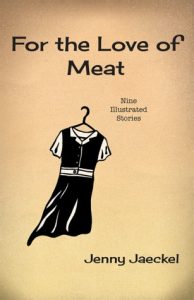
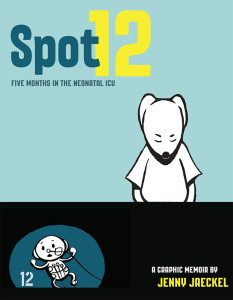
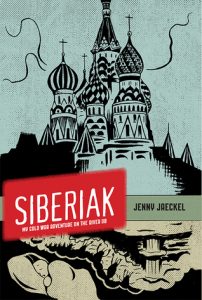
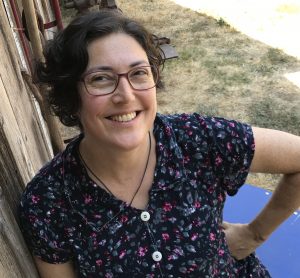 Jenny Jaeckel is the author of House of Rougeaux, her debut novel, which made Bitch Media’s 25 Must Read Books of 2018 list. Her previous titles include For the Love of Meat: Nine Illustrated Stories and Siberiak: My Cold War Adventure on the River Ob. In 2016, Jaeckel published the graphic memoir Spot 12: Five Months in the Neonatal ICU, which was the winner of the 2017 Next Generation Indie Book Awards and a 2016 finalist in the Foreword Indies Book Awards. She has worked as a translator, an editor, a Spanish teacher, a graphic arts teacher, and an illustrator. Jaeckel is currently working on her second novel, yet to be named, a continuation of the Rougeaux family epic.
 Wow, where to start… All the aspects of the process, whether internal or external are quite varied. As a writer, I have to have a whole mental “team” going on: the passionate one, the researcher, the emotional digger/investigator, the critic, the cheerleader, the scheduler, etc. etc. My biggest inspirations are my favorite books, the ones I love with all my heart and soul, and have made me want to be a writer in the first place. I always aspire to those literary heroes. They function like my North Star. I may be down in my clunky little rowboat, with my one broken oar, paddling furiously and getting nowhere, but when I look up, at least I know where I’m trying to go. J.D. Salinger, Toni Morrison, Merce Rodoreda, Eduardo Galeano, and Edith Wharton are some that I return to again and again.
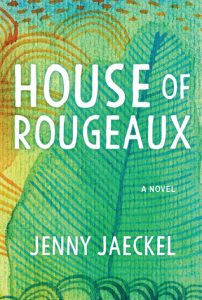 One of the most key parts of the process for me is working with my editor, Neesa Sonoquie. When I first showed her the manuscript for House of Rougeaux, I thought it was in pretty good shape. I’d already gotten some feedback from readers I trusted and done a lot of revising. But I had not worked with Neesa before. She absolutely demolished it. I’d sent off a book and got back confetti. It was humbling, but it turned out to be a transcendent moment. The revision process transformed the book and made me grow tremendously as a writer.
 I don’t exactly have a cheerleading squad, but I have a small group of friends and acquaintances who have, at one time or another, said, or written some very wonderful things about how my work has touched them. When I get this in an email, for example, I print it out and put in on the wall by my bed, where I have a little collection, and when I get discouraged, I read them over and over. I also talk pretty regularly with three writer friends of mine. Though we all deal in different genres, the process and the struggle are the same, and being able to engage in that mutual support is essential. My lovely family is very supportive too. My partner and child give me regular feedback on my blog posts and written interviews (like right this second).
 Art and life have a complete interface for me, like body and mind, or heads and tails sides of a coin. My first three books were all memoirs, the next two pure fiction, so while my relationships to all those topics varied, it was all deeply personal. When writing memoir, it has been much easier for me to see the therapeutic aspects of storytelling. Curiously though, putting key chunks of my life into these packages called books has made me identify with the stories less, as if these events happened to a human, and that human just happened to be me. It’s very liberating.
 I am grateful to creativity for being the force that animates me. I think without it I’d be a lifeless hulk, a Frankenstein’s Monster pre-electrification, misshapen and covered in scars and moldy clothes (but smaller). I was lucky that as a child I was encouraged in art (so many are discouraged or even shamed for their efforts,) and lucky that since then I’ve had countless opportunities to grow creatively. Creativity takes infinite forms, I think it’s our birthright as human beings, and I think the more we can bring it to all aspects of our lives the better off we are. Once I heard the singer Krishna Das say in an interview that his music was how he stayed alive. He didn’t say music was his bliss and all that, he said it was how he literally stayed alive. I really appreciated that. It’s survival. Creativity is not the icing on the cake, it’s the cake itself.
 Connect with Jenny:
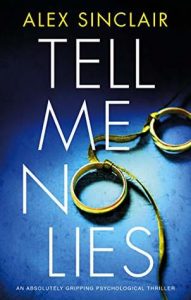 Grace Dalton watched her husband die after being struck in a hit and run accident. After a brief period of submerging herself in the grief, she begins to move on, speaking with his lawyer to learn of a secret bank account and life insurance. Then she sees her husband, sending her best friend into conniptions for some reason, and she ends up in several bizarre emergency sessions with her psychiatrist. Much of this story, once you get past the repetition (and the repetition continues throughout the book), lacks credibility, such as Grace’s phone sessions with her psychiatrist, and then her best friend dragging her to so many emergency sessions instead of listening to Grace. Her best friend comes across as more like a mean sister, making the ending even less likely. This story had such potential, and then Grace ended up being more crotchety than the damsel in distress. The reader does not need reminding in every chapter that Grace wallowed in her grief for six weeks. The story is in there if you want to earn it! I was graciously given an early copy by Bookouture through NetGalley.
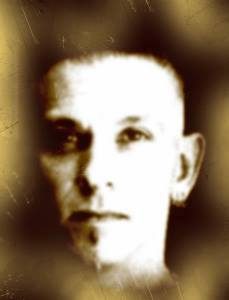
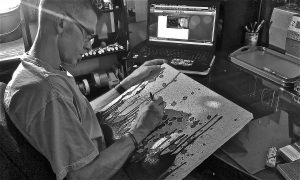 Brian Barnett is a Central Florida artist and designer who specializes in fine line abstract ink and pencil drawings, painting and other mediums. He is also the SO of my high school friend, and though I only know him online, he’s friendly and interesting, and his work is astonishing. I have to share it. After learning about him, follow the links at the end to contact Brian, scope out more of his work, and purchase pieces.
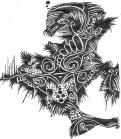 Tell me about your artistic process, from ideation to finished product, including medium / material, schedule, environment, and inspirations tangible and abstract.
 The process for my art can take a second or be meticulously planned for weeks months or even years. For example, if I’m working with pens, the process is almost instant. I don’t have a pre-planned route or image I am seeking when I create using the pens; it’s just free and letting the ink flow as it wants to create the images.
 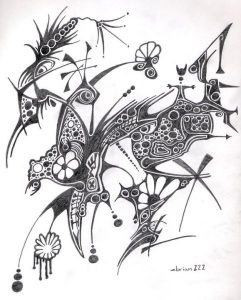 But if I’m working on a sculpture, I may have thought and planned it for months, looking through the bins of mixed media for that certain piece that make it perfect. I don’t have a preferred medium. I tend to draw mostly as it is most accessibleof my mediums at any time. I prefer lately to work with my hands, sculpting or building creations, with my next step being woodcarving and the eventual goal of teaching myself and being able to carve my wife’s face out of wood or sculpt from clay. I’m constantly challenging myself with new mediums.
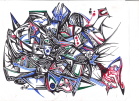 How do you find buyers—short-term and long-term strategies and venues; do you create art from your own vision and / or commission art?
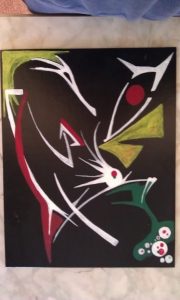 I do markets and online sales, hang in local galleries. and sometimes I post randoms for sale, but when I found this talent, I didn’t find it for fortune. I found it for sanity. I am always honored to sell a piece. To me, it means that person liked something that came from inside of me enough to spend money on it and hang it in their house. To me, that’s amazing. To me, it means I touched them; they connected with the image or the sculpture. That’s a priceless payday for an artist to see the viewer connect. I have done and am available for commissions—I love to work with a client to reach the perfect piece.
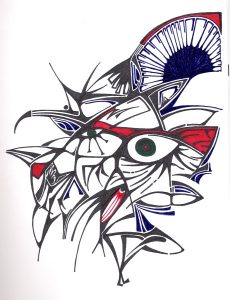 Describe your support system online and IRL—who are your biggest cheerleaders?
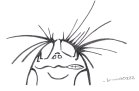 So, when it comes to my support, my art is my release that allows the people who support me to connect to me in a way they wouldn’t have been able to before. If it weren’t for the Orlando art community’s support, and that of my family and friends, I couldn’t have as much joy on this mission of art as I do.
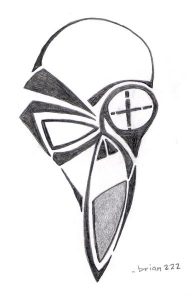 How does your life influence your art and vice versa?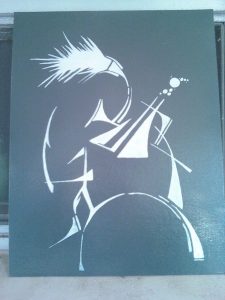
 Connect with Brian:
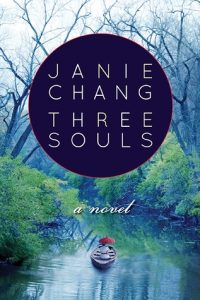 Leiyin learns she has three souls upon her death, souls who explain they are trapped with her ghost until she atones for some egregious transgression in her mortal life. They witness her, through memories, rebel against the patriarchal traditions of her father, suffer the consequences, and live with regrets for her naivety. In the early 20th century, Leiyin controls little about her life, and this during a civil war and Japanese aggression. Epiphanies hit her hard and fast reliving her memories. She must communicate with mortals to appease the gods by rescuing the fates of her loved ones in order to ascend to the afterlife with her souls. Chang’s blending and bending of Chinese culture and history create a compelling narrative of inadvertent espionage and acceptance of one’s place in society. The speculative elements placing Leiyin outside her own story fascinate the reader as they astonish Leiyin. Chang’s novels are educational in many ways, to the anticipated appreciation of readers of historical fiction, speculative fiction, and fans of Tatiana de Rosnay and Laura Spinella.