Emerson, Georgia, and Marley meet at fat camp, quickly establishing lifelong friendships. Their weight reflects backgrounds of abuse, neglect, and unrealistic expectations, leading to self-sabotage. One friend’s tragedy spurs the others toward their authentic selves.
Higgins digs deep into the transference of emotions into weight, using journal entries for immediate empathy. Along the journey to keep their promise, the two friends follow a rocky path to become true to themselves. This story reaches beyond friendship, beyond body acceptance, exposing the body shaming culture of western society, the misogyny of determining a woman’s worth by her appearance, the invisibility of women who don’t fit the mainstream idea of what a woman should look like, and the self-fulfilling prophecy of buying into that idea. Feminism needs a huge boost in this society where a thin woman is treated better than one who is overweight—even a little bit of extra weight (according to whomever) places someone in the undesirable category; when woman starve themselves or gorge themselves, or accept society’s norms to feel inferior.
I was fortunate to receive a copy of this wonderful book from the publisher for an honest review. The pretty cover and oft sarcastically used phrase as the title belie the substance and depth of this novel. I recommend this to everyone for the insight into the damage done by social cues demanding that all women look one way. Life is hard enough without finding derision in place of compassion. Kudos to Higgins for telling what women are too ashamed to share and the hypocrisy of the fitness industry.
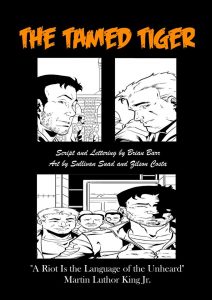
The second short story in his Nihon cyberpunk series, this tale tells of cyborgs gone rogue, culminating in a massacre of human co-workers by the cyborg Mannix. Dr. Nagai and the other Ashita Institute scientists create a program to instill empathy in cyborgs through fabricated experiences of pain and fear. Mannix is too cunning, however, and he is only interested in the officer who deactivated him at the crime scene, turning this digital tall tale into a warped love story.
Brian Barr is a natural storyteller, whose characters stay with the reader. His stories don’t so much twist and turn as they flow like a river around bends and past tall trees, sometimes shady, sometimes sunny. Mannix totally owns the ending in this cyberpunk short fiction. Look for my upcoming reviews for other short stories in the Nihon cyberpunk series.
I met Kimberly through Bloom, the Facebook group for Tall Poppy writers and their readers. If you’re looking for reading material, this author collective has writers of many genres and styles. Since I love speculative fiction, I asked Kimberly for an interview and she graciously agreed to share a little peek into the magic that is writing. Enjoy! And join Bloom if you’d love to a part of a community of stories and supportive human beings.
Describe your writing process—schedule, environment, inspirations—and everything you do as an author beyond writing.
Almost always, I start with a place, because setting is so important in my writing, and a problem. I love the peculiar or unexplained. Outliers and underdogs are always my favorite characters and often a voice comes to me with a line or two of dialogue or narrative that will send me off to learn that person’s story. In fiction and in real life, I can’t stand not knowing why. I’m a bloodhound for the whole story.
In terms of my writing day, I’m not a morning person, so I usually work during the late morning and through lunch while my kids are in school. When I’m drafting a story, I can write through the day without realizing the hours have passed. I love research and I have to be careful I don’t get lost in it. I often go through many drafts of a novel before I find the real heart of what I’m trying to say and that means it takes me quite a while to complete a book. Luckily, I have an agent who encourages me to dig deep and likes being part of my process.
When I’m not writing–and trust me, I’m always writing–I spend my time with my family. I have three children–a daughter who is entering college this fall, a son who is a rising senior in high school, and a second son who is entering fifth grade. We have two dogs–a cairn terrier and a rescue dachshund. My husband and I love to cook and travel, and our favorite spots to visit are Savannah, Georgia, Charleston, South Carolina, and the occasional trip to the Pacific Northwest, where we lived early in our marriage. We’ve been to France a few times and lately we’ve been talking a lot about Cornwall and Wales. Maybe someday!
Walk me through the publishing process from final draft to final product, everyone involved, and what you do yourself to promote your new books.
I think my experience in publishing is pretty typical. I spent many years at work on multiple manuscripts, submitting queries to agents and entering contests. I was very lucky to sign with an agent, but I sold my first novel on my own to a small press and it was a lovely experience. My editor and I and a copy editor worked together to get the book in the best shape possible before it went to press.
After the novel was in the world, I went to work making use of all the networking I’d done over the years prior to publishing–relationships I fostered with generous book bloggers and fellow writers–and I sought out every way I could find to put the book in front of as many readers as possible. The novel won the Georgia Author of the Year award, and I went on a book tour across the southeastern US and visited as many independent bookstores as I could. They are the fairy godmothers of authors and readers!
You are a member of the Tall Poppies author collective. Tell me how that happened and about your support system online and IRL; who are your biggest cheerleaders?
A few years ago, Orly Konig invited me to lead a workshop for the Women’s Fiction Writer’s Association’s first retreat. Over that weekend, I learned about the Tall Poppies from author Kathryn Craft and got excited about the group. I had lunch with Amy Impellizerri before we left the airport and I absolutely adored her, too. I was delighted when they invited me to be a part of this inspiring group of women authors. They are absolutely my support system online AND IRL!
Patti Callahan Henry and Amy Nathan have been longtime supporters and friends. Outside of Poppies, Allison Law, Joshilyn Jackson, Sally Kilpatrick, Nicki Salcedo, Heather Bell Adams, Gina Heron, Reta Hampton, Shari Smith, Marybeth Whalen and Ariel Lawhon have encouraged me so much along the way. Emily Carpenter and MJ Pullen know where all the bodies are buried. There are so many more! I know I’m leaving so many people out.
The short stories on your website evoke your Southern Gothic style; they are a wonderful introduction to your writing. How does your life influence your art—and vice versa, and how did speculative elements find their way into your storytelling?
Thanks! The short stories are like little treats for myself that I hope readers enjoy. In them, I allow myself to just play with the magical elements that I love in my favorite stories. My novels aren’t so heavy with magical elements, although they are most definitely present. I love the inexplicable.
I think my world view comes through in my writing and my choice to always force characters to examine what they think they believe and especially what they are willing to accept without concrete evidence. I like to challenge black and white ideas and I’m interested in what exists in the gray areas. I grew up and have lived most of my adult life in the South where ghosts and spirits, religion and superstition are a part of everyday conversation. I’m a very intuitive person. I think I could hardly write anything else.
What do you love most about your creativity?
Over the years, I’ve heard so many writers lament a loss of creativity in their lives. I don’t adhere to that idea. I believe that people are inherently creative by nature. Like any other natural ability, we have to be healthy in other areas of our lives in order to function at our best and creativity is no different. There are months when my creativity seems dormant, but it’s easy to know why if I look at other areas of my life–my physical or psychological health.
The most amazing thing I’ve learned as I’ve gotten older is that the answer to reviving my creativity is engaging in creativity. It’s self-healing. The more I allow myself to be freely creative, the more my physical and psychological health also improve. If I neglect my creativity, everything else goes downhill with it. It’s imperative for a full life.
I started the Tinderbox Writers Workshops, which led to an annual retreat, based on these ideas and my own experiences. Every year, writers meet on the South Carolina coast for a week of inspiration, friendship, writing and transformation. It’s one of my favorite things and truly the most rewarding part of my writing journey.
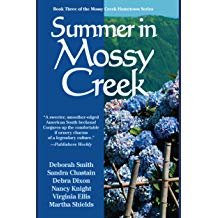
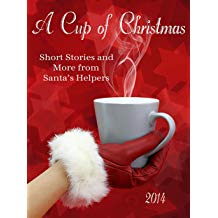
FORTUNE’S KEY. I contributed a short story to a new collection this February. The best part – all proceeds of the ebook sales for the anthology A CUP OF LOVE, go to First Book, a children’s literacy charity. ONLY $2.99! Give a little love, get a little love! And I’d love to know what you think of Phoebe and Henry!
In 1965, Carly Sears becomes the physical therapist for an intriguing man who seems to know her. Five years later, as her brother-in-law, Hunter helps her find specialty medical care for her unborn baby—in the future. The events on 9/11 alter her course, causing her to make an agonizing decision regarding her daughter.
Chamberlain carefully lays out the rules for time travel and sticks to them, allowing for the anomalies not yet worked out by Hunter and his scientist mother. In her first foray into speculative fiction, this story remains pure Diane Chamberlain, with complex characters, dynamic relationships, and impossible choices. Within tension building to a near breakdown as revelations explode, Chamberlain’s characters make the right decisions for them, and the reader swoons.
After dozens of novels in the literary genre, Chamberlain ventured a bit further into historical fiction, which worked out really well for her. Now tossing in a bit of fantasy / sci-fi proves her versatility. I was fortunate to receive an early copy of the newest book by one of my favorite authors directly from the publisher #St.Martin’sPress.
I met Sullivan through a writerly Facebook friend who hires him to illustrate his stories. His work is fantastic, so I asked him for an interview. He graciously agreed, and here I can share his work with you and offer a peek behind the scenes at his artistic process.
Describe your artistic process—schedule, materials, studio, and inspirations.
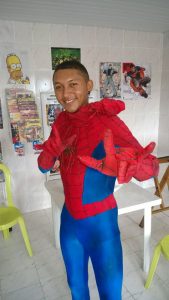
Let’s start with inspiration—my inspiration comes from everything I’ve read that I’ve seen and lived. It comes from all that. The comic gave me everything, gave me my work, gave my culture, gave the taste for reading; the comic led me to like various things. Although my family did not encourage me much, the first time I won a comic, I found it fascinating. I thought, “This is what I want to do.” While other kids said they wanted to be doctors, lawyers, or football players, I said I wanted to work for Marvel drawing Spider-Man. HAHAHA!!! My studio is my bedroom. Here I work and develop everything. The materials I use are conventional—I am still learning to adapt to the use of technologies. The creative process comes when the script itself arrives; you read and begin to internalize the scenes. So I do. I imagine it and play it all on paper soon.
Tell me about your support system, online and in real life.
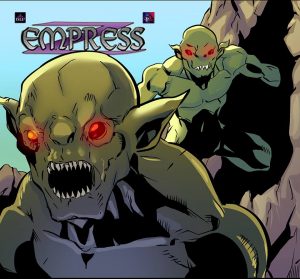
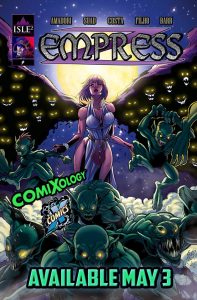
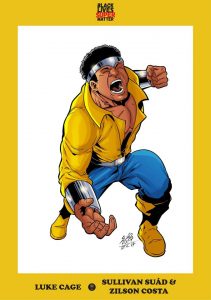
I can say that who supports me in my work, both in real life and online, is my teammate Zilson Costa. It has been a few years since we started an excellent partnership, and this has paid us good results. Our production chain begins when the client sends us the script, and it comes to me that I make only the pencil sketch. After I do the drawing, I send it to Zilson, who puts in the ink.
How do you obtain clients, and is all your work specific to clients?
I already have some specific clients, others are by indication. But I am always divulging my portfolio to get new jobs.
How does your life influence your art and vice versa?
I counted on the influence of several friends, also comic book fans–who were an incentive for me to gradually learn everything as a self-taught artist. The inspiration came from Marvel and DC Comics.
What do you love most about your creativity?
It may seem heresy on my part, but I love my profession, because it is like playing a little god. You create, give a life to a character, and lead a whole universe of possibilities—it is something incredible. I wanted to finish here and leave a positive message about all this: Never stop studying, the market is always changing and you need to update. If you do not practice every day, you will surely miss an opportunity for someone who practices every day. As for the financial part, those who work with comics can earn as well as any other professional in another area. It only depends on it, not only as a drawer, but as a person who knows how to take advantage of the opportunities; after all if you follow a career for the status of that money always, there would not be so many lawyers changing branches. The beginning is always complicated, no matter the area or profession. You will grate, you will work double, and you will receive little. But if you sneak in and keep on evolving your work, believe me—there’s never going to be a lack of opportunity and money can be interesting.
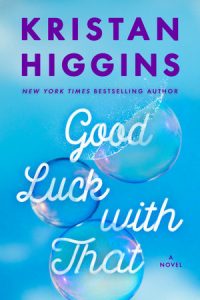 Emerson, Georgia, and Marley meet at fat camp, quickly establishing lifelong friendships. Their weight reflects backgrounds of abuse, neglect, and unrealistic expectations, leading to self-sabotage. One friend’s tragedy spurs the others toward their authentic selves.
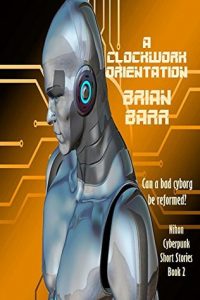 The second short story in his Nihon cyberpunk series, this tale tells of cyborgs gone rogue, culminating in a massacre of human co-workers by the cyborg Mannix. Dr. Nagai and the other Ashita Institute scientists create a program to instill empathy in cyborgs through fabricated experiences of pain and fear. Mannix is too cunning, however, and he is only interested in the officer who deactivated him at the crime scene, turning this digital tall tale into a warped love story.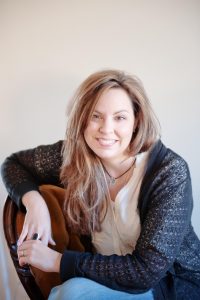
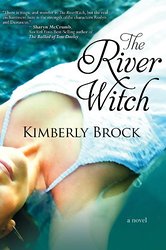


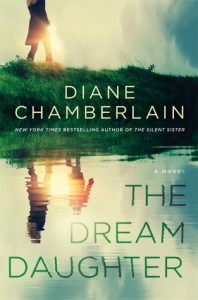 In 1965, Carly Sears becomes the physical therapist for an intriguing man who seems to know her. Five years later, as her brother-in-law, Hunter helps her find specialty medical care for her unborn baby—in the future. The events on 9/11 alter her course, causing her to make an agonizing decision regarding her daughter.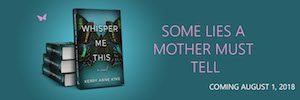

 Describe your artistic process—schedule, materials, studio, and inspirations.
 Tell me about your support system, online and in real life.
 How do you obtain clients, and is all your work specific to clients?
 What do you love most about your creativity?