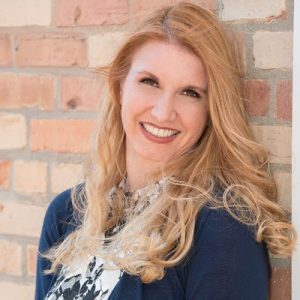
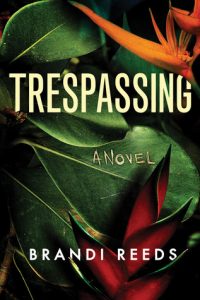
I met Brandi Reeds through the Lake Union Authors Facebook page. She also writes YA under her pen name Sasha Dawn. As you’ll see, she’s truly dedicated to her writing. I’m fortunate that she agreed to allow a peek into her writing life on my little blog. Her adult debut novel “Trespassing” just came out in April.
Describe your writing process, including schedule, environment, and inspirations.
SCHEDULE: Writing isn’t my only career. I have another full-time job, two busy teenagers, three dogs, and an incredibly busy husband, so I have to use every second wisely. I write whenever I have a free moment. A typical day:
● I wake up around 2 or 3 a.m., thinking of something that won’t quit. I’ve been an insomniac most of my life.
● Often, my laptop is open and on my lap, and my fingers are tapping keys before I open my eyes.
● I’ll write in bed for a couple of hours, close the laptop, and catch a quick nap before my day begins. My alarm goes off at 6. My goal is to have 1,500 words written before this moment. I usually meet my goal.
● After my girls are at school, I go for a run if my schedule permits, then work begins. I balance my home design and renovation business with writing. Both are on-demand and involve irregular hours. I have a design office in my home, and my laptop is my mobile writing office. Sometimes I write a sentence here, a sentence there; other times, I carve out blocks of time in a slower design day to write.
● Evenings are for family: dinner, walking puppies, jogging (if I missed my earlier run), and time with my girls—helping with homework (though they rarely need it anymore, they still humor me) and getting them to the dance studio or to the theater, or voice lessons, or wherever else they need to be.
● By the time everyone’s evening activities are over, it’s usually about 10 and time for bed.
● I sleep for a few hours, and repeat.
PROCESS: I outline a book on a high-level basis before I begin to write. The outline isn’t carved in stone; I often find that the book shifts a bit in drafting. But this helps to keep me on track. I don’t always write in order. I find that writing what I’m feeling helps keep me productive. There’s no reason to stall simply because I don’t feel like writing a particularly challenging scene. I’ll come back to it when I feel better about it. Some days, I write only dialogue. Others, I write only setting. I can’t afford not to stay on schedule, as I have deadlines looming.
At present, I have 6 weeks to write a Brandi Reeds book, contracted less than a month ago, a Sasha Dawn novel due in early November, and Brandi’s third release due by July of next year…as well as edits due on other works already in progress I revise as I go, and once I finish the book, I revise twice more before sending it to my agent and editor for commentary.
ENVIRONMENT: I prefer to write in places without distraction, but my schedule doesn’t permit me to be too particular. I’ve written in the car while my husband is driving, in parking lots waiting for my girls, in hospital waiting rooms, in cafes, on trains. I will write anywhere, but I’m most productive between the hours of 2 and 5 a.m., when the world is still asleep.
INSPIRATION: Much of my inspiration comes from dreams (I often dream plots), from places I’ve been, struggles I’ve endured, and my wonderful family. I recently returned from Spain, for example, and I’d love to create a story set on the island of Majorca. That said, I’m a firm believer that writers are not born of safe keeping. I’m a survivor of many battles, and I think that helps me when it comes to creating worlds in which my characters live. My mind goes to crazy places due to what I’ve been through.
 Tell me about your support system: beta readers, publishing team, and any other cheerleaders.
My daughters and my best friend and her daughters read much of what I write before I send it to my agents and publishers. They’re my system for reality-checks and often tell me when something doesn’t ring true (i.e., a teenager wouldn’t use this word here; or wouldn’t she be thinking about her kid at this moment?). I also have a great friend in writer Patrick W. Picciarelli, retired NYPD, who is often my sounding board when it comes to plotting, criminal activity, and the business end of publishing.
My agent, Andrea Somberg of Harvey Klinger Agency is incredible. She often offers suggestions and advisement for books before we send them to my editors. I’ve been blessed to work with some incredible editors and publishing teams. I think every editor I’ve ever worked with will tell you that I’m open to criticism. I’ve never been hung up on a book being solely mine; it’s a team effort, and editors offer brilliant advice.
My mother, siblings, aunts, cousins, friends, and grandmother are cheerleaders AFTER they’ve read my books, which is equally as important. My husband, Joshua, does not read. He says that if he wants to know what happens in my books, he’ll just ask me. This doesn’t offend or bother me in any way, as he’s still an integral part of the process. I discuss plots with him, and I often tell him at the end of the day what my characters managed to accomplish. He and my girls are constant supporters and I am endlessly grateful for them.
 Take me through your publishing process, from final draft to published product.
After we submit a final draft to my editors, the waiting begins. Some weeks later, I receive an email full of praise for what I’ve accomplished and created…and an attached edit letter detailing everything wrong with what I’ve done. My most intense experience with the edit letter entailed about 14 single-spaced pages. (Me at this point: “Ummm….you said you liked the book, right?”) So, after I cry for a few hours (kidding, I’ve never actually cried), I get back on the horse and revise.
Usually a book will go through 2 or 3 rounds of developmental edits. During this process, I’m filling out forms and giving input on cover design, depending on the publisher. Next, we go through a couple of rounds of copy-edits, and then a final polishing for interior design. Around this time, I receive final cover design and copy. And then suddenly, the book is real, tangible, and exciting. Sometimes, as an additional step, a publisher will ask me to check the ARC for errors.
How does your life influence writing and vice versa?
When I’m writing for the teen audience, I draw on my tumultuous teen years for emotional content. There is a little bit of me in every character I write, but I’ve never told my life story through a character. I’ve been writing for as long as I can remember, and for as long as I’ve been writing, it has kept me sane and balanced. As a teenager, I wrote as a sort of therapy. Other kids my age weren’t going through the things I was experiencing—or maybe they were, but back then, we sure didn’t talk about it—and I felt less alone because my characters went through much of what I did.
Now that I’m older, I like to think my writing reaches audiences who need it…and letters from readers support this thought. It means something to tell unconventional stories, because life is not normal. It means something to write people as they truly are, even if they’re often flawed and unlikeable. While some readers hate this about my work, there are more who write and thank me for telling a story through an authentic narrator. I don’t write fairy tales because life is dark and messy, and no person I’ve ever met is all good or all bad. Flaws are what make us interesting and varied, and so these are the stories I tell.
What do you love most about your creativity?
I’ve never considered facets of my creativity as something to love, and even thinking about this question now, I don’t know that I can answer it. Both my careers (writing and designing) require heightened levels of self-awareness, however, and through that awareness, I’m able to dissect struggles, learn from them, and project them onto a bigger canvas. Being a published author certainly puts me in a position to reach others, and I definitely appreciate all that accompanies the connections.
Ergo, due to my creativity, I’m able to extend my reach. For example, last spring, I visited my alma mater (Antioch Community High School in Antioch, Illinois) for writers week. I do this sort of thing whenever I have an opportunity, and I’ve visited high schools all over my home state. I tell my story to captive audiences, who are experiencing the same types of challenges I’d endured as a teen. While I’m sure a few high school students in every crowd are bored with me, or even asleep, the majority walk away from my presentation inspired to overcome whatever it is they’re dealing with. And I LOVE this part of my job.
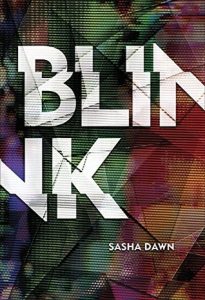
It’s also pretty fun to name characters after people I know. Emily and Andrea in TRESPASSING are named for my nieces; Samantha in SPLINTER is named for my eldest daughter, and all the male characters in SPLINTER are named after my nephews; the main character in BLINK is named for Joshua, and his sisters are named for my best friend’s daughters, Margaret and Caroline; and my upcoming teen release (currently known as PANIC) stars a spunky introvert named Madelaine, for my youngest daughter. I tell people that if they don’t want to find traces of themselves on the pages of my books, they shouldn’t stop by for a chat. I can’t help it. It’s an occupational hazard. 🙂
Brandi Reeds also has a story on the HOOKED app, entitled OFF LIMITS:
http://www.amazingchatstories.com/se/offlimits-1
Brandi Reeds website (under construction—please be patient)
 I
I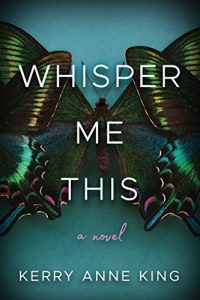 follow
 s Kerry Schafer I write fantasy and paranormal thrillers. As Kerry Anne King I write contemporary family dramas (although the book I’m writing now does have a touch of magical realism that makes my fantasy-loving-heart happy). Keeping track is fairly straight forward—Kerry leans to the dark side; Kerry Anne leans toward relationships and emotions.

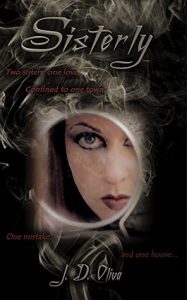 Is there ever a process for anything when you have kids? I try to steal time to write, but I do it every day. I journal, I write ideas when they pop up, and I write poetry. I am an emotional storyteller, because in all honesty, I struggle with my emotions, so in turn I heal. I don’t write from a desk or have an office. I write from my laptop, which is portable, so I can take it places, but mostly I write from my couch. I have been known to write in my car while my son is at football practice, I would say a third of Sisterly was written or edited there. It is for me, really, no different than reading a good book, an escape, but I get to choose the ending. As for a muse, this is the concept that I thought only I experienced. When I write I do feel as though I am channeling many muses. I like to think of them as my writing angels. My grandmother (my mother’s mother) was, in her lifetime, the best storyteller. When I was a child, she would tell us a story that I would visualize so vividly. I would like to think that she is still telling me those stories I loved to listen to as a child. Our stories are very important to generations to come. They learn from our mistakes and gain knowledge to what works. Life is not easy.
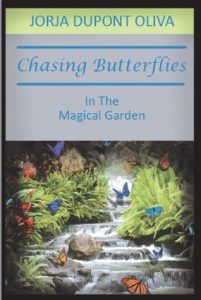 My mother wrote for our local paper. She loved to write and would always talk about wanting to write a book. She could come up with stories that conveyed a message about love, friendships, and all the good things life has to offer (Hallmark channel was her favorite). Sadly, I lost my mother this year, February 2018. She unfortunately never published any of her works. She lived that dream through me I suppose. Let me step back and explain,–I talked my Mother into taking a class to teach you how to write a book. At that time I had no interest in writing a book. I just thought it was something we could do to spend time together and possibly help her achieve one of her dreams. I found a love for writing—it was my purpose, and looking back, I was always a writer. My Mother wrote many short stories through our adventure in this class, but my Mother always put her kids first. She became my biggest fan. By the end of the class I had created a book—Chasing Butterflies in the Magical Garden (2013). By the way, I plan to publish her work in the coming year. I see it like this—I have gained another writing angel during her time on earth and in her after life.
 What finds its way into your stories and why?
 pos, because let’s face it, typos happen! During final edit we worry about those. I have been fortunate to have two wonderful and patient editors. I spend most of my time on editing and rewriting. I am not going to tell you it is my weakness. I am just going to say I don’t edit while I write. Editing interferes with my creative process. When most people think of an editor, they think of someone who comes in and cleans it all up. I’m sure there are some editors out there that do that, but that isn’t my case. I have two supportive editing coaches. They show me things I missed or need to elaborate on and we work together to prefect it. It is usually a 4 to 6 time go-over on the story. While this is happening, I send my story with a WARNING to everyday people to read and send me feedback. Usually I have at least 4 to 5 people of different ages and opinions. I have even sent one of my first drafts to my 4th grade English teacher, who is now retired. I can’t express the importance of having many people working with you to produce the best you are capable of producing.
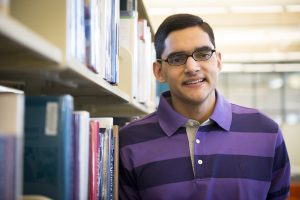
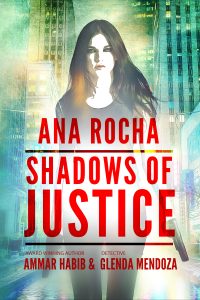
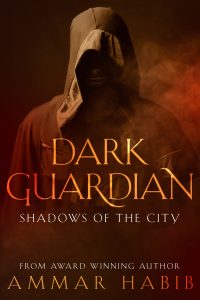

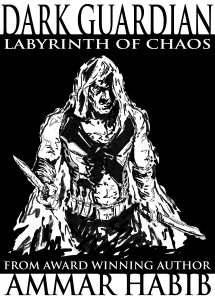
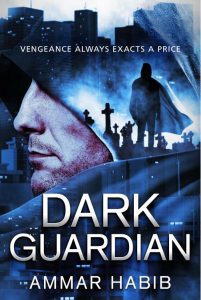
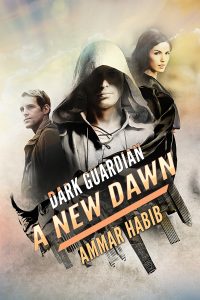
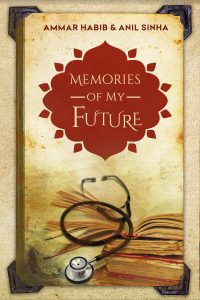 Memories of My Future is definitely one of my personal favorites. It takes place in three time periods: 13th century India, 19th century India, and present day New York City. The project began when I got a phone call from Dr. Sinha, whom I somewhat knew beforehand, in September 2014. He had the seeds of an idea that he wanted to write a book about, which was very similar to something that I was wanting to write about, which is why we decided to partner together. The reason Dr. Sinha reached out to me was because he had just read my debut novel, Dark Guardian, and had really loved it.
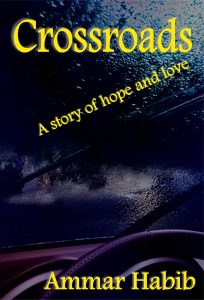 Ammar Habib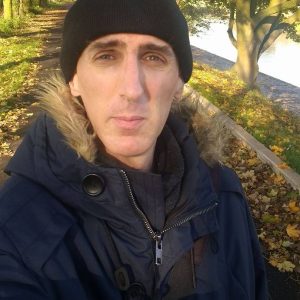
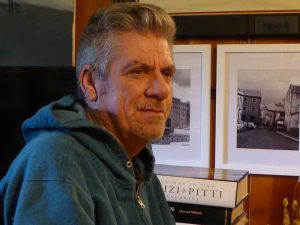 I met Steven Carr in the Facebook writing group
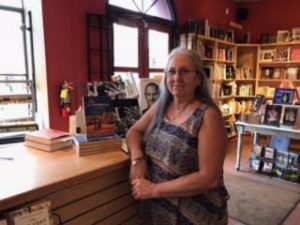 I met Carmen Baca in the Facebook group
  anuscripts in print, and when I’ve written sufficiently to have a couple of pages on my iPad, I revert to keyboarding since I can type (keyboard) so much faster than I write. My short pieces I do completely on my iPad before submission.”
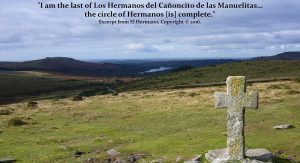 After my father passed, we cleaned out the morada, the prayer house, and since I was the only one living in our little valley, the community members (all way older than I at the time) elected me to house the religious artifacts left behind from the brotherhood, as all the brothers had passed by that time. There was a wooden box I remembered had been in the morada throughout my childhood, but since it was always locked I never knew what was inside. One element of los Hermanos’ practices, which is sensationalized in the websites and in other literary works, is their devotion to Christ, which includes self-flagellation. My father never once disclosed whether he did this or not, and my only clue that he did was once when I was with him at a doctor visit. When the doctor exclaimed, “What happened to your back,” I knew.
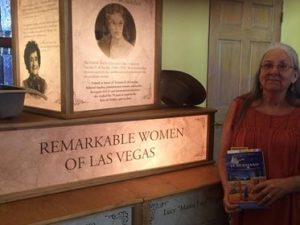 “Now that I’ve got my novel and several short pieces published, writing has given me a purpose, a new career as a story teller in my twilight years. All those decades I spent teaching the classics—short stories, poetry, novels, etc., by my own favorite authors—I am free to create my own literary works which other teachers can use in their own classes. That floors me! To know that my own literature will be taught in English, Spanish, Chicano Studies, and history courses in the same way I used to teach literature just amazes me.

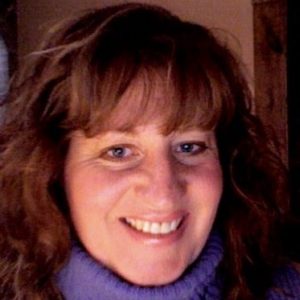
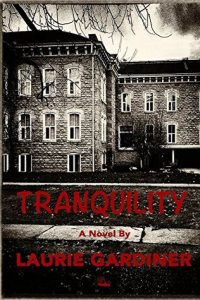
 Many writers have an unusual and varied employment history. Mine includes framing / remodeling, llama husbandry, job coaching, home health care, and substitute teaching. I’ve also been a barista, a wine steward, and a personal assistant. Brian’s career climb is more logical, with surprising summers.
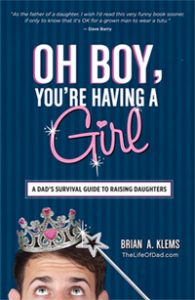 When Brian became a father, his life changed dramatically, and he desired to share his experience in his humorous book