I met Sandi on Twitter. She is super friendly and supportive of other writers. If you’re a fan of Hallmark, love heartwarming stories, and appreciate learning about other humans through reading, her novels are for you. Oh, you must also love cats! Here’s my review on her second novel Something Worth Saving.
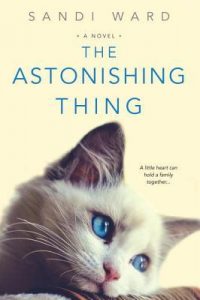 Tell me about your writing process: schedule, environment, strategies, and inspirations tangible and abstract—what’s in your office?
Because I work full-time (I’m a medical copywriter at an ad agency), I write my fiction sporadically, whenever I can grab a few minutes here and there. My MacBook Air is always with me, and it essentially is my office-to-go! I’ll write in the early morning, on my lunch hour, late at night, or whenever else I can grab a few minutes.
I prefer to write with a hot cup of coffee nearby. My primary requirement is quiet. I can’t write with music or other background noise going on.
I don’t outline my story arc on a line chart, or put plot points on post-it notes, or anything like that. I’m completely what some people call a “pantser,” making it up as I go along (flying by the seat of my pants). I re-read written chapters and then add a new one, going back constantly to edit in new ideas. My goal is to write stories that are unexpected, and not formulaic. I let the characters surprise me, in the hopes that they will also surprise the reader.
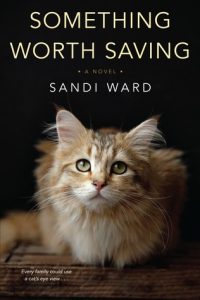 Walk me through your publishing process from final draft to final product: publishing team, timeline, and expectations of you as the author, especially toward marketing and publicity.
Kensington gives me a year to write a novel, during which time their art department starts to design a cover and their marketing team writes potential cover copy (once I can supply a synopsis). Once the draft is done, it goes to my agent and editor, and we do a round of changes before moving on to copy editing, and finally page proofs. This stage also takes about a year, from final first draft to published book.
On the one hand, this process is slow. By the time of book launch, it has been over a year since I wrote the story. But I’m happy to be writing general fiction, where I get the time I need to devote to writing a first draft. Other writers, in genres like romance and mystery, are sometimes under pressure to write much faster, and that would be tough for me. I’m always promoting books at the same time I’m writing new stories, so I’ve got plenty to keep me busy. Right now I’m finishing up the first draft of my third novel, What Holds Us Together.
My publicists and the social media team at Kensington decide where and how to promote the book, for example via print or online advertising, but I also do as much as I can! I maintain my website and social media accounts, and reach out to other authors, readers and book bloggers who might be able to share news and reviews of the book.

Describe your support system online and IRL—who are your biggest cheerleaders?
My literary agent, Stacy Testa at Writers House, is my #1 go-to person for all of the questions I have about writing and promotion. She’s amazing and I’m very lucky to be working with her!
Other authors have also been incredibly supportive. The online writing and reading community is great about sharing information and helpful tips. I belong to a number of writing-based Facebook groups where I learn new things every day, and try to share some of my own knowledge.
At home, it helps that my husband and teens are all writers. My husband is also in advertising, my son is a journalism major in college, and my daughter is a student filmmaker. They can relate when I need to disappear into my laptop for a while.
Your unusual protagonists are cats; I suspect you’re a huge animal lover, and I’m curious how you determined to write cat main characters. How does your life influence your writing and vice versa?
I do love animals! I have both a cat and a dog.
When people ask me what inspired me to write from a cat’s point of view, the truth is, I don’t remember exactly how I got started with it. Essentially, I wanted to experiment and try writing from the viewpoint of an unconventional narrator. I love books like The Curious Incident of the Dog in the Night-time and The Boy in the Striped Pajamas, which are written from unexpected points of view, where the reader realizes that more is going on than the narrator fully understands.
A main theme that runs throughout all of my books is how hard it is to be a parent—especially of teenagers. Real life absolutely influences my characters and stories. I don’t usually talk about my personal life too much, but if you read my books, you’ll quickly figure out where I stand on many issues.
When I wrote Something Worth Saving, I was feeling pessimistic about how divisive society has become. I don’t have all the answers. I think it’s okay to disagree with others, but it’s also important to be respectful and not make anyone feel unsafe. My character Charlie (my narrator Lily’s favorite human) should not have to feel threatened when he wants to express himself—not at school, not at home, not anywhere. For me, writing a novel is a better way to try and convince someone to take another look at an issue, rather than shouting on Twitter about it.
What do you love most about your creativity?
I enjoy getting really enthusiastic about ideas, words and images. This is true at my job at the ad agency as well as when I’m writing fiction. Great ideas should get the creator fired up, and want to share those thoughts with the world. I believe you have to write for yourself first, and then you can try to get everyone else on board.
Connect with Sandi:
 I won Seven Days of Us through Goodreads and devoured it, a story full of complicated family dynamics imploding from mandatory quarantine due to a daughter’s work in treating an epidemic—my review
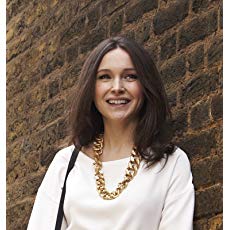
 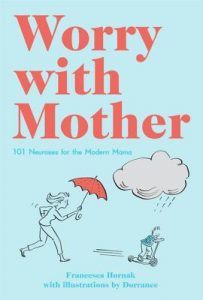 I try to write every weekday morning between 9:15 and 12:15, which is the window when both my children are in nursery. I’m actually glad it’s so regimented, as it enforces a kind of ‘exam conditions’ pressure, which I find easier than if I had all day at my disposal. I could write at home, but I generally go to a café or library, as I like to work surrounded by strangers, and I always get more done in a place where I’m not connected to the Wi-Fi. I usually begin by having a really elaborate breakfast over my laptop, which I definitely wouldn’t recommend as a writing strategy, but I’ve now come to believe that I physically can’t write without a particular kind of coffee/juice/toast/peanut butter etc. Other than that I’m not too particular; I just always avert my eyes from the Wi-Fi password and usually wear earplugs—unless I’m eavesdropping on an especially interesting conversation. Inspiration is a mix of internal and external. It might be something I’ve experienced, that I want to relive through a character., or it might be a news story, or a chance conversation, that sparks an idea.
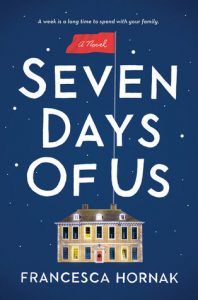 The final product wasn’t hugely different to the final draft, and luckily my editors (I edited UK and US editions simultaneously) agreed on everything. There were two scenes in my draft that we all felt were implausible or melodramatic, so I cut one and changed the other. Jesse’s character (the illegitimate son who gatecrashes his birth father’s quarantine) was also given a little more backstory and depth. The rest of the editing was mostly me finessing the wording. I’d rushed submitting to publishers, as my agent and I were both pregnant and wanted to get the manuscript out before we gave birth. So I wanted to perfect nearly everything—towards the end my US editor did suggest I ‘cease and desist’….
 Connect with Francesca:
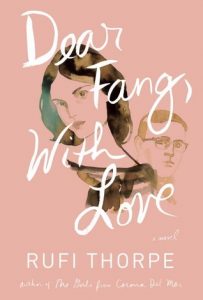
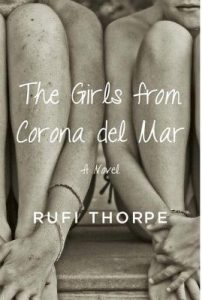
 Rufi Thorpe received her MFA from the University of Virginia in 2009. Her first novel, The Girls from Corona del Mar, was long listed for the 2014 International Dylan Thomas Prize and for the 2014 Flaherty-Dunnan First Novel Prize. Her second novel, Dear Fang, With Love, was published by Knopf in May 2016. Her third novel, The Knockout Queen, is forthcoming in 2020, also from Knopf. She lives in California with her husband and two sons.
 Now my children are older and I have many more hours while they are at school, but those hours still feel somewhat stolen, and that lends the act of writing some urgency. I have never, for instance, had to worry that I would fritter away my few hours with social media. I am also, for better or worse, one of those writers who enjoys the act of writing itself. I enter a kind of narcotic stupor, and I can write twenty pages and then kind of “wake up” and have to figure out if anything interesting happened in them or not. I have to throw away a lot, but it also means I think I torture myself less than is common. Both because my time almost always feel stolen, and because I actually enjoy writing more than any other activity I do, my writing time has almost no ritual element. I don’t have to get in the mood, or become inspired. All that is required is a computer. I suppose the only truly odd thing is that I prefer to be entirely alone and dislike it even if someone is in the next room.
 The book undergoes four rounds of copyedits, which involves changes made by the copyeditor, which I then review, everything from spelling or grammar errors, typos, to “would a football game be on at this time of the day on west coast time?” Copyeditors are amazing people. At around this time, you start to see cover mock-ups. While I don’t think I have full cover control, i.e. the ability to legally veto a given cover, my publisher very much wants me to be happy, and if I have a big problem with something they will try to accommodate me. But I’ve been very happy with all the covers they have shown me, so we have never had to really duke it out.
 Connect with Rufi:
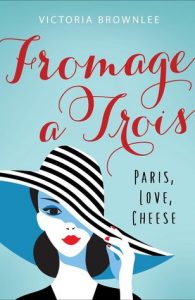 After eight years in a monogamous relationship, Ella expected a proposal at their favorite restaurant. That’s not what she got. So she runs away to Paris to rediscover herself as the adventurer she was before the relationship. Yearning for the most Parisian experience, she falls into a bet to taste all 365 varietals of French cheese, becoming an Instagram sensation. However, she still chooses glamour over substance in men; though the romance is inevitable, it’s still fun to watch Ella grow and evolve. Brownlee creates a character as enchanting and quirky as Sophie Kinsella’s Shopaholic Becky. But she goes beyond Ella’s endearing personality to educate readers on French cheeses, with delectable descriptions and fascinating anecdotes and history, even referencing Napoleon. Fans of Kinsella, foodies, Francophiles, and romantics will appreciate this lovely story that I was fortunate to receive from Amberjack Publishing through NetGalley.
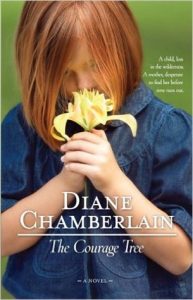
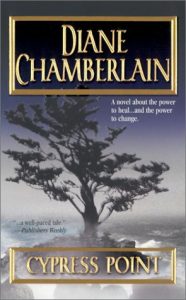
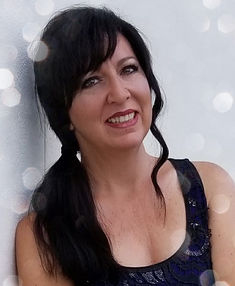
 I met Diane in person at a book signing in Topsail Beach at Quarter Moon Books. In my overzealous fangirling,
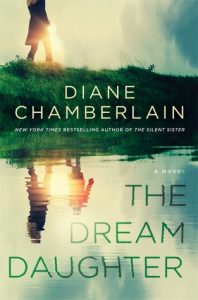 I crashed a book club photo and had to be gently shooed away. I’ve been her most awkward fan since, and she’s been the most gracious literary star. I show up for each new book’s signing / reading like a middle-aged stalker who looks so innocent (muahaha), and Diane keeps smiling and signing my new books. If only she could write super fast; I know I will love each new story. I was fortunate to receive an early copy of The Dream Daughter—
 I usually write either in my Raleigh area sunroom or at my condo on Topsail Island. I generally have a year to write a book. The first few months, I think about my idea and start doing research, often visiting the area where the story takes place. I begin picturing scenes and putting them on post it notes that I move around on a big presentation board until I like the arc of the story, thus creating an outline. At the same time, I think about my characters, specifically what type of person will have the hardest time dealing with whatever dilemma I’ve come up with for the story.
  If there is no personal struggle, there is no story. I think about which characters will have a point of view in the story and will they have a first person or third person point of view and will I write the story in present or past tense. I sometimes look on the internet for pictures of people who make me think of my characters. I find this a huge help in creating characters who feel very real to me and hopefully to my readers. These are all decisions I make before I start writing.
 Finally, I start writing about 6 months before my deadline. I usually listen to movie soundtracks as I write because I like the emotional ups and downs of the music. I’m always doing research as I write. Also, I listen to my characters because they frequently go astray from my outline and I’ve learned to pay attention to them. I write three to five drafts. Finally, often a bit late, I turn in the book. That’s where my dynamite editor comes in. She reads the book, looking at the big picture. What works and what doesn’t? She makes many suggestions, sometimes requiring a big change in the book. I’ve learned to listen to her, and I rewrite. And perhaps rewrite yet again.
 Here’s how it works. First I write a book. Then I have an agent who is responsible for finding the publisher she thinks will do the best job with that book. She is also responsible for negotiating the contract with that publisher. You can see in my answer above some of the work the editor does with regard to my book. The publisher then, of course, publishes the book. If the publisher feels strongly that they can make the book a bestseller, they will give it a lot of advertising and other support before and during publication. My publisher for the last six books, St. Martins Press, does a great deal of promotion for me. I try to hold up my end by keeping up with social media (which I enjoy), giving interviews, touring to speak to groups and do book signings, where I get to meet my readers, the best part of the process!
 My biggest supporter is my significant other, John. He’s a photographer and understands the creative process and doesn’t complain that once a year, as deadline nears, I disappear from real life into my imagination, 24/7. Aside from him, I have many local writer friends who I get together with often. And then I have my “official group.” We call ourselves The Weymouth Seven because we originally met up at the Weymouth mansion in Southern Pines, NC, where authors are invited to work for up to two weeks each year. Now we usually meet up on Topsail Island. You’re right that Mary Kay Andrews is a big part of our group. She’s our ringleader, the one who keeps us on track during the week that we meet. Other members are mystery writer Margaret Maron, historical mystery writer, Sarah Shaber, horror and thriller writer Alexandra Sokoloff, and mystery writers, Brenda Witchger and Katy Munger. We have fun but we work hard at the same time.

 When I heard about the eugenics (forced sterilization) program in North Carolina, I knew I had to write about it. That meant setting the story during the years of the program, so I selected 1960 and thus wrote my first novel (Necessary Lies) with a totally historical setting and I found I really enjoyed it. Two books later, I decided I wanted to write about the 1944 polio outbreak in Hickory, NC during which the town built a functioning polio hospital in 54 hours (The Stolen Marriage). So I would say, if the idea that comes to me is historical, I will happily write it, but I am still perfectly happy writing contemporary books as well.
 When it comes to The Dream Daughter, that is a whole different subject! For years, I had the idea that’s central in The Dream Daughter: a woman is told that her unborn baby will die, but she learns that if she’s willing to take a huge risk and travel to the future, her baby could very well live. I put this idea off for years because it is so unlike my other books, but finally, I talked to my editor and she gave me the go-ahead. The book was tremendous fun to write and the early reviews have been amazing. I’m grateful to readers who dislike time travel for giving this book a try because it’s still “vintage Diane Chamberlain” and people seem to be loving it.
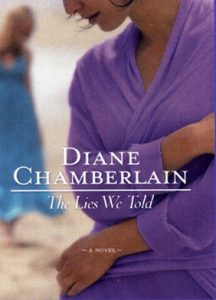 I think your question about my previous profession (clinical social work) and secrets actually go together. I worked in hospitals and then in a private psychotherapy practice with adolescents and their families, and one thing I learned is how destructive secrets can be in a family. I was fascinated by that topic, so it often appears in my stories.
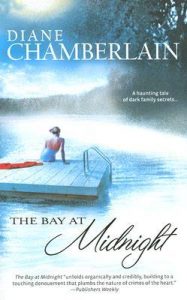 I’m very grateful for my imagination. It got me into tons of trouble as a kid, but now pays off. I might be stopped at a traffic light and see a woman pushing a baby carriage across the street and within 30 seconds, I imagine a car hitting them, and the police discover it was on purpose and there was a connection between the woman and the driver, or maybe even between the baby and the driver . . . it’s exhausting having a brain like this, but it often pays off in the end if it means I can entertain my readers.
 Website
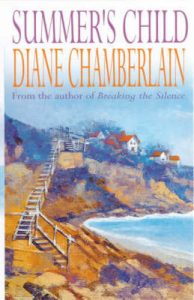
 First, let me say thank you for having me, Lael! I love visiting with reader friends and new readers who may not know me yet!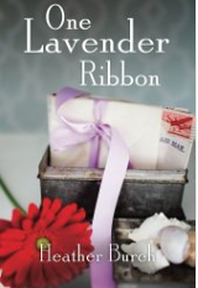



 What do you love most about your creativity, and how does it play into teaching the craft of writing?
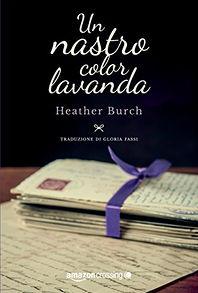
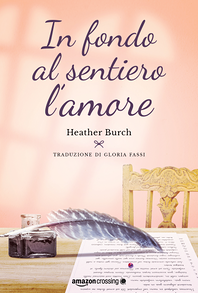
 Adrienne leaves an abusive relationship and divorce in Chicago and buys a fixer-upper in Florida, where she starts her new life of independence on the Gulf. A box of eloquently written letters from a WWII soldier in her attic sets Adrienne on a journey to friendship, potential romance, and matchmaking. She exposes decades-old secrets, changing lives and mending relationships while building strong bonds with her new “family.”
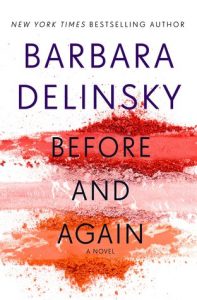 Before—she was Mackenzie Cooper, who had a loving husband and a beautiful daughter; After—she is Maggie Reid, a single woman with a secret past who lives with two cats and a dog and sells confidence through makeup artistry at her job in a resort spa. She can only move forward, away from her family, away from her “crime,” away from her former life…until her ex-husband arrives to manage the resort his business group just purchased, HER resort. At the same time, her friend and co-worker learns that her son hacked into his high school, their spa, and a prominent journalist’s computers, and her friend is terrified that her secret past—a powerful and dangerous man—finds her.
 Lyla Volpe doesn’t expect her life to change after her crush takes a drunken, semi-naked photo of her at a party, because she doesn’t want to do anything about it. Tom, her working-class, single father, astonished by her complacency, cannot let it go. The boy’s mother, Nina, is sick over the incident and also cannot let it go, though her wealthy husband attempts to cover it up. The story whips back and forth on who exactly the culprit may be, but eventually the truth comes out, and Nina finally releases her insidious secret in order to save herself, her son, and his victim. The ending wrapped up quickly in a summarized chapter, disappointing readers who expected more about how the boy redeemed himself.
 Tell me about your support system: beta readers, publishing team, and any other cheerleaders.
 Take me through your publishing process, from final draft to published product.