 I met Julie in Bloom, the readers group for Tall Poppy authors. She exudes positivity and encourages everyone to be their best selves, enlightening us with her expertise and wisdom. Listen to her TEDx talk: Know Thyself: Two Questions That Will Change Your Life. Julie is a ray of sunshine through the clouds. Her novels take on tough issues, focusing on relationships and communication, with unconditional compassion. If you’re Christian, you’ll appreciate that her faith is woven throughout her novels and her children’s books. I believe Julie lives her faith.
Elaborate upon your writing process.
My process has been different for each book. When my children were younger, I wrote while they were sleeping, never wanting to miss a moment of motherhood. I have had various stages of my writing life, usually squeezing the work into the wee hours of the morning before I would start my hectic day as mother, teacher, speech-language pathologist, organic farmer, etc. Now, I am grateful to be writing and editing full-time. My children are grown, and the entire process is much less intense. I tend to go with the flow and let the creative dance take me where it pleases.
Describe your publishing process, including your publishing team.
Oh, goodness. I could write an entire book explaining the countless people involved in getting a story from an author’s brain to a reader’s hands. It truly is an incredibly complex process, and I learn something new about it every day.
 Tell me about your support system and how you came to be a Tall Poppy.
I’m incredibly honored to be a part of the Tall Poppy Writers. As female authors, we cheer one another through the many hurdles involved in publishing, always eager to elevate one another’s work and to lift our voices as a united tribe. Since daring to publish my first books, I have found most authors to be extremely supportive and encouraging at every turn. It’s been a wonderful career, and the best part about it has been the positive relationships I have been blessed to form with writers and readers alike. Fabulous people at every turn.
 It’s wonderful how you use your author platform as a medium to serve others through education, disseminating information and raising awareness for social issues. Explain the intertwining of your life, advocacy, and writing.
Thank you, Lael. I do believe in the healing power of story, and I try to give voice to those whose truths have been silenced or shamed. I don’t shy away from difficult topics, but I also believe a “spoonful of sugar helps the medicine go down,” and I try never to be voyeuristic or profane.
 My work has tackled tricky issues such as domestic violence, sexual assault, mental illness, suicide, human trafficking, etc. I have been inspired by the many positive reader responses I have received through the years, the conversations my stories have sparked in book club meetings, and the impact these fictional tales have had on the lives of many.
 I am passionate about encouraging others to live the life they were born to live, to establish healthy relationships, and to know the difference between “love” and abuse. If my stories help people heal, find freedom, or love one another, then I am grateful to play a small part of that process.
What do you love most about your creativity?
As a very young girl, I learned to rely on writing as my way of processing the world around me. I can’t imagine my life without a creative outlet. I spend hours every day reading and writing. It’s just part of my very being. Aside from writing, I also enjoy painting, gardening, creating music, and taking part in other creative activities. While I’m not very good at doing any of them, I never allow my limited abilities stop me from enjoying the creative process.
Honestly, I believe we have each been given creative tools to help guide our emotional and spiritual development. These tools help us manage anxiety, establish greater levels of empathy for others, and develop a broader understanding of our place in this miraculous universe.
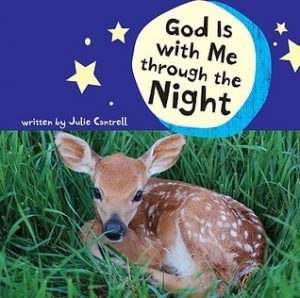
I encourage everyone to create something every single day. Whether it’s a meal, a photograph, a song, a piece of furniture , a quilt, or a story… offer something new to this world that no one else can offer. Explore your talents and see where your gifts will take you. I dare you!

Connect with Julie:
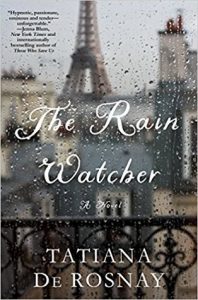 Franco-American Linden Malegarde travels to Paris to celebrate with family his father’s 70th birthday to find himself trapped in a flood and more than one family crisis preventing their evacuation. Over a few deluge-filled days, the Malegarde family bursts at the seams, spewing secrets and long-held hurts, with deadly descriptive flashbacks and a horrifying centimeter-by-centimeter account of a real-life flood. De Rosnay’s writing flows like the Seine spilling over its banks, sparing no characters of their integrity in situations that require fortitude beyond their human frailty. She takes on more than one social issue, in Linden alone being an outsider in more than one way, in more than one country, his saving graces being a successful creative and having a supportive partner. Readers of historical fiction, Francophiles, and fans of Liane Moriarty and Thritty Umrigar will appreciate this novel. I was fortunate to receive an early copy of #TheRainWatcher from #St.Martin’sPress through #NetGalley.
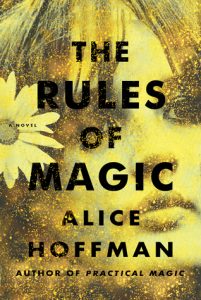 Franny, Jet, and Vincent come of age in New York City, far removed from their ancestral home by their mother’s rules, which they continually break as they learn about their extraordinary powers. Jet is the first to break their mother’s rule of not falling in love, suffering the fate of the curse placed on their family by their ancestor Maria, cruelly deceived in romance. Allowing Franny to visit her great-aunts on her 17th birthday per family tradition opens up a whole new pathway in life for her, and fate brings all three siblings to live with their aunts, where they truly learn who they are and exactly how different. In this prequel to Practical Magic, readers learn about Vincent and how the curse affects an Owens’ male, for he disappears from his family in circumstances as extraordinary as his powers. As in her previous novel, Hoffman continues to weave magic into everyday life as though it’s normal, at least for the Owens family, who are all too aware of their status outside of mainstream. She shows the challenges of being a witch in societies that find it too difficult to accept what they don’t understand, even while hypocritically taking advantage of the witches’ gifts, one of which is unconditional kindness, for which they are never thanked. For readers who like a little magic with their complex family dynamics, this story will certainly be appreciated. For those living with differences not readily explained, the Owens siblings would be easily relateable. Hoffman’s characters retain their integrity within their limitations as witches, including not being able to save a loved own drowning because everyone knows witches float. The story ends where Practical Magic picks up, with Vincent’s granddaughters—orphans as far as they know—arriving at their great-aunt’s home to live with them.
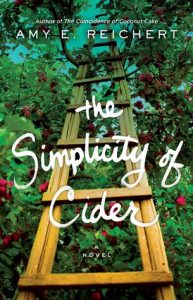 Life seems to be careening out of control for Sanna Lund, whose sole desire is to live quietly in her ancestral home, creating apple ciders in her unique way of tasting colors. An accident temporarily incapacitates her father Einars, the new hired hand Isaac stirs new feelings she’s not planned on entertaining—his son Sebastion distracts her as well, and her brother Anders, who moved away, urges her to sell the struggling family business. Secrets crack her long-held paradigms and Sanna comes to realize certain truths cannot be ignored, and she opens herself up to more than she imagined was possible, including a mother she’d tried to cut out of her heart.
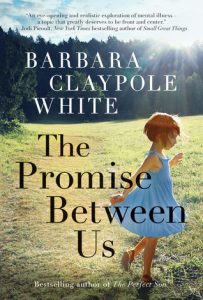 Katie suffers post-partum OCD in silence for fear of destroying her life, but loses that life when her husband Callum realizes that he’s ignored her problem too long and feels their marriage is irreparable and their daughter is in danger. She disappears and he raises Maisie alone, with support from his best friend Jake, cutting out Katie’s sister Delaney also. In a jarring coincidence, Katie’s artistry brings her in contact with her daughter, who believes her mother died, and she sees evidence of inherited OCD. She must convince Callum, a man whose past blinds him to his family’s needs. With Callum’s pregnant second wife included in the family picture, alliances shift, romances are roused, and a little girl teaches adults how to behave. Though the repetition can be nettlesome to the reader, Katie’s constant fears and reminders demonstrate the experience of OCD. There may have been a bit much to the back and forth of convincing Callum, since Katie’s argument never really shifts. Persistence seems to be the key to OCD. It’s clear the author did her research and she acknowledges her resources. This is a good story to read for a sympathetic, but not pitying, representation of living with a mental illness.